


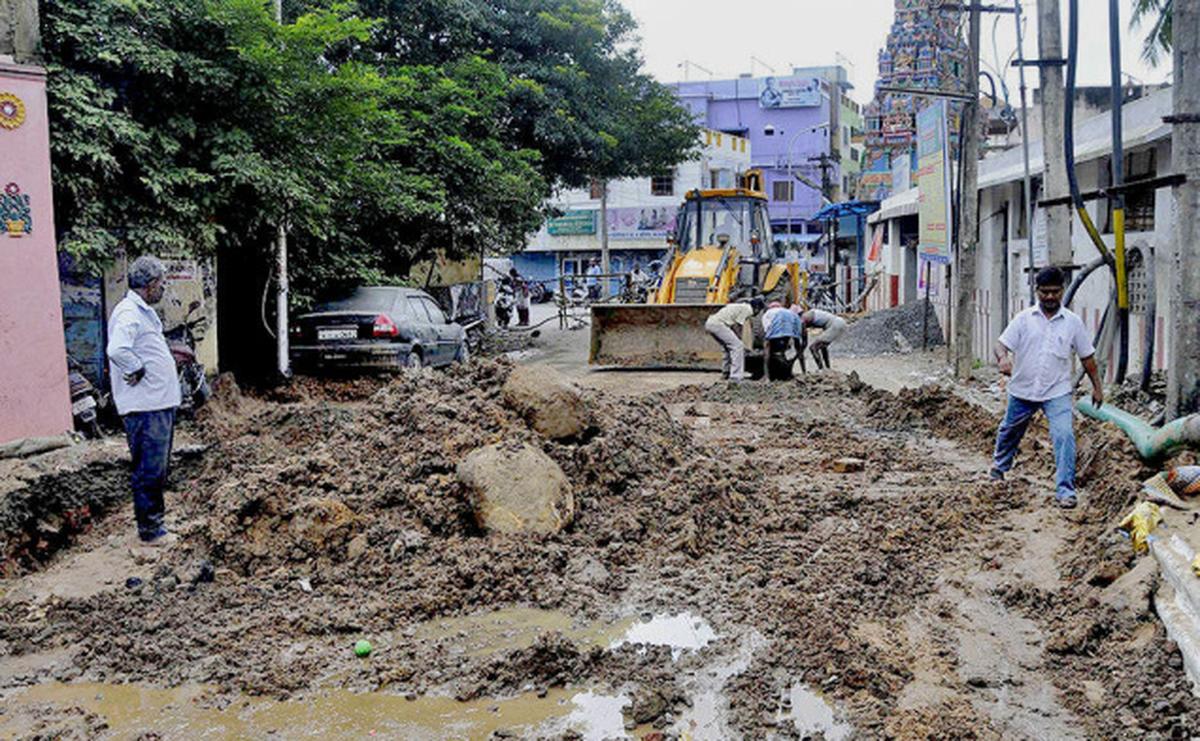
A major sewage pipeline upgrade in Chennai’s Adambakkam neighbourhood has intensified access challenges for residents, with prolonged road closures raising concerns about emergency mobility and execution standards. The ongoing sewage pipeline work, led by the city’s water utility, underscores the tension between essential underground infrastructure renewal and day-to-day urban functionality in dense residential pockets.
The project involves the laying of a 600 mm diameter trunk line along a key internal street that serves as a primary access route to adjoining residential stretches. While the sewage pipeline work is part of a broader effort to replace ageing sewer networks prone to blockages and leakages, the excavation has effectively narrowed — and in sections fully obstructed — the carriageway for several weeks.Residents say the disruption has limited vehicular access, including for ambulances and school transport, forcing families to adjust routines and in some cases suspend daily activities. Urban mobility experts note that such situations highlight the absence of phased construction planning in older neighbourhoods where alternate routes are limited or non-existent.
According to a senior official at the Chennai Metropolitan Water Supply and Sewerage Board, the pipeline installation is progressing at full pace and is expected to be completed before the end of the month. The authority maintains that the upgrade is critical to preventing sewage backflow and groundwater contamination — issues that have historically surfaced during heavy rainfall.Adambakkam, like several low-lying areas in south Chennai, has faced recurrent flooding during the northeast monsoon. Urban planners argue that sewer modernisation and stormwater drain integration are vital for climate resilience. However, they caution that infrastructure projects must incorporate pedestrian safety, soil stabilisation, and post-construction road restoration to avoid secondary risks.
In previous phases of similar works across the city, loose soil compaction and inadequate resurfacing have led to subsidence and vehicular safety concerns. Civil engineers suggest that quality audits and third-party monitoring could mitigate such risks, particularly when replacing older pipelines embedded in saturated ground conditions.From a real estate perspective, prolonged civic works in residential streets can temporarily affect rental demand and property transactions, especially in mid-income neighbourhoods where road accessibility is a primary value driver. Yet, market observers note that long-term sewer upgrades tend to strengthen asset resilience by reducing health hazards and improving liveability metrics.
Chennai’s push to modernise underground utilities aligns with its broader goal of building climate-ready infrastructure. Still, as cities densify and retrofitting intensifies, execution quality and community communication will increasingly determine public trust.For Adambakkam, the immediate priority is timely completion and durable restoration. For Chennai, the episode is a reminder that sustainable urban infrastructure must balance engineering urgency with people-first planning.
Also Read:Pune Airport to Introduce Timed Vehicle Pickups
Chennai Sewage Pipeline Work Disrupts Adambakkam
