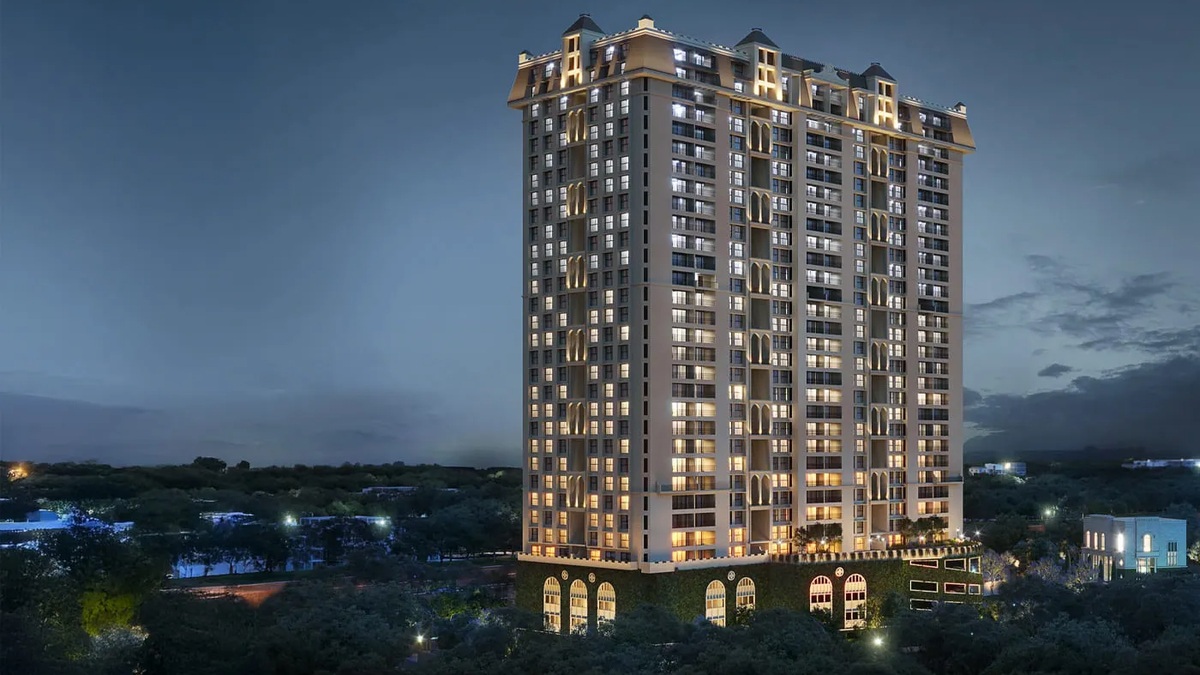
Chennai’s southern growth corridor has gained a significant new residential address with the unveiling of Brigade Stellaris, a large-scale housing development on Velachery Road. The project, spread across just over five acres, is positioned between the city’s established commercial core and the IT-intensive Old Mahabalipuram Road (OMR) belt, a location that reflects shifting urban demand towards transit-linked, employment-centric neighbourhoods.
The launch of Brigade Stellaris comes at a time when Chennai’s residential market is witnessing renewed traction, driven by technology-sector hiring, infrastructure upgrades and a steady preference for home ownership among salaried professionals. Industry estimates suggest that well-connected micro-markets such as Velachery, Guindy and the OMR corridor have seen consistent absorption over the past two years, supported by proximity to office campuses and arterial roads. Company executives said the development has a projected gross development value of around ₹1,700 crore and will include a portfolio of premium residences marketed as “signature” homes.
While design specifics are still being rolled out, officials indicated that the project would combine higher-end amenities with sustainability features an increasingly non-negotiable element in urban housing as cities confront climate risk, heat stress and water management challenges. Urban planners note that Velachery Road occupies a strategic position within Chennai’s evolving metropolitan fabric. It acts as a connector between the traditional central business district and the expanding IT corridor, while also benefiting from rail, metro and road infrastructure improvements. As Chennai Metro Rail extends coverage and suburban rail connectivity strengthens, developments in such zones are likely to shape future patterns of commute and density. However, experts caution that the long-term impact of projects like Brigade Stellaris will depend on how effectively they integrate with civic systems.
“Large residential clusters must align with drainage planning, public transport capacity and social infrastructure,” said an urban development consultant familiar with the city’s master planning framework. “Otherwise, they risk adding pressure to already stretched neighbourhood services.” Chennai has in recent years faced extreme rainfall events and periodic flooding, prompting stricter scrutiny of stormwater design and site resilience. Developers operating in the premium segment are increasingly expected to incorporate water-sensitive landscaping, energy-efficient building materials and waste management systems that reduce environmental footprint. The entry of Brigade Stellaris into the market underscores Chennai’s growing stature as a southern residential investment hub beyond Bengaluru and Hyderabad. For the city, the test will lie in balancing private real estate expansion with inclusive planning ensuring that high-value housing coexists with accessible mobility, green cover and equitable public amenities. As more projects target employment-linked corridors, the trajectory of Brigade Stellaris may offer a signal of how Chennai’s housing sector aligns growth with sustainability in the decade ahead.