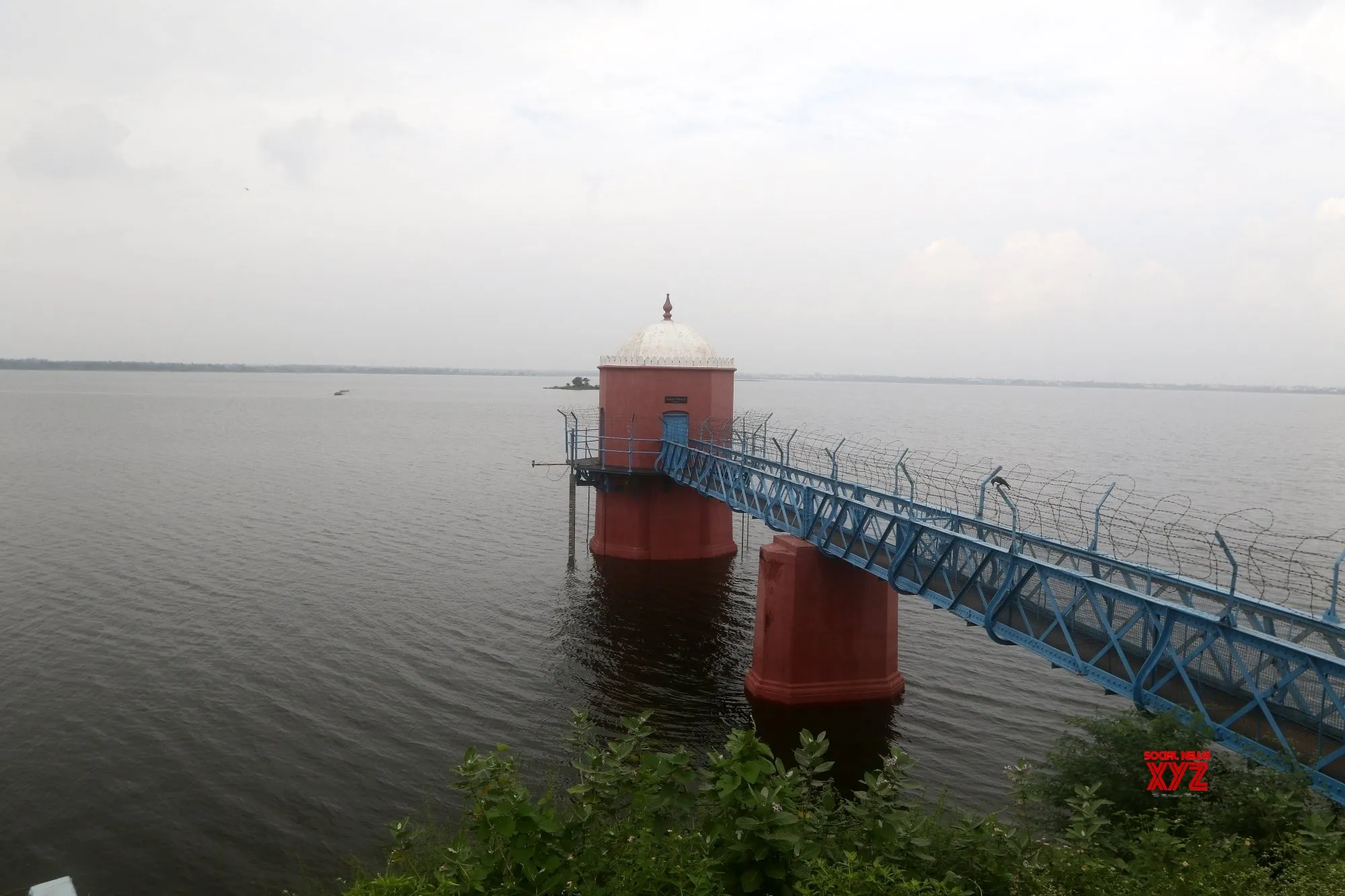
Chennai Sees Big Rise In Lake Storage After Rains
Chennai’s water supply outlook has brightened significantly, as heavy rainfall triggered by a weakening cyclone has boosted storage across the city’s main reservoirs. The six principal lakes feeding Chennai now hold about 10.64 TMC — a marked improvement over last year’s levels — suggesting a temporary easing of pressure on the city’s drinking water infrastructure.
Officials at the state water resources department confirmed that reservoirs supplying Chennai have benefited from renewed inflows. The replenished lakes include the city’s primary sources: Poondi, Red Hills (Puzhal), and Chembarambakkam, as well as Cholavaram, the combined Kannankottai–Thervaikandigai system, and the more distant Veeranam. These lakes collectively have a design capacity of roughly 13.22 TMC, which means storage currently stands at around 80 percent of capacity — a dramatic reversal from the often precarious levels witnessed in prior dry seasons. For Chennai — a coastal megacity whose piped supply depends heavily on these reservoirs — this upswing is more than just hydrological luck. Historically, when major lakes dipped low, households and businesses turned to groundwater, private tankers, or desalinisation, often with compromised reliability. With lakes now better stocked, the immediate pressure on groundwater abstraction may ease, offering potential respite to aquifers that have been under stress.
Water system engineers note that this resurgence emphasises the critical role of rainfall in sustaining reservoir-based supply. “Given our dependency on surface lakes, especially during pre-monsoon months, this kind of rainfall-driven refill can buy us breathing space ahead of the next dry spell,” commented one official. Experts warn, however, that such gains remain fragile: without consistent rainfall and careful catchment management, storage may again dwindle — as observed during past monsoon deficits. Beyond immediate supply concerns, the recent improvement carries broader significance for long-term water resilience. A comprehensive water-demand study has highlighted that as Chennai expands, demand could exceed a million gallons per day more than currently supplied if surface and groundwater sources are not managed sustainably. Conserving these reservoirs — desilting them, protecting catchment zones from encroachment, and preventing pollution — will be key to avoiding future supply shocks.
Moreover, this episode underlines the value of a mixed water-supply strategy that combines reservoirs, aquifer recharge, and — where needed — desalination, especially in climate-uncertain times. Cities like Chennai will need to strengthen green infrastructure, preserve traditional waterbodies, and integrate groundwater recharge — making urban water supply systems more inclusive, reliable and resilient. For now, residents may welcome a near-full city storage buffer. But the challenge ahead remains: converting this temporary boon into a stable foundation for sustainable, equitable water access for all.
Chennai Sees Big Rise In Lake Storage After Rains