


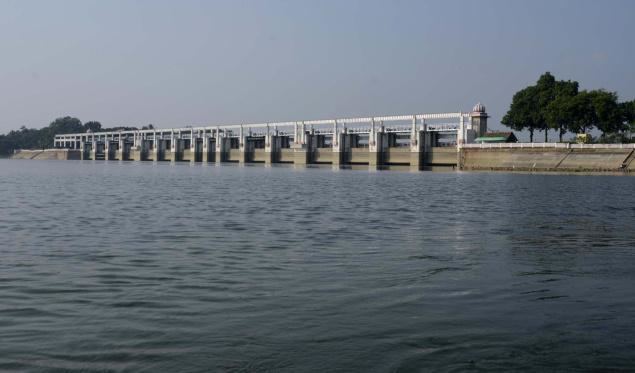
Chennai has gained a major boost to its water security as a cluster of key reservoirs — led by Poondi Reservoir in Tiruvallur district — have nearly filled up following abundant rainfall and a pause on inflows from upstream sources. This replenishment promises to steady drinking water supply for the city and offers breathing space to planners for the coming year.
Officials from the Tamil Nadu Water Resources Department (WRD) confirm that Poondi now holds around 3,114 million cubic feet (mcft), which is roughly 96 percent of its full capacity of 3,231 mcft. Given that Poondi supplies much of Chennai’s water needs (eventually channelled via Chennai Metropolitan Water Supply and Sewerage Board — MetroWater), the replenishment is a significant turnaround from earlier deficits. The improved condition is not limited to Poondi. Across six major supply reservoirs — including Veeranam Tank, Red Hills Reservoir, Cholavaram Lake and others — total storage now stands around 11,749 mcft against a combined capacity of 13,222 mcft. This positions Chennai to comfortably meet its monthly demand of approximately 1,000 mcft for nearly 11 months. With supply more plentiful, MetroWater has resumed delivering about 1,230 million litres per day (mld), up from 1,091 mld at the same time last year. While Poondi lacks its own treatment plant, water from there is released daily (around 40 mld) to Red Hills, where it is processed before distribution. This logistical arrangement highlights the importance of integrated reservoir and treatment infrastructure.
Experts note that this turnaround owes much to two factors: stronger-than-expected monsoon rains across Poondi’s catchment and a strategic decision by WRD to pause water release from upstream Kandaleru Reservoir in Andhra Pradesh. The pause allowed rainfall alone to recharge local lakes, reducing reliance on inter-state inflows. From an urban resilience perspective, the restoration of reservoir levels is more than just a short-term reprieve — it underscores the potential of sustainable water management in Indian cities that are increasingly vulnerable to climate variability. Capacity remains, however, finite. The WRD has, for years, flagged the need to increase storage at Poondi (by raising the full-reservoir level by two feet) — a project that could add around 0.74 tmcft if implemented. But as of now, the plan remains pending approval.
For Chennai’s rapidly growing population, this moment offers a breathing space — yet it should also serve as a warning. As urban expansion intensifies, surface water resources remain critical to a zero-carbon, climate-resilient future. Policymakers should capitalise on this reprieve to accelerate reservoir upgrades, restore catchment areas, and deploy integrated water-conservation strategies. In short, Chennai’s temporary reprieve from water stress, driven by fortuitous rainfall and prudent management, demonstrates what well-timed governance and nature can deliver — but long-term stability will demand sustained investment and planning.
Also Read : Lucknow Breathes Poor Air Again This December
