Chennai Residents Revive Neglected GCC Park Wall With Civic Responsibility Message
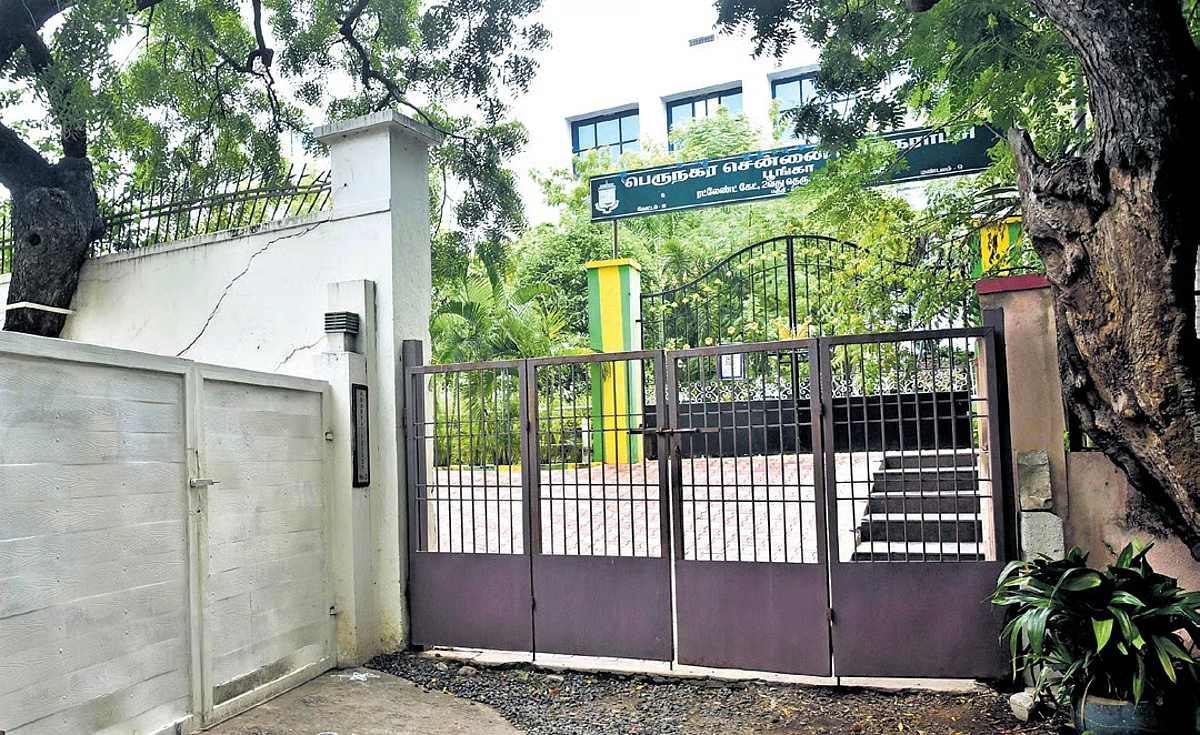
In Chennai’s Thiruvanmiyur neighbourhood, residents have transformed a long-neglected corporation park wall into a vibrant canvas promoting civic responsibilities. Once plagued by littering and public urination, the 19-panel wall now features colourful murals warning against wasteful water use, unsafe driving, and public defecation, reflecting a community-led effort to reclaim and beautify public space. The initiative, driven entirely by local volunteers in partnership with a non-profit, illustrates how grassroots action can complement municipal efforts and inspire civic engagement.
The wall, which had long been ignored and misused, had become an eyesore along the park’s perimeter, drawing complaints from walkers and residents alike. While Greater Chennai Corporation (GCC) had installed railings six months ago to protect the boundary, the visual and functional neglect remained, prompting local residents to step in. “We wanted to reclaim and own this space, making it both appealing and purposeful for the community,” said a senior resident who participated in the project.The initiative was spearheaded by Kalakshetra Colony residents in collaboration with Karam Korpom, a non-profit dedicated to public space beautification. On a Saturday afternoon, volunteers of all ages—approximately 20 in total—took up paintbrushes and buckets of vibrant colours to transform 19 concrete panels along the wall. The murals convey clear messages against water wastage, riding without helmets, drunk driving, littering, and public urination, blending artistic expression with civic education.
Funding for the project was sourced entirely from the residents themselves, who pooled ₹24,000 to cover painting materials. Beyond aesthetics, the community has initiated ongoing maintenance plans, including assigning caretakers to water plants along the wall and ensure the space remains visually engaging. The involvement of children and teenagers underscores how creative initiatives can also foster civic consciousness among younger generations.According to a trustee of Karam Korpom, art is a medium that can communicate public values effectively, particularly when traditional civic messaging falls short. “Any neglected urban space can be transformed through collaborative artistic engagement,” he said, noting that such interventions also support municipal efforts by sharing the responsibility of public upkeep.Local councillors and city officials welcomed the effort, highlighting how citizen-led projects can strengthen community cohesion and reduce administrative burdens. Urban planners emphasise that participatory approaches like this not only improve the visual environment but also cultivate long-term stewardship, inclusivity, and shared accountability in urban neighbourhoods.
Experts argue that reclaiming neglected public spaces through artistic engagement enhances sustainability by discouraging misuse, encouraging environmentally responsible behaviour, and creating spaces that are safer and more accessible to all residents. The Thiruvanmiyur mural now stands as a testament to how small, community-driven interventions can yield meaningful improvements in civic culture and urban well-being, demonstrating that citizen ownership is key to the success of sustainable city initiatives.