


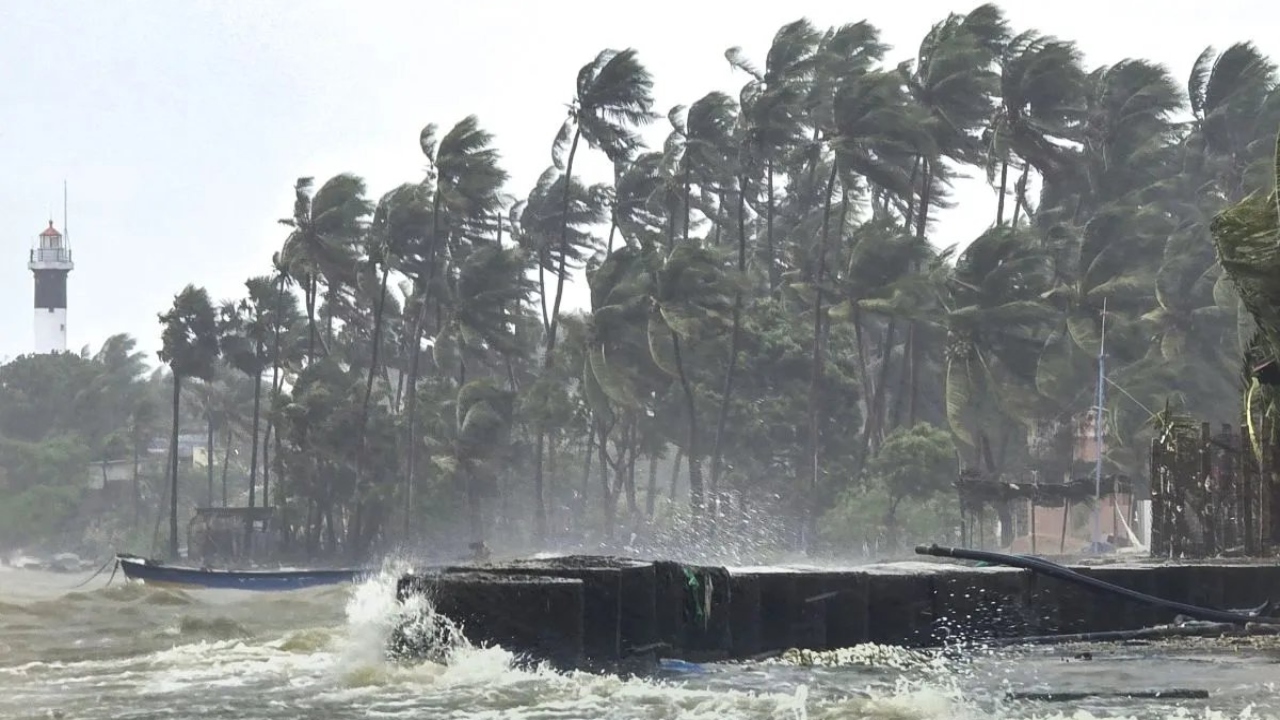
A slow-moving deep depression over the Bay of Bengal is expected to curve back towards the Chennai coastline, prompting authorities to issue a red alert for four districts amid forecasts of extremely heavy rainfall and strong winds. Schools and colleges across Chennai, Tiruvallur, Kancheepuram and Chengalpattu were closed on Tuesday as a precautionary measure, with officials urging residents to remain indoors and avoid non-essential travel.
The weather system, a weakened remnant of Cyclone Ditwah, has remained largely stationary near the Tamil Nadu–Puducherry coast, increasing the risk of prolonged rain bands hovering over metropolitan Chennai. According to an official from the weather department, the system is likely to weaken gradually, yet its slow movement could intensify local flooding in low-lying neighbourhoods and coastal settlements. Overnight showers have already led to significant waterlogging across major arterial roads, neighbourhood streets and public spaces. Meteorological data shows that localities such as Ennore recorded more than 26 centimetres of rain in the last 24 hours. Urban infrastructure teams were deployed early on Tuesday to clear fallen trees and restore blocked stormwater drains. Despite the response, civic engineers admit that gaps in drainage capacity continue to leave several pockets of the city highly vulnerable during intense rainfall events. In rural belts bordering the affected coastal zone, wind damage has affected agricultural livelihoods. In Mayiladuthurai district, farmers reported large-scale flattening of banana crops an economic setback for those dependent on seasonal harvests. A horticulture department official confirmed that more than 37 hectares of cultivated area were inundated.
Farmers said losses of this nature have become increasingly frequent due to erratic weather conditions and hope financial support will not be delayed. Meanwhile, the impact of Cyclone Ditwah has been far more devastating in Sri Lanka, where hundreds have died and many remain missing following widespread flooding and infrastructure collapse. India has deployed 53 tonnes of relief supplies under Operation Sagar Bandhu to support emergency response and humanitarian needs in the island nation. Urban experts say frequent extreme weather events are reshaping conversations on resilience, especially in rapidly expanding coastal cities. A senior urban planner noted that “high-density development without climate-responsive design leaves cities exposed. Drainage, land use and mobility networks must evolve alongside climate realities.”
For Chennai, authorities emphasise continued vigilance over the next 24 hours as more heavy showers are expected. As climate-linked weather patterns intensify across South Asia, integrated urban planning, robust stormwater systems and equitable disaster management will be crucial for building safer and more inclusive cities.
Also Read : https://urbanacres.in/chennai-sees-big-rise-in-lake-storage-after-rains/
Chennai Residents Confront Flooding Challenges Today
