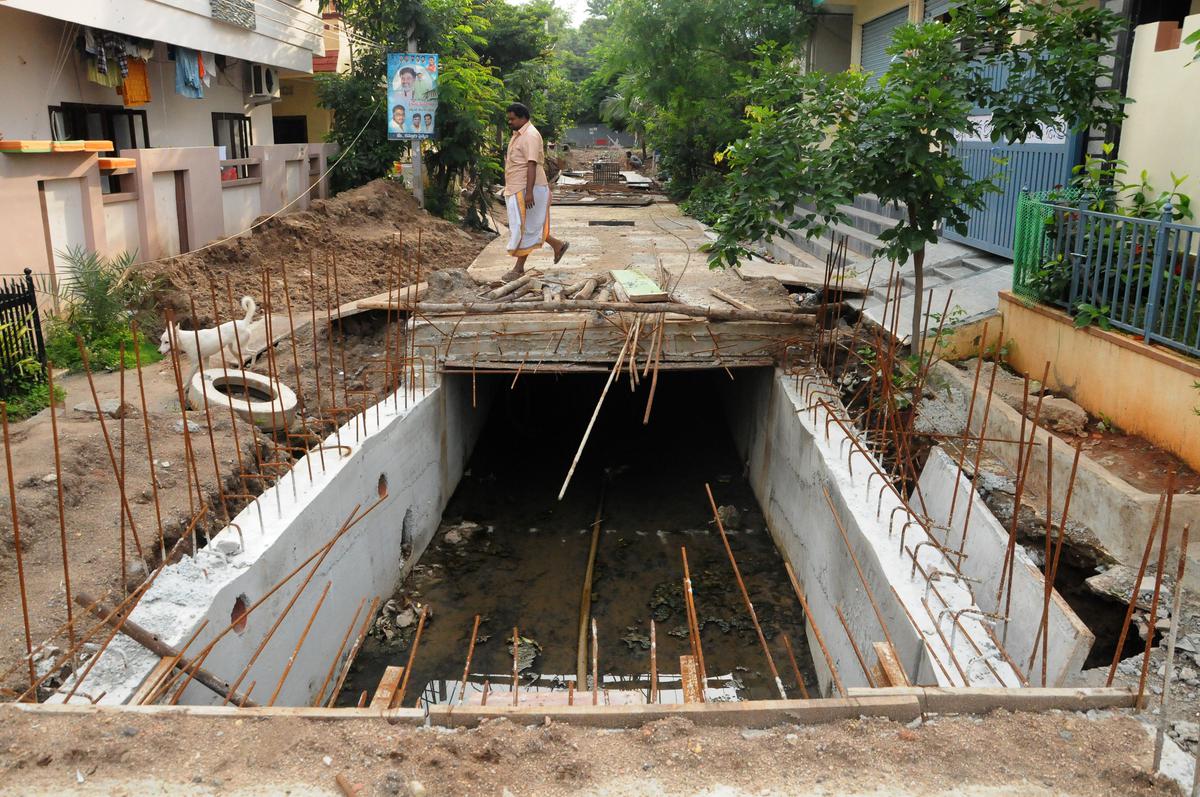
Chennai Residents Battle Overflowing Sewage Amid Slow Drain Works
Dug-up roads and sewage-choked trenches have disrupted life for residents in Chennai’s Arumbakkam locality, where ongoing stormwater drain upgrades are progressing slowly despite the onset of monsoon. Complaints have mounted over damaged pipelines, stagnant sewage, and unsafe roads, turning neighbourhoods into potential health hazards. As rainwater continues to flood low-lying areas, locals are urging civic agencies to speed up repairs before the Northeast Monsoon intensifies flooding risks across this vulnerable part of the city.
Arumbakkam, situated in one of Chennai’s most flood-prone belts, has witnessed recurring waterlogging with every rainfall. While residents welcomed efforts to overhaul the stormwater drainage network, they say sluggish execution is worsening the area’s monsoon preparedness. Several inner streets remain inundated not just with rainwater but also untreated sewage spilling into open trenches. This dual threat has made walking or driving hazardous, especially on arterial roads like Indira Gandhi Street, where a motorist recently fell into an open trench filled with wastewater. Locals point out that the situation worsens during even mild spells of rain, reflecting poor planning and slow coordination between civic departments. The prolonged construction has exposed critical infrastructure gaps. Dug-up roads have led to accidental damage of underground water and sewage pipelines, triggering fresh leaks and stagnation across residential zones.
Streets such as Duraipillai Street, Sri Sakthi Nagar, and various lanes within Venkatakrishna Nagar now double as sewage channels, with overflowing wastewater contaminating the narrow paths residents must navigate daily. This environmental degradation not only threatens public health but also undermines the city’s broader sustainability goals by allowing untreated effluents to enter the stormwater system, further polluting Chennai’s already strained urban ecosystem. Public frustration has grown due to the absence of visible progress, despite repeated complaints. Residents claim that coordination between civic agencies like the Greater Chennai Corporation and Chennai Metrowater is too slow to match the urgency of the crisis. While officials have acknowledged some pipeline damage, their assurances of pumping out sewage and fixing leaks are not backed by consistent on-ground improvements.
The growing perception is that bureaucracy and poor oversight are delaying necessary infrastructure work, putting entire neighbourhoods at risk of both flooding and disease outbreaks in the coming weeks. As Chennai braces for the Northeast Monsoon, completing drain upgrades and restoring safe roads in Arumbakkam must become a civic priority. The situation calls for immediate and transparent communication from city agencies, stricter oversight of ongoing works, and an integrated drainage and sanitation plan that reduces disruption to daily life. Only a rapid, coordinated response can prevent a minor civil project from escalating into a full-scale public health and climate resilience failure in one of Chennai’s most flood-vulnerable zones.