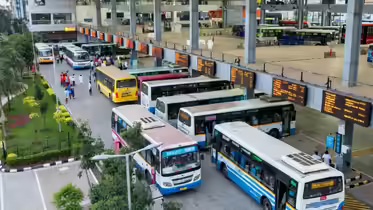
Chennai Region Launches Modern Bus Termini Network
In a significant step for suburban mobility, new bus termini have been inaugurated in Tiruttani and Tiruvallur municipalities, aiming to reduce town-centre traffic congestion and streamline public transport operations. The development reflects a growing emphasis on modernising infrastructure to support sustainable and inclusive urban mobility across rapidly expanding satellite towns around Chennai.
The Tiruttani facility replaces the older Arignar Anna bus stand located at the town centre, moving operations to a purpose-built complex along the Tiruttani–Arakkonam Road. The ₹20.97 crore project, developed by the municipality, is designed to accommodate all local and intercity bus services, reducing congestion in the central business area and providing improved commuter access. Urban planners suggest that relocating termini away from crowded town centres can significantly enhance pedestrian safety and reduce vehicular emissions by minimising idle times and bottlenecks.
Similarly, Tiruvallur has seen the completion of a new ₹36 crore bus terminus on the Tiruvallur–Uthukkottai corridor, replacing the existing Thiru Vi Ka stand in the heart of the town. The terminus will serve as the exclusive point for all bus operations from March 30, with feeder town buses connecting the terminus to the nearby railway station. Experts highlight that such integration between bus and rail networks is essential for fostering last-mile connectivity, which is often a critical barrier to higher public transport adoption in peri-urban areas. Beyond improving commuter convenience, the new infrastructure is expected to create economic ripple effects. Local businesses along the old bus routes may experience reduced footfall, while new commercial opportunities are likely to emerge near the termini. Urban development specialists emphasise the importance of complementary zoning and commercial planning to ensure equitable economic benefits across towns.
From an environmental perspective, the design of modern termini can contribute to lower carbon footprints. Facilities that include shaded waiting areas, efficient circulation paths, and better scheduling systems help reduce congestion-induced emissions, aligning with broader goals of climate-resilient, zero-carbon urban transport networks. City officials note that while the termini are operational, ongoing monitoring of commuter flows, safety compliance, and integration with local transport services will be crucial. Analysts stress that these projects exemplify a shift towards people-centric urban planning, where infrastructure decisions balance economic growth, mobility efficiency, and environmental sustainability. The success of these initiatives may serve as a model for other rapidly growing suburban towns in the Chennai metropolitan region.