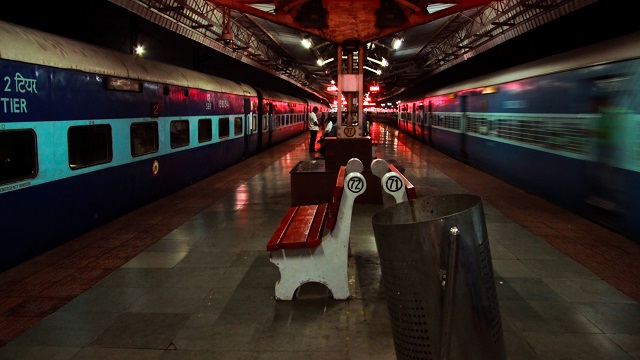
Chennai Rail Services Rerouted Impacting Night Travellers
Chennai’s suburban rail network will undergo temporary operational changes as redevelopment work at Egmore railway station begins, affecting train schedules and commuter routines across the city. From midnight on February 20, platforms serving electric multiple unit (EMU) trains will be reorganised for the next 45 days, with knock-on effects for traffic patterns, public transport planning, and local businesses.
The Southern Railway has confirmed that platforms 10 and 11 will be closed for construction, with EMU trains on the Chennai Beach–Tambaram and Chennai Beach–Chengalpattu lines redirected to platforms 5 and 6. Trains running in the city-bound direction will depart from platform 5, while outbound services will use platform 6. Existing train numbers and schedules are suspended, replaced with revised timings for the duration of the redevelopment period, which concludes on April 5. No special Sunday schedules will be maintained during this interval.
Urban transport experts note that such temporary disruptions are a critical challenge for megacities seeking sustainable mobility. “Reconfiguring high-frequency commuter rail operations requires careful coordination with local buses, last-mile transport, and traffic management,” a senior railway official explained. In response, 50 additional buses have been deployed, covering key routes from Royapuram to Kilambakkam and Pallavaram to Chengalpattu via Tambaram, to mitigate commuter inconvenience and maintain network connectivity. The operational adjustments underscore the broader significance of Chennai’s suburban railway system as a backbone for low-carbon mobility. Electric trains not only reduce road congestion and urban air pollution but also support inclusive access to employment hubs, educational institutions, and commercial zones. Planners point out that ensuring uninterrupted service during station redevelopment is critical for both economic activity and equitable urban mobility.
For local businesses and informal vendors around Egmore station, the platform shift may alter footfall patterns temporarily, affecting revenues and delivery logistics. Meanwhile, commuters reliant on precise train timings must adapt to revised schedules, particularly those travelling during late-night and early-morning hours. Real estate analysts observe that improvements in station infrastructure, although disruptive in the short term, can enhance accessibility and property value in surrounding areas once the project is completed. The redevelopment at Egmore also highlights a long-term urban infrastructure challenge: maintaining high-capacity public transport while retrofitting ageing facilities. Observers suggest that similar interventions should integrate digital scheduling, passenger flow management, and enhanced intermodal connectivity to minimise disruption and strengthen resilience. As the city navigates this temporary operational shift, stakeholders from civic authorities to commuters are expected to recalibrate travel plans, while monitoring the impact on traffic flows, public transport efficiency, and economic activity until the redevelopment work concludes in early April.