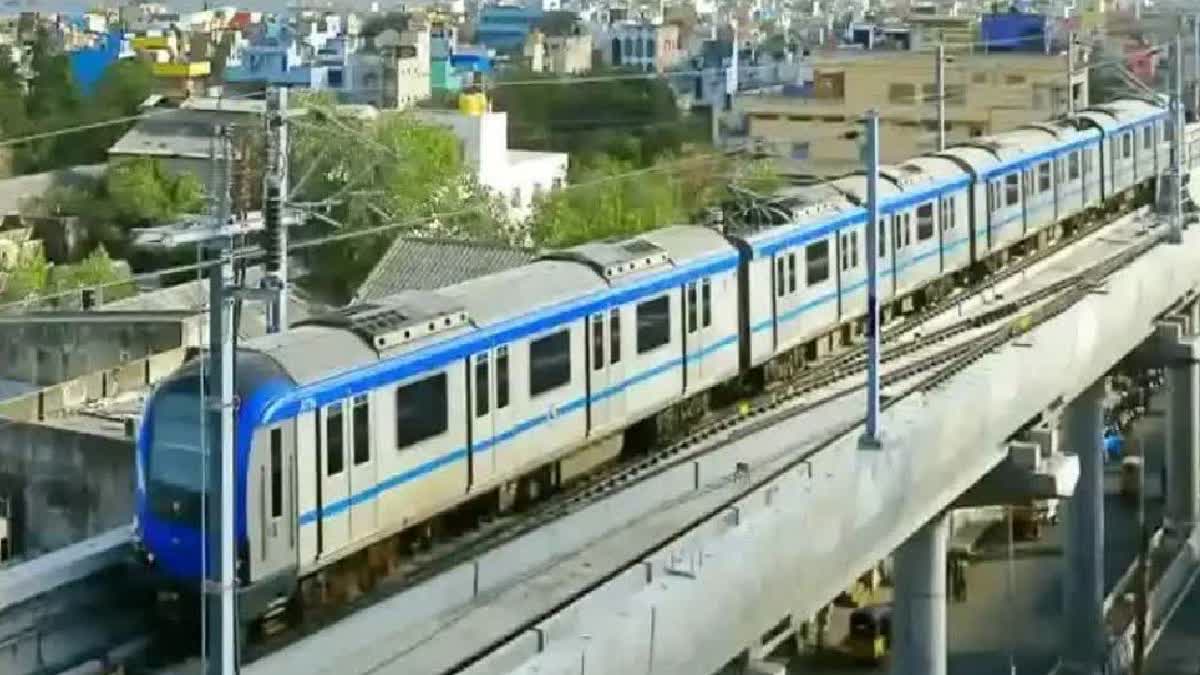
Chennai’s long-delayed rail connection between Velachery and St Thomas Mount has entered a decisive phase, with Southern Railway initiating internal inspections ahead of a mandatory safety clearance. The nearly five-kilometre Velachery–St Thomas Mount MRTS extension, once operational, is expected to integrate the elevated corridor with suburban and Metro networks a move that could reshape commute patterns across south Chennai.
Railway officials confirmed that multi-departmental teams are reviewing track alignment, signalling systems, power supply and station infrastructure before the Commissioner of Railway Safety (CRS) conducts the statutory inspection. Such pre-clearance checks are routine but critical, particularly for elevated corridors where structural and operational reliability must meet national standards before passenger services begin. The Velachery–St Thomas Mount MRTS extension has faced repeated delays despite civil works nearing completion months ago. Earlier structural load tests were undertaken to validate the safety of select elevated spans. However, scheduling the CRS inspection, a prerequisite for commercial operations, has taken longer than anticipated, pushing back multiple tentative launch timelines.
For Chennai’s transport ecosystem, the significance of this link extends beyond operational readiness. St Thomas Mount functions as a strategic interchange, connecting suburban electric multiple unit (EMU) services and the city’s Metro Rail network. Direct MRTS access to this node could reduce interchange friction, shorten travel time for daily commuters, and ease pressure on arterial roads such as GST Road and Velachery Main Road. Urban planners note that improved multimodal connectivity tends to stimulate transit-oriented development around interchange stations. Residential and mixed-use real estate in Velachery, Adambakkam and surrounding neighbourhoods may benefit from stronger rail integration, potentially increasing land values while encouraging denser, more sustainable growth patterns. For a city grappling with congestion, flooding vulnerabilities and rising private vehicle dependence, rail-based mobility remains central to climate-resilient planning.
The broader MRTS Phase II programme was sanctioned in the mid-2000s with the intent of extending the elevated corridor and integrating it seamlessly with other mass transit systems. Yet land acquisition hurdles and coordination challenges have slowed progress. Industry experts argue that such project gestation delays underline the need for streamlined institutional frameworks in urban infrastructure delivery. Once the CRS grants approval, services on the Velachery–St Thomas Mount MRTS extension can begin without further structural interventions. The final operational date will hinge on regulatory clearance and commissioning protocols. If delivered efficiently, the corridor could serve as a reminder that incremental network completions even short stretches can unlock disproportionate gains in mobility, productivity and environmental performance. For Chennai, the test now lies not just in launching the line, but in ensuring reliable frequency, safe station access and seamless interchange the essentials of a people-first urban transport system.