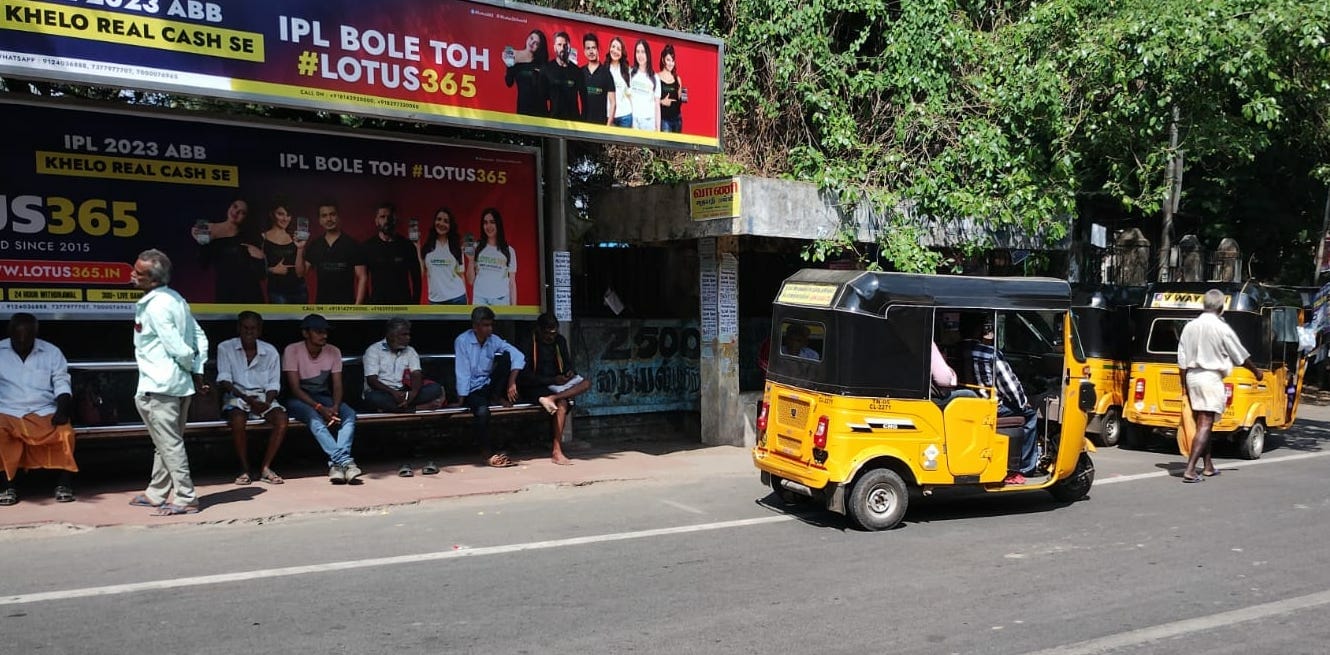
Chennai Public Transport Shelters Rendered Unusable By Parking
Chennai is one of the city’s busiest neighbourhoods, bus shelters intended to provide safe and accessible waiting areas for commuters have been rendered largely unusable due to encroachments. The Saidapet Court bus stop, designed to serve thousands of daily passengers, is now dominated by illegally parked vehicles, informal service vendors, and other obstructions, forcing commuters to wait on the carriageway or pavements.
Urban mobility experts say this situation underscores a persistent challenge in Chennai: the lack of coordinated management between transport infrastructure development and enforcement of traffic regulations. While city authorities have invested in modern bus shelters to improve last-mile connectivity and commuter safety, the absence of effective policing has resulted in these assets being underutilised.
The encroachments, which include private vehicles, autorickshaws, and informal businesses, have not only compromised commuter safety but also created operational difficulties for public transport services. Buses are reportedly unable to dock at designated stops, disrupting boarding and alighting routines. Urban planners note that such informal occupation of transport infrastructure reduces the efficiency of public transit and increases pedestrian exposure to vehicular hazards, particularly for vulnerable groups such as senior citizens and students. A senior city official highlighted that the shelters fall under the maintenance remit of the State Highways Department, while enforcement against illegal parking is the responsibility of traffic police. Coordination gaps between civic bodies and law enforcement agencies often leave such projects ineffective despite significant public investment. Experts suggest that interventions such as structural barriers, dedicated enforcement teams, and digital monitoring could improve compliance and preserve the intended function of these shelters.
From an economic and urban development perspective, these encroachments represent lost value from public infrastructure investment. Each bus shelter is designed to support efficient urban mobility, reduce wait times, and enhance comfort, contributing to broader goals of equitable and sustainable transport. Their misuse signals both a governance gap and a missed opportunity to strengthen climate-resilient, people-first urban planning. Urban analysts emphasise that resolving such challenges requires integrated planning that combines infrastructure provision with proactive regulation, community engagement, and long-term enforcement strategies. For Chennai, scaling such measures could significantly improve pedestrian safety, optimise public transport efficiency, and ensure that sustainable mobility investments deliver the intended societal benefits.