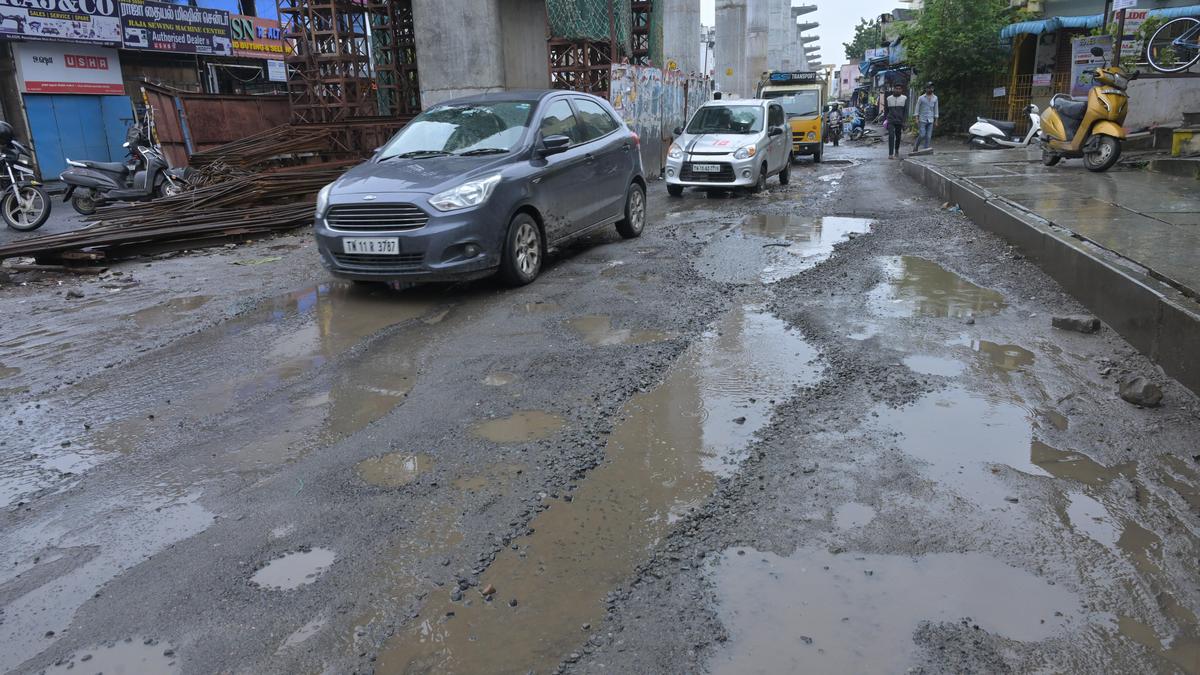
A critical 500-metre corridor linking the MLA hostel to the city’s Press Club in Chepauk is showing signs of prolonged neglect, raising concerns about urban planning and civic accountability. This stretch, which connects two heavily trafficked bus routes and passes prominent institutions including a historic cricket stadium, a state-run broadcasting office, and university campuses, is marked by potholes, encroachments, and poorly maintained public spaces. Commuters and professional visitors alike are reporting accessibility and safety challenges along the route.
Urban observers point out that the deteriorating condition highlights broader gaps in municipal infrastructure management. While the corridor falls under the maintenance purview of the state public works department (PWD), it has not been integrated into the city corporation’s civic maintenance plan, creating a governance grey zone. A senior urban affairs official noted that such small stretches often get overlooked in larger infrastructure programmes, but their functional importance is disproportionate, given the daily footfall and the economic and civic activity concentrated along them. Beyond basic road conditions, environmental and public health issues are evident. Encroached pavements are littered with waste, and illegal stabling of horses along portions of the stretch has created odour and hygiene challenges, contradicting municipal regulations for animal housing. Urban planners argue that such gaps undermine the city’s efforts toward inclusive, climate-resilient, and zero-carbon urban spaces, as unplanned encroachments and poorly maintained surfaces exacerbate environmental degradation and reduce walkability.
From an economic standpoint, the corridor functions as a vital connector for media, education, and cultural establishments, which are integral to the local knowledge economy. A transport and urban infrastructure expert highlighted that streets linking institutional clusters contribute to both formal and informal economic activity, and prolonged neglect can erode investor confidence, reduce footfall, and indirectly affect nearby real estate values. The disparity between the maintenance of institutional campuses and adjacent public corridors has also drawn attention to equity concerns in urban upkeep. Citizens’ groups emphasise that roads serving high-profile institutions should not be prioritised over public-access routes, and that uniform maintenance protocols are essential for fostering inclusive urban growth.
Civic authorities indicate that the corridor’s future rehabilitation depends on administrative transfers between state and municipal agencies. Urban development analysts suggest that integrating the stretch into the city corporation’s maintenance plan, combined with targeted improvements such as drainage, lighting, and pedestrian-friendly surfaces, could restore functionality while supporting sustainable city objectives. As Chennai continues expanding its urban infrastructure, small but strategically significant corridors like this one are emerging as litmus tests for equitable, climate-conscious, and citizen-focused city planning.