


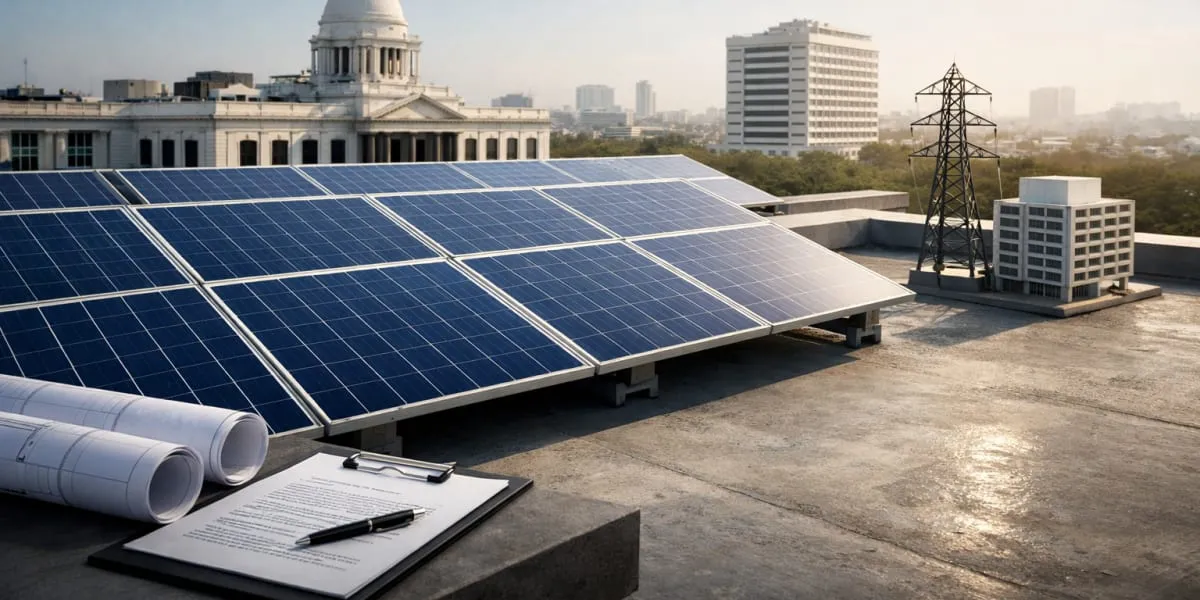
Chennai Port Moves Ahead With Rooftop Solar Plan
Authorities managing the historic harbour in Chennai have initiated the process to deploy solar power infrastructure across port buildings, signalling a broader shift toward low-carbon operations within India’s logistics sector.
The planned Chennai Port rooftop solar project proposes installing solar panels across suitable rooftops within the port estate, with private developers expected to build and operate the system under a long-term service model.Officials overseeing the initiative said the project is being structured under a Renewable Energy Service Company framework. In this arrangement, a private operator finances, installs and maintains the solar systems while the port purchases the electricity generated. Such models are increasingly used by public infrastructure agencies to adopt renewable energy without large upfront investment.The Chennai Port rooftop solar project is expected to deliver around two megawatts of generation capacity once operational. Rooftop installations will likely be distributed across administrative buildings, warehouses and operational structures inside the port campus. This decentralised approach allows existing infrastructure to generate power while reducing dependence on grid electricity sourced from fossil fuels.Energy specialists note that ports are among the most energy-intensive nodes in urban infrastructure. Lighting systems, cargo equipment, administrative facilities and logistics operations require continuous electricity supply. Integrating renewable energy into such facilities can significantly reduce operational emissions while improving long-term energy security.
Chennai Port Authority manages one of the country’s oldest maritime gateways and remains a critical logistics hub for southern India’s manufacturing and trade ecosystem. The port handles a wide mix of cargo including automobiles, containers and bulk commodities that support industrial clusters across Tamil Nadu and neighbouring states.Urban planners view projects such as the Chennai Port rooftop solar project as part of a broader trend where major infrastructure assets are adopting clean energy solutions. Transport hubs including airports, metro networks and ports are increasingly installing solar panels on available roof surfaces, parking areas and unused land parcels.Experts say rooftop solar offers a practical route for infrastructure facilities located within dense cities where land for large solar farms is limited. By utilising existing building space, organisations can generate renewable power close to the point of consumption, reducing transmission losses and grid stress.For cities like Chennai, which face rising energy demand from expanding industries and urban populations, distributed renewable energy systems can contribute to long-term climate resilience. Infrastructure institutions are also under growing pressure to align operations with national sustainability targets and carbon-reduction commitments.The tendering process will determine the developer responsible for engineering, financing and operating the solar system over a defined contract period. Officials involved in the process said proposals will be evaluated on technical capability, project efficiency and the tariff offered for supplying solar electricity.
If implemented successfully, the Chennai Port rooftop solar project could demonstrate how legacy infrastructure can adapt to the changing energy landscape. As ports modernise logistics systems and upgrade facilities, renewable energy integration is increasingly becoming part of the broader transformation of urban infrastructure.
Also Read:Chennai Petroleum Stock Rally Draws Investor Attention
Chennai Port Rooftop Solar Plan Signals Clean Energy Shift
