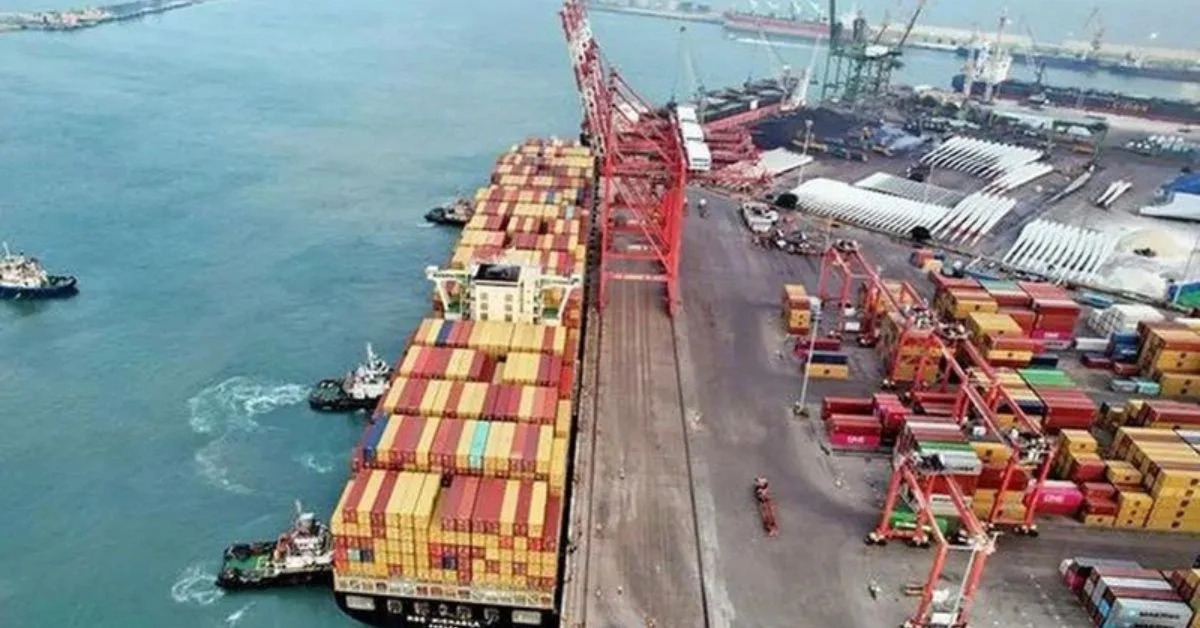
Chennai’s principal maritime gateway is preparing to relaunch its long-pending outer harbour project, commissioning a fresh detailed project report expected by June and revising costs to nearly ₹10,000 crore. The move signals a renewed push to reposition the port for ultra-large container vessels, a shift that could reshape cargo flows, logistics efficiency and industrial competitiveness across southern India.
Officials familiar with the development indicate that while the broad engineering design remains intact, financial projections and implementation structures are being recalibrated to reflect current market conditions. Earlier estimates had placed the investment closer to ₹8,000 crore. Escalating construction costs and updated funding models have now pushed the projected outlay significantly higher. The proposed outer harbour project is central to Chennai Port’s ambition to handle container ships exceeding 20,000 TEU capacity. Such vessels require deeper drafts and longer berths than the port’s existing inner harbour can currently provide. Without these upgrades, shipping lines may continue to prefer competing transshipment hubs or larger ports along India’s western and eastern seaboards.
Industry analysts note that the capacity constraints at older Indian ports are increasingly shaping trade competitiveness. As global shipping consolidates into larger vessels to reduce per-unit costs and emissions, infrastructure mismatches can translate into longer turnaround times and higher logistics expenses. By enabling larger ships to berth directly, the outer harbour project could reduce transshipment dependency and improve supply chain resilience for exporters in Tamil Nadu and neighbouring states. To overcome earlier funding hurdles, the Chennai Port Authority is evaluating the Hybrid Annuity Model (HAM), a public–private partnership framework in which the public authority bears a majority of project costs while private developers finance and operate the remainder. Under the model under consideration, the port would contribute around 60% of the capital expenditure, with the balance raised by the concessionaire. Previous attempts had stalled partly because of the heavy upfront burden placed on private bidders.
Beyond commercial implications, the project will require environmental clearances and central government approvals before tenders can be issued. Given Chennai’s vulnerable coastline and history of cyclones, climate resilience and coastal impact assessments are expected to play a significant role in project appraisal. Urban planners argue that any large-scale maritime expansion must integrate shoreline protection, sediment management and sustainable dredging practices to avoid long-term ecological stress. If executed in phases as planned, the outer harbour project could expand cargo handling capacity, generate employment across logistics and warehousing clusters, and strengthen Chennai’s position within India’s maritime economy. For a city balancing industrial growth with climate risk, the coming months will determine whether this renewed push translates into infrastructure that is not only larger, but smarter and more resilient.