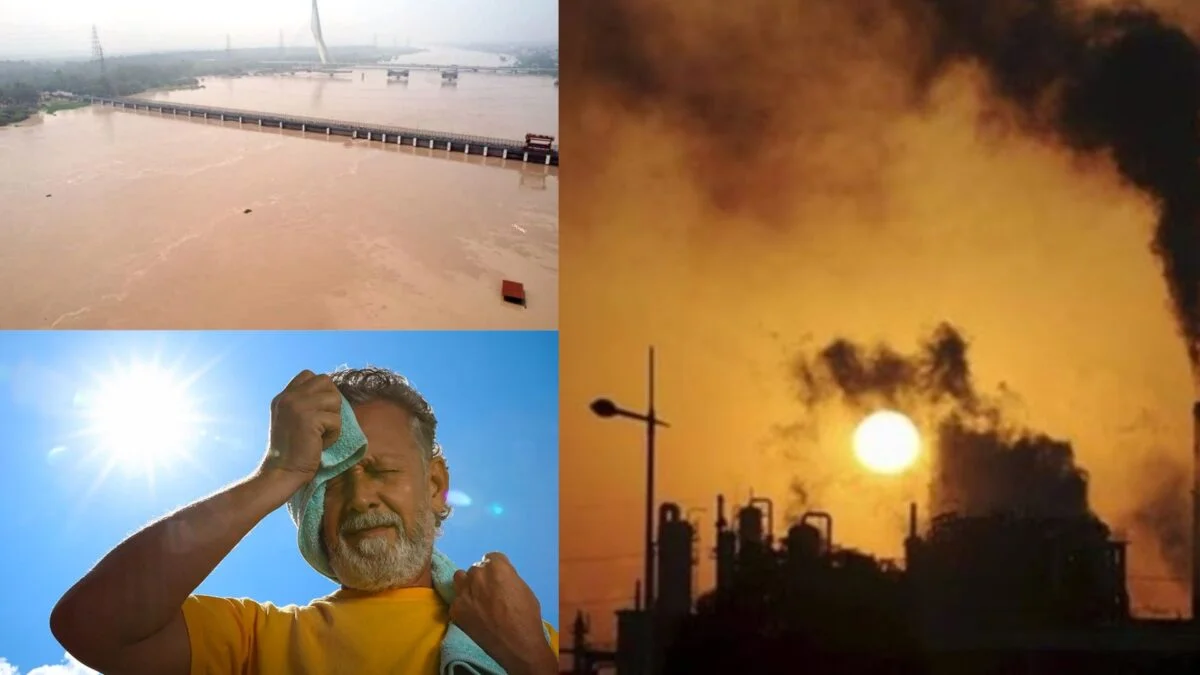
Chennai Pollution Threatens Monsoon Patterns Impacting Rainfall And Water Security
Chennai’s rapidly deteriorating air quality is now raising concerns that extend beyond public health, with experts suggesting that pollution may be subtly altering the city’s monsoon rainfall patterns. The phenomenon, still under scientific investigation, points to an intricate link between emissions, cloud formation, and precipitation efficiency an interaction that could shape the future of the city’s water security.
Airborne pollutants in Chennai primarily stem from vehicle exhaust, unregulated construction dust, and industrial emissions. Among the most harmful are fine particulate matter (PM2.5), capable of lingering in the atmosphere for extended periods. Meteorologists note that these microscopic particles not only damage respiratory health but also act as cloud condensation nuclei tiny platforms around which moisture condenses.When excessive particles are present, clouds tend to form with numerous small droplets instead of fewer, larger ones. This process can slow raindrop formation, leading to lighter showers, delayed rainfall, or precipitation being displaced to neighbouring regions. In Chennai, such effects could have profound implications during the northeast monsoon its most crucial rainfall season, spanning October to December.
Climatologists tracking the city’s weather patterns have observed that years with severe smog often coincide with irregular rainfall. These include delayed monsoon onset and reduced rain intensity. While it remains difficult to attribute this solely to pollution given the influence of wind patterns, sea surface temperatures, and global climate events such as El Niño the correlation is strong enough to warrant further research.Globally, cities like Beijing, Bangkok, and Delhi have exhibited similar trends, where poor air quality disrupted rainfall efficiency. Interestingly, in some cases, prolonged pollution has led to sudden bursts of intense rain once conditions finally permitted droplet merging posing risks of flash floods.
The consequences for Chennai are twofold. First, reduced rainfall can worsen the city’s water stress, especially during dry spells. Second, diminished showers mean fewer opportunities for natural air cleansing, leaving pollutants trapped and aggravating health risks. Officials from environmental monitoring agencies emphasise that emission control measures could deliver a “double dividend”improving public health and potentially stabilising local climate patterns.
Policy measures suggested by experts include enhancing public transport systems, enforcing stricter vehicular emission norms, regulating construction activity, and encouraging industries to adopt cleaner production methods. Such interventions, they say, align not only with climate resilience goals but also with the broader vision of building sustainable, equitable, and liveable cities.While the science behind pollution’s influence on monsoon patterns continues to evolve, the stakes for Chennai are clear. Addressing air quality challenges now could safeguard both the city’s breathable air and its most vital seasonal rains for the decades ahead.