


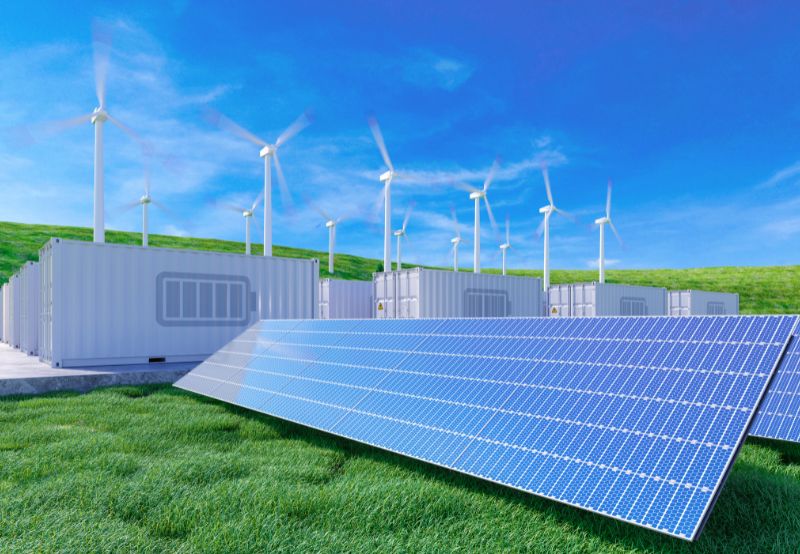
Chennai Petroleum Corporation Limited has initiated a formal assessment to secure 100 MW renewable energy on a round-the-clock basis for its Manali refinery, marking a significant step in decarbonising one of Tamil Nadu’s major industrial complexes. The proposed study will evaluate how wind and solar generation can be combined to ensure uninterrupted supply — a move that could reshape industrial power sourcing in the Chennai metropolitan region.
The refinery, located in north Chennai’s industrial belt, is among the city’s largest energy consumers. Securing 100 MW renewable energy through hybrid configurations would reduce dependence on conventional grid power and fossil fuel-based captive generation. For a city grappling with air quality pressures and climate vulnerability, industrial clean energy transitions are emerging as a critical lever alongside electrified transport and green buildings.Officials familiar with the tender process said the pre-feasibility study will be undertaken in two stages, each covering 50 MW renewable energy capacity. The selected consultant will assess current and projected electricity demand at the refinery and identify technical pathways to deliver firm power using variable renewable sources. Round-the-clock supply typically combines solar generation during daytime hours with wind or storage-backed capacity to ensure reliability at night.
Beyond technical sizing, the mandate includes examining regulatory frameworks and identifying a commercially viable structure. Options under review include captive use, group-captive arrangements and potential joint development models. The consultant will also prepare detailed financial projections, including cost estimates within defined accuracy limits and indicators such as net present value and internal rate of return. These metrics are central to determining whether 100 MW renewable energy can deliver both emissions reductions and long-term cost stability.The evaluation will follow a quality and cost-based selection model, placing greater emphasis on technical competence than price competitiveness. Eligibility norms require prior advisory experience in large-scale plant sizing, reflecting the complexity of designing hybrid renewable portfolios for energy-intensive industries.
Energy economists note that Tamil Nadu already has one of India’s highest installed wind capacities, while solar parks in the southern districts are expanding rapidly. Linking industrial demand in Chennai to renewable assets across the state could reduce transmission bottlenecks and stimulate green investment corridors. Such projects also create downstream economic opportunities in grid integration, storage systems and clean-tech services.Urban planners argue that decarbonising heavy industry is essential if metropolitan regions are to meet long-term climate resilience goals.
Industrial estates account for a significant share of city-level emissions, yet remain under-addressed in urban sustainability planning. A successful 100 MW renewable energy model at Manali could serve as a template for other refineries, petrochemical clusters and manufacturing hubs across India.The pre-feasibility findings, expected within weeks of award, will determine whether the refinery proceeds to procurement and implementation. For Chennai, the outcome could signal how legacy industrial infrastructure aligns with the next phase of India’s energy transition.
Also Read:Premium Push Masks Volume Slowdown in Residential Realty
Chennai Petroleum advances 100 MW renewable energy
