


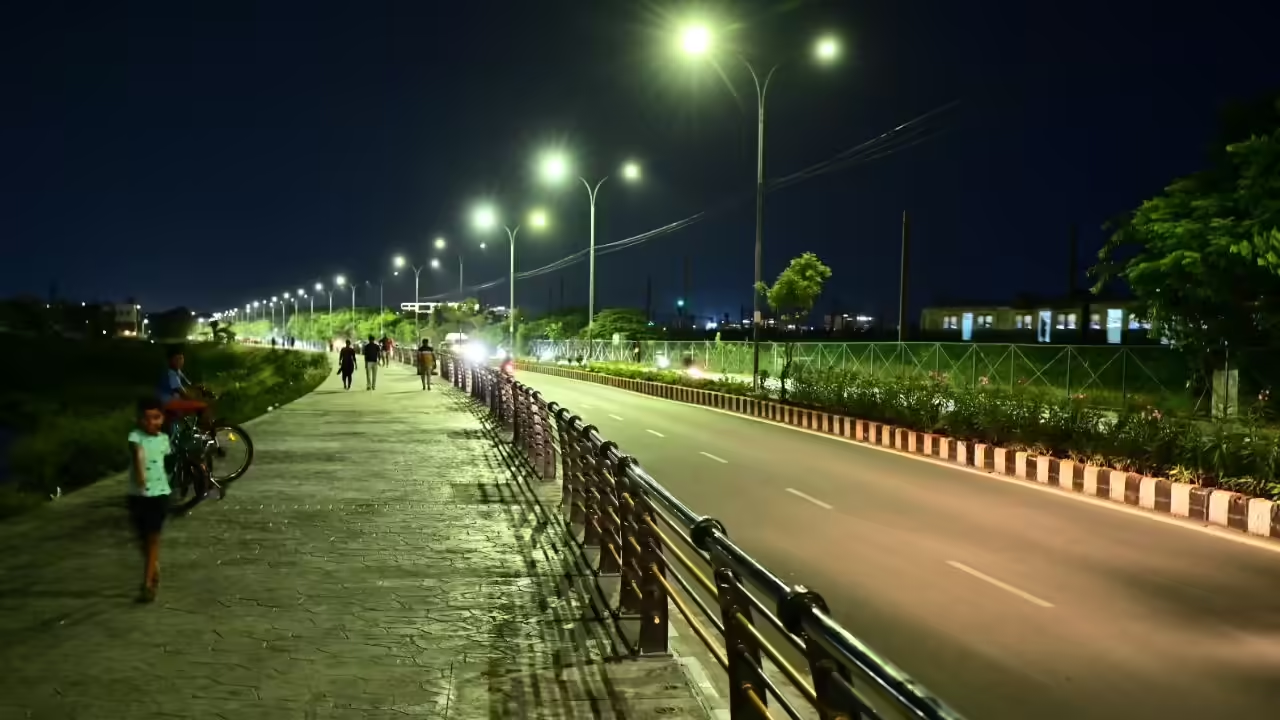
Urban mobility planning in Chennai is set to prioritise pedestrian infrastructure with a proposed 3.2-kilometre walkway connecting two key suburban rail stations.
The Chennai pedestrian corridor, planned between Velachery MRTS Station and Taramani MRTS Station, aims to improve last-mile connectivity and encourage non-motorised transport in one of the city’s busiest IT and residential zones.Officials indicate that the project is designed to create a continuous, safe, and accessible walking route for commuters who currently rely on informal or unsafe pathways along congested roads. The corridor is expected to include dedicated pedestrian pathways, improved lighting, and basic urban amenities, addressing long-standing concerns around walkability in the area.The Chennai pedestrian corridor is being positioned as a critical link within the city’s multimodal transport network. Despite the presence of the Mass Rapid Transit System, poor last-mile connectivity has limited ridership potential. Urban mobility experts note that seamless integration between transit stations and surrounding neighbourhoods is essential to maximise the efficiency of public transport systems.The proposed alignment passes through a corridor that hosts major employment hubs, educational institutions, and residential developments. This makes pedestrian infrastructure not only a mobility solution but also a factor influencing urban productivity and quality of life. By reducing dependence on short-distance vehicle trips, the project could help ease traffic congestion and lower localised emissions.
From a planning perspective, the Chennai pedestrian corridor reflects a broader shift towards people-centric urban design. Indian cities have historically prioritised road expansion for vehicles, often at the expense of pedestrian infrastructure. However, changing mobility patterns and climate considerations are driving renewed focus on walkability as a sustainable alternative.Real estate stakeholders are also closely monitoring such developments. Improved pedestrian access and connectivity can enhance the attractiveness of surrounding properties, particularly in mixed-use and transit-oriented developments. Areas with better walkability often see increased commercial activity and higher occupancy rates, as accessibility becomes a key determinant of value.Urban planners emphasise that the success of the corridor will depend on execution quality and long-term maintenance. Issues such as encroachment, poor upkeep, and inadequate safety measures have undermined similar projects in the past. Ensuring inclusivity—through barrier-free design for elderly and differently-abled users—will also be essential to maximise the corridor’s impact.The Chennai pedestrian corridor aligns with broader climate resilience goals by promoting low-carbon mobility options. Encouraging walking as part of daily commutes can contribute to reducing the city’s transport-related emissions while improving public health outcomes.
Civic authorities suggest that if implemented effectively, the project could serve as a model for similar interventions across Chennai. As cities look to balance growth with sustainability, investments in pedestrian infrastructure are likely to play an increasingly important role in shaping more liveable and resilient urban environments.
Also Read:Chennai Mangrove Plantation Boosts Urban Climate Resilience
