


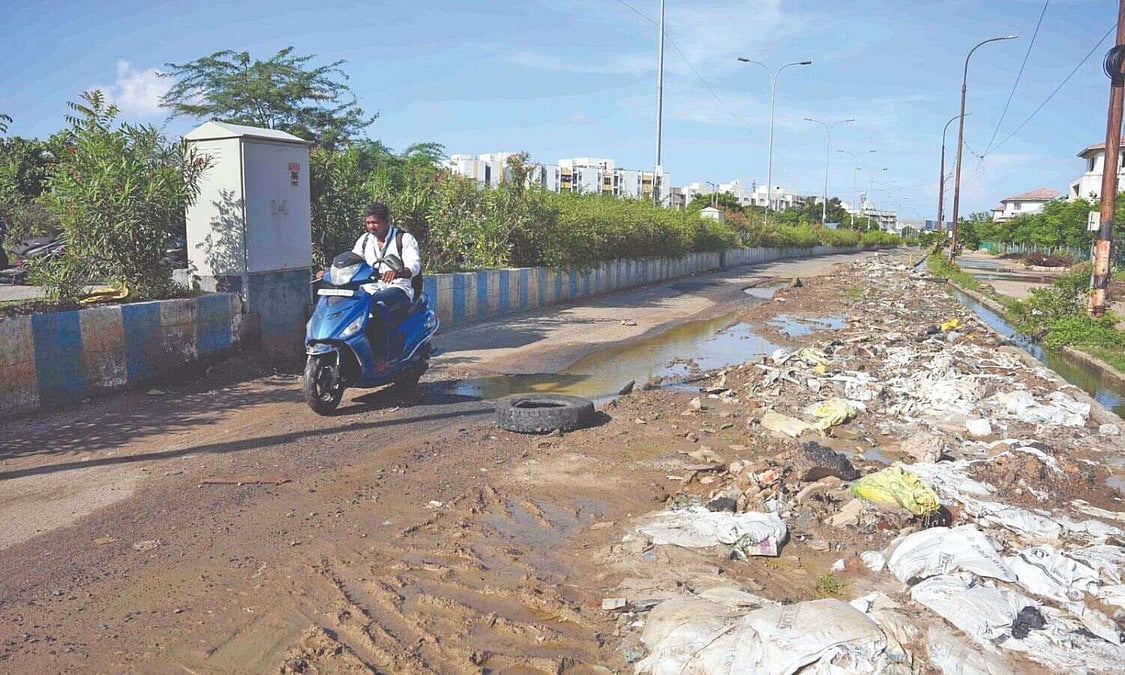
Delays in clearing encroachments along a key road connecting Chennai’s Mass Rapid Transit System (MRTS) corridor in Perungudi are emerging as a bottleneck for urban mobility and infrastructure efficiency.
The situation highlights persistent challenges in land management that continue to affect transport integration in the city.The Chennai MRTS Perungudi road stretch serves as an important link for commuters accessing rail services and nearby commercial zones.However, unresolved encroachments have hindered efforts to widen and upgrade the road, limiting its capacity and contributing to congestion in an already high-traffic area.Urban planners note that the Chennai MRTS Perungudi road issue reflects a broader pattern seen in many rapidly expanding cities, where infrastructure development often outpaces land regulation and enforcement.Encroachments—ranging from informal structures to commercial extensions—can significantly delay project timelines and increase implementation costs.From a mobility perspective, the lack of clearance affects first- and last-mile connectivity to public transport systems.Efficient access routes are critical to maximising the utility of mass transit networks. Without adequate road infrastructure, the effectiveness of systems like the MRTS can be compromised, discouraging public transport usage.The Chennai MRTS Perungudi road challenge also raises questions about governance and coordination between civic agencies. Clearing encroachments typically involves multiple stakeholders, including municipal authorities, transport departments and enforcement agencies.Delays often stem from procedural complexities, legal constraints and the need for rehabilitation measures.
There are social dimensions to the issue as well.Encroachment removal can impact livelihoods, particularly where informal economic activities are involved. Experts emphasise the importance of balancing infrastructure needs with inclusive policies that provide alternative arrangements for affected communities.Environmental considerations are also relevant. Prolonged congestion due to constrained road capacity can lead to higher emissions and deteriorating air quality. Addressing bottlenecks in critical corridors is therefore essential not only for mobility but also for improving environmental outcomes.From an economic standpoint, inefficient transport links can affect productivity and business operations, especially in areas with significant commercial activity. Reliable connectivity is a key factor in supporting economic growth and attracting investment.Experts suggest that resolving the Chennai MRTS Perungudi road issue will require a combination of policy clarity, stakeholder engagement and timely execution. Leveraging digital mapping tools and data-driven planning can help identify and address encroachments more effectively.As Chennai continues to invest in expanding its transport infrastructure, ensuring seamless integration between different modes of mobility remains a priority. Addressing land-related challenges is a critical component of this effort.
Looking ahead, the ability to resolve encroachment issues efficiently will play a key role in shaping the city’s infrastructure outcomes. Strengthening governance frameworks and adopting inclusive approaches can help Chennai move towards a more connected, efficient and sustainable urban transport system.
Also Read:Chennai Blackbuck Decline Raises Urban Biodiversity Concerns
