Chennai Moves To Widen Sardar Patel Road, Fast-Track Flyover Completion by October
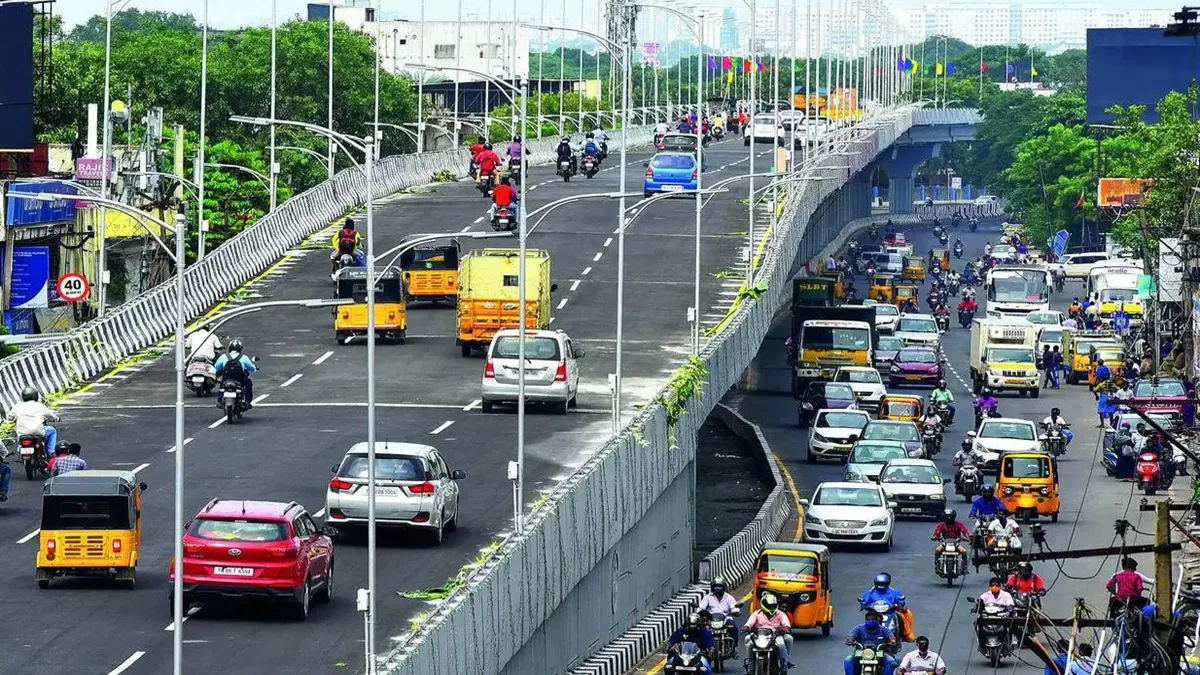
Chennai is set to ease one of its busiest traffic bottlenecks as highways authorities prepare to widen the Sardar Patel Road stretch near Adyar and expedite the ongoing Madhya Kailash flyover project. The planned road expansion from the IIT Madras-Gandhi Mandapam Salai junction to Guindy aims to convert the current four-lane corridor into six lanes. Officials say a feasibility study will be conducted for the 3-km widening proposal, while construction of the 652-metre-long flyover is targeted for completion by October. The dual measures are expected to decongest a high-traffic urban spine used daily by thousands of commuters.
Sardar Patel Road connects key educational and medical institutions like IIT-Madras, Anna University and the Cancer Institute, forming a vital east-west arterial link in the southern part of the city. However, recurring traffic snarls due to signal stops at Gandhi Mandapam Salai and Anna University junctions have left the stretch perennially clogged. Officials say the proposed road widening, which may not require private land acquisition as the land belongs to various government departments, could significantly relieve vehicular stress. The route is critical for both daily traffic flow and emergency services and carries strategic importance in Chennai’s urban transport network. The under-construction flyover at Madhya Kailash, designed in an L-shape to bypass the congested junction, is also central to the decongestion strategy. Once completed, the three-lane unidirectional flyover will allow vehicles from Sardar Patel Road to move seamlessly towards Rajiv Gandhi Salai, facilitating smoother access to IT corridors and southern suburbs.
All 19 pillars of the flyover have been erected, with final deck slabs being laid. Progress had earlier slowed due to challenges in shifting underground water pipelines, but with major civil components nearing completion, authorities now hope to meet the October deadline. Urban mobility experts stress that both the widening and the flyover are crucial, but caution that infrastructure upgrades alone may not be enough. Sustainable urban design, improved pedestrian pathways, and coordinated public transport are needed to ensure equitable road access and reduce carbon emissions in the long term. The current infrastructure overhaul comes amid rising concerns over congestion-induced pollution, delays, and safety hazards in South Chennai’s fast-growing zones. Some residents have welcomed the move, but others warn against unchecked road expansions that may encourage more private vehicle use over greener options.
With an estimated cost of ₹60.61 crore, the flyover begins roughly 350 metres from an existing flyover near the Cancer Institute and ends near Kasturibai Nagar railway station. The new infrastructure, when aligned with other eco-friendly mobility solutions, could help Chennai make strides toward becoming a more liveable and climate-resilient city. As the flyover nears completion and the road-widening feasibility gets under way, stakeholders urge that these projects integrate long-term goals of accessibility, safety, and sustainability into Chennai’s future transport blueprint.