


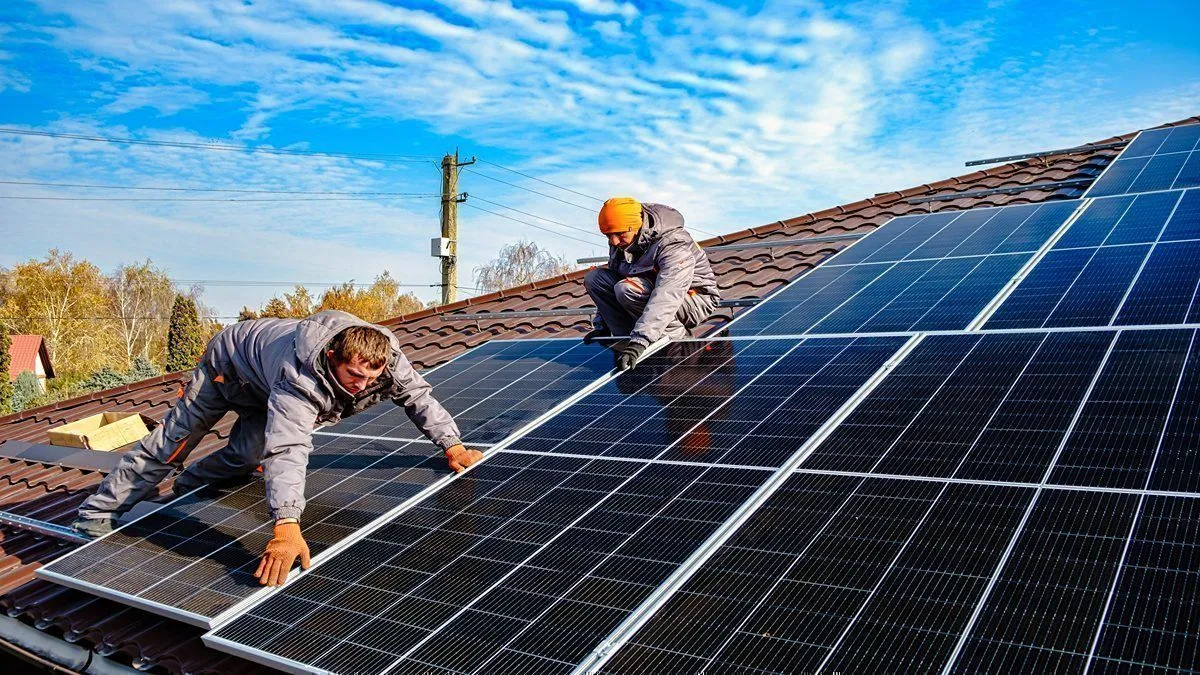
Chennai’s water utility, the Metro Water board, is set to initiate a sustainability drive by commissioning a feasibility study for solar rooftop installations and floating solar farms across its operations — including treatment plants, desalination facilities, pumping stations, office buildings, and three major lakes. The move aims to reduce its ₹300‑crore annual energy expenditure while advancing zero‑carbon goals.
Facilitated through Tamil Nadu Urban Infrastructure Financial Services Ltd (TNUIFSL) and supported by KfW Development Bank’s Project Development Grant Fund, the tender invites a private consultant to assess solar deployment possibilities. A Metro Water official noted that rising energy costs, especially as new plants come online, have made renewable energy adoption essential for long‑term viability. The proposed solar infrastructure includes floating photovoltaic systems at Poondi, Chembarambakkam, and Redhills lakes, alongside rooftop solar across critical water‑cycle infrastructure. The agency has earmarked the Chembarambakkam treatment plant (530 MLD) and the Nemelli desalination plant (110 MLD), plus 16 sewage treatment plants, 119 water distribution centres, 342 sewage pumping stations and 222 office buildings for evaluation.
To develop the feasibility report, the consultant must audit each site’s approved load profiles, historical energy usage, fuel consumption and costs. Additionally, technical evaluations are required to predict future electricity demand, factoring in plant expansions and operational changes. A chief project engineer stated that accurate modelling is vital to align solar power capacity with demand scenarios. Financial planning is a key component of the study. The board expects the consultant to create a comprehensive financial model outlining costs, investment returns and funding options under the proposed PPP framework and CSR contributions. The role also involves assessing resilience and flood mitigation strategies—particularly for lake‑based installations vulnerable to Chennai’s seasonal extremes and climate‑change risks.
A sustainability adviser underscored that floating solar panels offer dual benefits for water‑body management: reducing evaporation and algae growth while generating clean energy. “Such installations could transform Chennai’s lakes into multi‑use assets that conserve water, raise efficiency and power the city,” the expert commented. Metro Water’s energy transition plan aligns with India’s broader push to decarbonise critical infrastructure. The central and state governments emphasise renewable integration into municipal services as a means to reduce greenhouse gas emissions and improve resilience in urban systems. Deploying solar on sites traditionally reliant on grid electricity or diesel generators marks a pivotal shift in utility operations. Local urban planners welcome the initiative, noting that Chennai’s utilities have long been overlooked in sustainability transitions. A Chennai‑based urban policy analyst said the project promises not only cost savings but also enhances gender‑neutral and equitable resource access. Women, who bear the brunt of water scarcity and shifting costs at the household level, stand to benefit directly from more reliable, renewable‑powered water services.
Nonetheless, challenges remain in the form of funding clarity and execution complexity. PPP models require strong governance frameworks, contractor oversight and O&M assurance, particularly for solar rooftops and floating systems exposed to monsoon conditions. A financial consultant working with the DNS noted that detailed performance benchmarks, risk allocation strategies and EPC contractor scrutiny will be critical to realising benefits. Metro Water expects the feasibility study, once awarded, to guide both technology deployment and investment strategy. Based on its conclusions, the board plans to roll out solar systems in phases, securing project funding from CSR partnerships and loans. Tight timelines and seasonal constraints mean that floating solar installations will likely be delayed until post‑monsoon.
From a city planning perspective, the project signals Chennai’s readiness to integrate sustainable energy within core municipal services. As the city yearns for equitable, climate‑resilient infrastructures, water and energy synergies become vital. Floating solar on reservoirs can reduce dependency on fossil‑fuel‑derived power, easing pollution and enhancing access reliability. As the consultant search progresses, stakeholders await the final report for firm cost‑benefit data and actionable roll‑out frameworks. The board’s formulation of flood‑resilience measures for water‑body solar systems reflects a growing recognition that future utility design must align with climate realities.
Whether this solar pivot brings systemic change depends on effective implementation and cross‑sector collaboration. Chennai’s water-energy transition presents a blueprint for other Indian cities seeking pragmatic, eco‑friendly urban renewal.
Also Read : South Central Railway Opens Bids for Ongole – Gudur Traction Overhaul
