


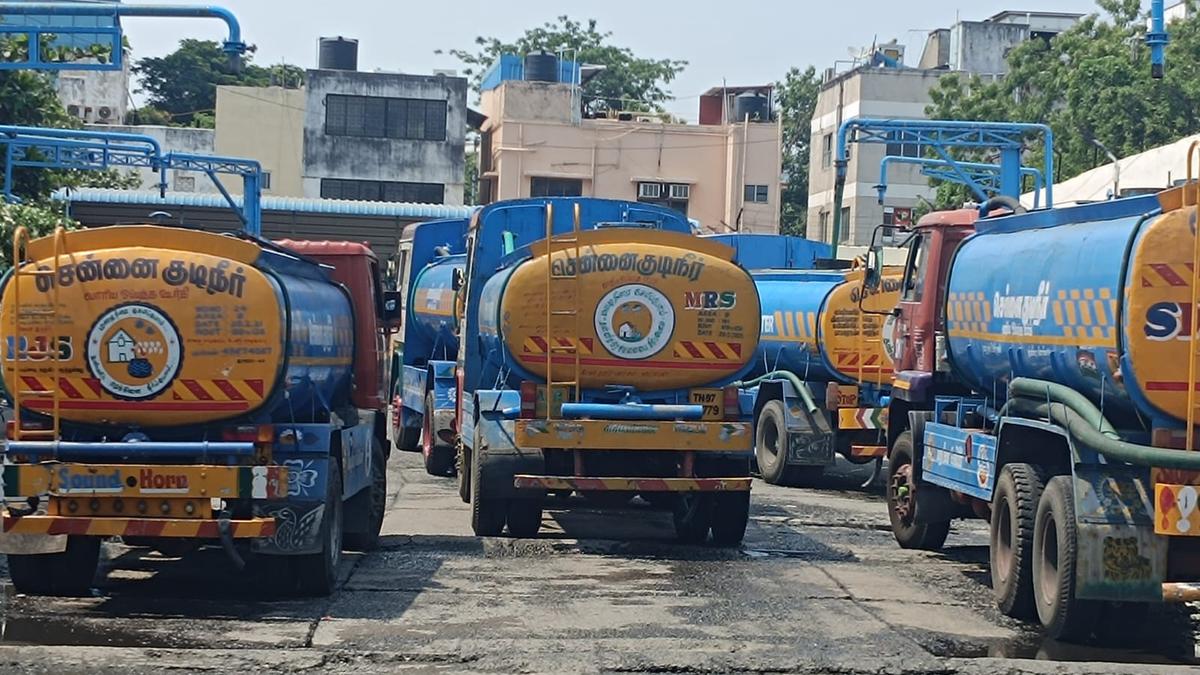
Chennai faces a significant potential disruption to its essential water supply as Metro Water contract lorry owners have declared an indefinite strike commencing tomorrow, June 1.
The decision stems from severe and prolonged delays in the finalisation of their renewed service contracts, leaving approximately 450 lorry owners in a precarious financial position. This impending industrial action highlights critical vulnerabilities in urban water management and underscores the human cost of administrative inefficiencies, particularly in ensuring equitable access to essential resources for a major metropolitan area. Such disputes can severely impact the daily lives of citizens, potentially undermining efforts towards sustainable and resilient urban living.
The core of the dispute lies in the unfulfilled assurances that prompted lorry owners to invest in new vehicles. According to Sundaram, President of the Metro Water Contract Lorry Owners’ Association, and Secretary Keshav Rao, many owners purchased new lorries based on explicit promises of a forthcoming contract renewal. Now, facing the due date for their first-year insurance premiums and struggling to manage monthly loan instalments (EMIs) for these new assets, they find themselves in an untenable situation. The emotional and financial stress has been profound, with the association grimly reporting that some owners have succumbed to stress-related ailments, while others grapple daily with financial precarity. “We have no choice but to go on strike from tomorrow,” stated Sundaram, urging immediate action from the Chennai Metropolitan Water Supply and Sewerage Board (CMWSSB) to finalise contracts and issue work orders.
The implications of an indefinite strike are stark for Chennai’s residents. These 450 contract lorries, ranging in capacity from 6,000 to 18,000 litres, are instrumental in serving the daily metro water needs across the expansive city. A cessation of their services would inevitably lead to widespread disruptions in drinking water supply, impacting households, businesses, and essential services alike. The sheer scale of reliance on these contract vehicles for water distribution underscores the critical role they play in the city’s infrastructure and the immediate impact their absence would have on public life.
The current contractual impasse is not a recent development. The previous contract for these services expired in February 2024, more than a year ago. While the CMWSSB had provided assurances in mid-2023 that new contracts would be issued between June and August of that year, progress has been minimal. A mere notification was released in November, and since then, no tangible steps have been taken towards finalising the agreements. This prolonged administrative inertia has created significant uncertainty and financial distress for the lorry owners, who have invested substantial capital based on official promises. On Saturday, representatives from the association visited the CMWSSB headquarters in Chintadripet in a desperate attempt to press their demands, but a meeting with officials proved impossible, exacerbating their frustration and solidifying their resolve to proceed with the strike.
This situation serves as a stark reminder of the delicate interplay between urban administration, contractual obligations, and the provision of essential public services. Delays in contract finalisation not only create financial hardship for service providers but also expose the vulnerability of critical urban infrastructure. For a city striving for sustainable and equitable access to resources, ensuring timely and transparent contractual processes is paramount. The current dispute highlights the need for robust grievance redressal mechanisms and proactive communication channels to prevent such impasses from escalating into widespread public inconvenience. The outcome of this strike will not only determine the immediate water security of Chennai but also set a precedent for how public utilities manage their essential partnerships in the future, impacting the city’s trajectory towards becoming a truly resilient and inclusive urban centre.
Also Read: Mumbai 20 infra projects delayed over coastal map issues
