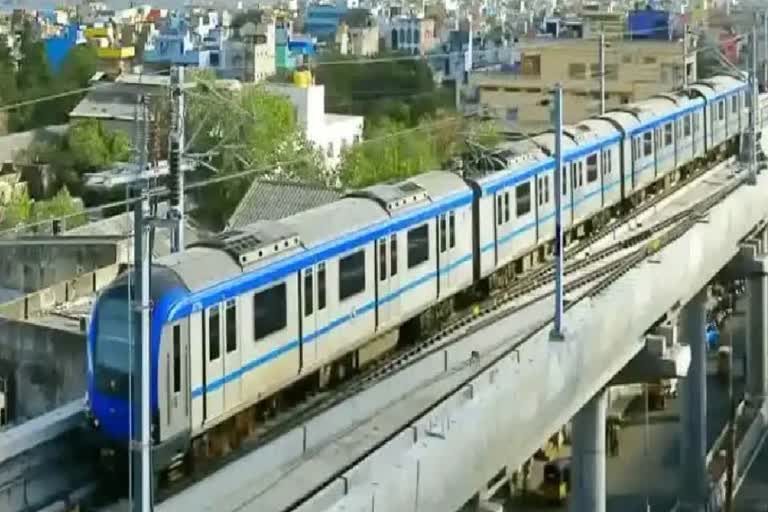
Chennai Metro Vadapalani Poonamallee Section Safety Cleared
Chennai is on the cusp of expanding its urban rail network, as the initial operational segment of the 118.1km Chennai Metro Rail Phase 2 project, spanning 15.8km from Vadapalani to Poonamallee, has successfully completed final safety inspections. The clearance sets the stage for the city’s first Phase 2 metro operations, promising enhanced connectivity and potential relief for commuters along the busy western corridor. Urban transport officials indicate public services could begin within days, pending formal regulatory approval.
The recent inspection rounds, conducted by the Commissioner of Railway Safety (CRS), focused on verifying operational readiness, including speed trials, signalling reliability, and the functionality of the backup operations control centre at Nandanam. Trains were tested at speeds up to 80km/h between Poonamallee and Porur and at 40km/h on the Porur–Vadapalani stretch. Signalling systems, both onboard and trackside, were rigorously assessed, ensuring compliance with mandatory safety standards. The CRS review is a crucial prerequisite before passenger services can commence, reflecting the city’s adherence to stringent operational protocols.
While the Vadapalani–Porur segment will initially operate at a maximum speed of 40km/h, driverless train technology will be deployed, underscoring Chennai Metro’s move toward automation. Six stations along the stretch, including four double-decker stations, remain under construction and will be bypassed until fully operational. The Vadapalani terminal will integrate with the existing Phase 1 network via a pedestrian skywalk, facilitating seamless transfers for commuters. Urban planners note that the opening of this stretch is expected to significantly reduce road congestion along the western suburbs corridor, with a projected impact on local air quality and urban mobility patterns. The phased introduction of automated metro services also signals Chennai’s commitment to sustainable transit solutions, potentially reducing private vehicle dependence and supporting climate-resilient urban infrastructure.
From an economic perspective, early operations could stimulate real estate activity along the new corridor, increase property values, and enhance business accessibility in adjacent districts. However, experts emphasise that full benefits will only be realised once all stations are operational and signalling systems achieve full automation, enabling higher-speed transit and improved service frequency. As Chennai moves toward commissioning its first Phase 2 metro segment, city authorities and transport planners remain focused on safety, operational efficiency, and integration with broader urban development goals. The stretch is expected to become a blueprint for future metro expansion, balancing commuter convenience with sustainable infrastructure growth.