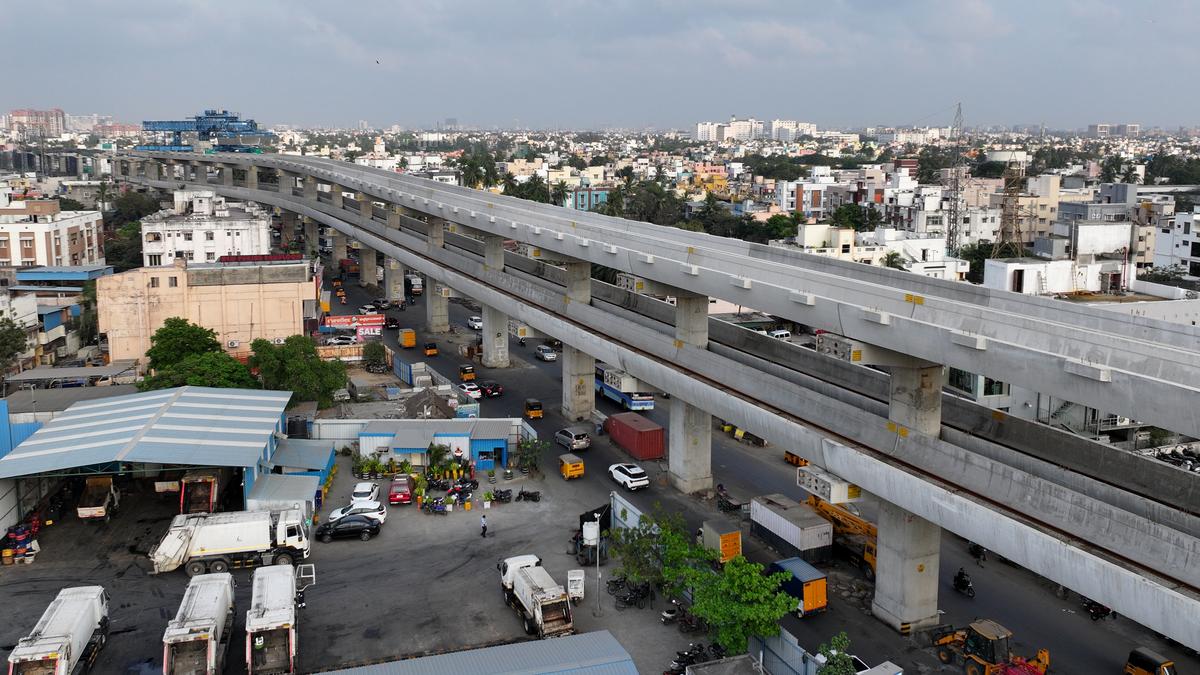
Progress on a key underground stretch of Chennai’s expanding metro network has slowed as city transport authorities await operational clearance from railway authorities before initiating tunneling near Villivakkam. The delay affects a short but technically sensitive segment of the city’s Phase II expansion, a major infrastructure project designed to improve public transport connectivity and support low-carbon urban mobility.Officials involved in the project say the work involves constructing a tunnel beneath active railway tracks near Villivakkam station. While safety approvals from the national rail safety regulator have already been secured earlier this year, the metro agency still requires operational consent from railway authorities to proceed with tunneling activity below the tracks.The issue centers on temporary operational adjustments required during construction. Metro engineers need railway authorities to reduce train speeds across the affected section to ensure safety when the tunnel boring machine passes underneath the track infrastructure. Until that permission is granted, the tunneling process cannot begin.
The stalled start has created financial and logistical pressure on the project team. According to officials familiar with the construction schedule, the tunnel boring machine has already been assembled and positioned at the launch shaft. Specialized crews and technical equipment are currently stationed at the site, but remain inactive while clearances are pending.Infrastructure planners say such delays, though common in complex urban projects, can significantly raise costs. Tunnel boring machines are expensive pieces of engineering equipment that must operate on tight schedules. Idle machinery, along with contracted labour and maintenance costs, can run into substantial expenses for the project agency.The affected section forms part of Corridor 5 of Chennai’s metro Phase II programme, which aims to connect northern and southern parts of the metropolitan region. The corridor is expected to play an important role in linking emerging residential clusters, employment centers, and transit hubs across the city.Urban mobility experts say the corridor’s completion will be crucial for shifting commuters away from private vehicles toward mass transit. Chennai, like many rapidly expanding Indian cities, faces increasing traffic congestion and rising emissions. Large-scale metro infrastructure is therefore seen as central to building a more sustainable and climate-resilient transport system.Once tunneling begins, engineers estimate that the machine will need roughly half a year to complete the underground passage beneath the railway corridor. The geological conditions in the area include layers of dense clay and rock formations, requiring careful excavation and continuous monitoring during construction.City infrastructure officials say tunneling beneath railway tracks is not unprecedented in Chennai’s metro programme. Similar engineering operations have previously been carried out at other locations where underground corridors intersect with railway infrastructure, following detailed coordination between agencies.
However, the current situation highlights the coordination challenges that often arise in large urban infrastructure projects involving multiple government authorities. Transport planners note that smoother inter-agency processes could help accelerate delivery timelines for future metro expansions.
For Chennai residents and daily commuters, the eventual completion of the corridor promises faster cross-city travel and improved public transport access. But for now, the start of tunneling at Villivakkam will depend on the final operational clearance required to move the Chennai metro tunneling project forward.
Chennai metro tunneling project faces operational pause.