


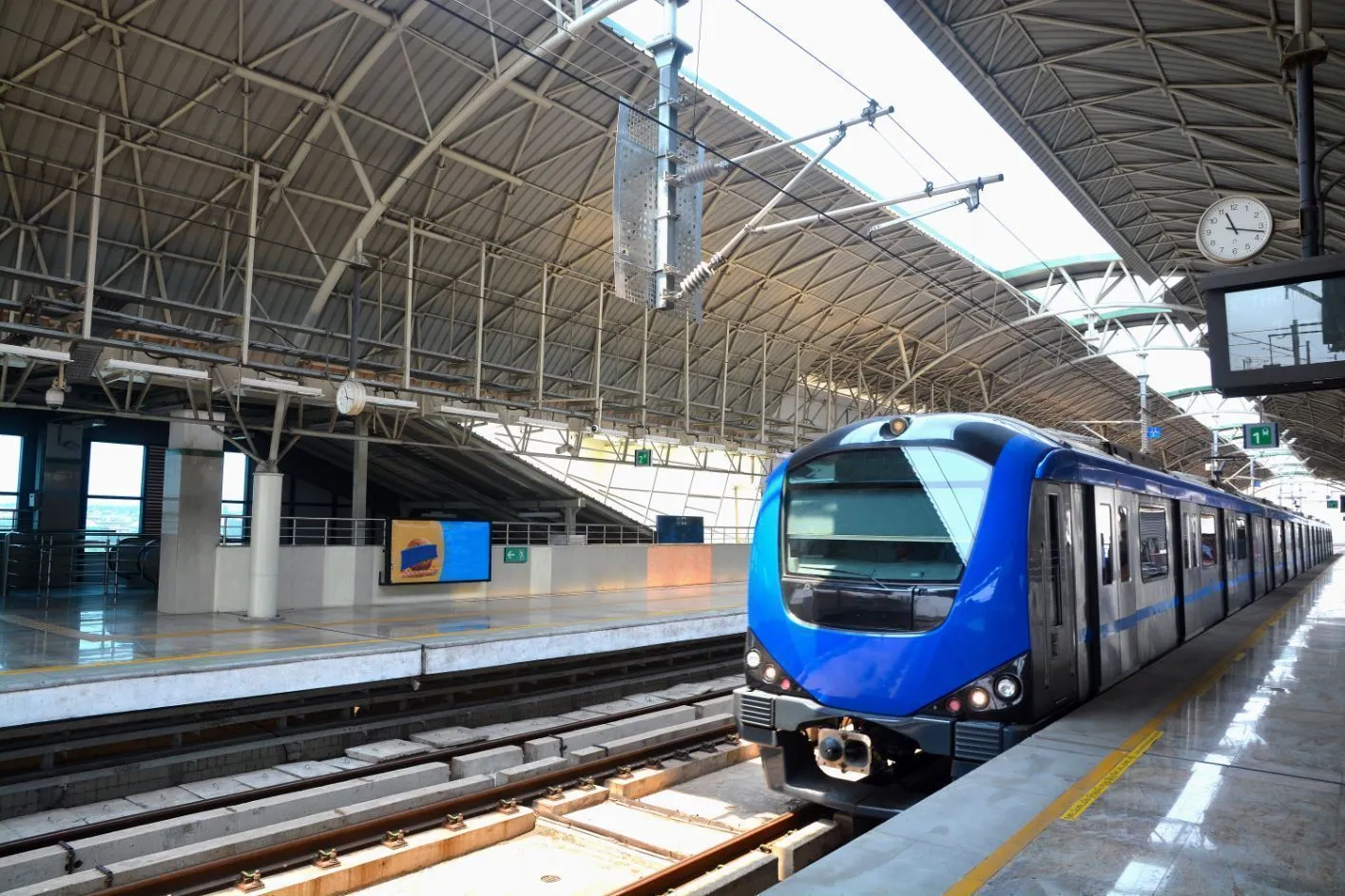
Chennai’s urban transport network recorded a notable financial milestone over the last financial year, with the city’s metro rail operator reporting a sharp rise in operating revenue. The improvement, driven largely by sustained passenger growth, signals a gradual but meaningful shift in how residents are choosing to move across the metropolitan region—away from private vehicles and towards mass rapid transit.
Urban mobility analysts say the revenue uptick reflects growing commuter confidence in the metro system as a reliable daily transport option. Expanded coverage, better service predictability, and improved last-mile connectivity have helped the network transition from a supplementary mode of travel to a core component of Chennai’s mobility ecosystem.Officials familiar with metro operations indicate that higher ridership has been supported by operational refinements rather than fare-led gains alone. Increased train frequency during peak hours, upgrades to station amenities, and improved interchange planning have reduced travel time uncertainty—one of the biggest deterrents to public transport adoption in large Indian cities.
From a financial standpoint, the revenue growth strengthens the metro operator’s balance sheet at a time when capital-intensive expansion remains underway. Transport economists note that higher internal revenue generation improves borrowing capacity and reduces long-term dependence on budgetary support, an important factor for sustaining network expansion without straining public finances.The performance also carries broader urban implications. Chennai Metro revenue growth has a direct relationship with land-use efficiency, congestion reduction, and emissions management. As more commuters shift to rail-based transport, pressure on arterial roads eases, improving freight movement and overall productivity in the city. Real estate consultants add that metro-linked corridors are already witnessing higher demand for housing and commercial space, particularly in peripheral districts.
State transport planners view the financial improvement as timely, given upcoming network extensions aimed at connecting employment hubs, residential clusters, and emerging industrial zones. Expanding the metro footprint is expected to further boost ridership while supporting more equitable access to jobs and services across income groups.However, experts caution that sustaining Chennai Metro revenue growth will depend on maintaining service quality as the system scales. Network reliability, integrated ticketing with buses and suburban rail, and pedestrian-friendly station design will play a critical role in retaining daily users, especially women, elderly commuters, and first-time riders.
Looking ahead, the metro’s improving financial health positions it as a central pillar in Chennai’s low-carbon transport transition. As fuel costs rise and climate risks intensify, mass transit systems that combine operational efficiency with commuter trust are likely to shape the next phase of urban growth. The challenge now lies in ensuring that expansion keeps pace with demand—without compromising affordability, accessibility, or long-term resilience.
Also Read:Advait Energy Transitions Secures Strategic Grid Restoration Contract
Chennai Metro Revenue Growth Signals Transit Shift
