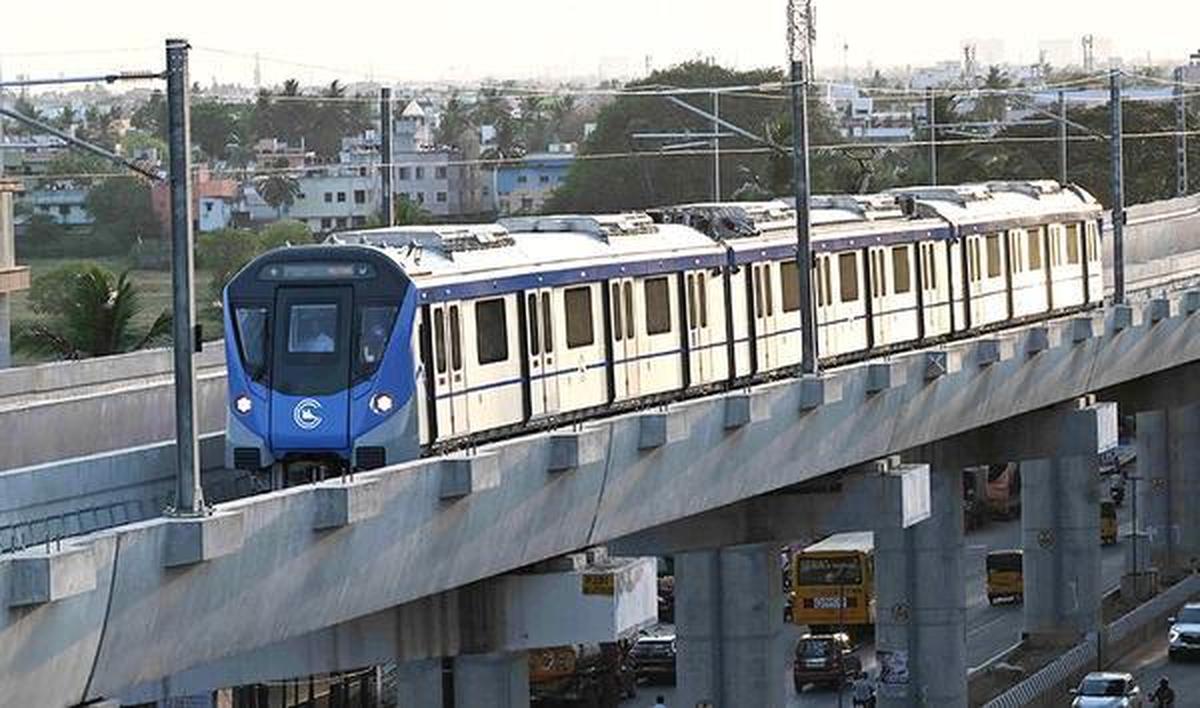
Chennai is witnessing a significant upswing in urban mass transit utilisation, as Chennai Metro Rail Limited (CMRL) records an average daily ridership of 4.64 lakh passengers, according to official figures from the Ministry of Housing and Urban Affairs.
This marks a more than twofold increase since 2021-22, highlighting the growing reliance on rapid transit systems for mobility in India’s fourth-largest metropolis. Analysts suggest that this surge underlines the critical role of metro infrastructure in shaping sustainable, low-carbon urban transport networks.The expansion trajectory of CMRL demonstrates a steady climb: daily passenger numbers rose from 1.90 lakh in 2021-22 to 3.41 lakh in 2022-23, and reached 4.58 lakh in 2023-24. Preliminary data for December 2025 indicates that daily ridership has now stabilised at 4.64 lakh. For comparison, Chennai Metro’s utilisation has consistently surpassed that of several other Indian metro networks, including Kochi, Noida, Nagpur, Pune, Ahmedabad, and Lucknow, reflecting both population density and urban transport dependency in the city.Transport planners highlight that increased metro usage has multiple implications for Chennai’s urban ecosystem. Higher ridership eases congestion on arterial roads, reduces vehicular emissions, and contributes to the city’s climate resilience objectives.
“The uptick in metro adoption is critical not only for commuter convenience but also for Chennai’s long-term zero-carbon mobility targets,” said a senior urban transport official.Revenue trends mirror ridership growth. CMRL generated Rs 149.59 crore in 2020-21, rising sharply to Rs 485.21 crore in 2022-23, and peaking at Rs 1,558.30 crore in 2023-24, before adjusting to Rs 623.79 crore in 2024-25. Industry experts indicate that these figures reflect both fare collection efficiency and increasing public confidence in mass transit. Such financial resilience is essential for supporting ongoing and future expansions, particularly Phase II of Chennai Metro Rail, which is under construction for approximately 118.9 km.Looking ahead, the completion of Phase II is expected to further boost ridership by connecting emerging urban corridors and reducing travel times across the metropolitan region. Urban planners note that integrating metro networks with last-mile connectivity solutions, such as feeder buses and e-mobility options, will be crucial for sustaining growth and ensuring inclusive access for all city residents.
Chennai’s metro expansion exemplifies a broader trend in Indian cities, where modern rapid transit infrastructure is increasingly seen as a backbone for sustainable, equitable, and people-first urban development. The city’s experience reinforces the need for continued investment in transit infrastructure, aligned with climate-conscious urban planning and future-ready mobility solutions.
Chennai Metro Expansion Drives Passenger Numbers