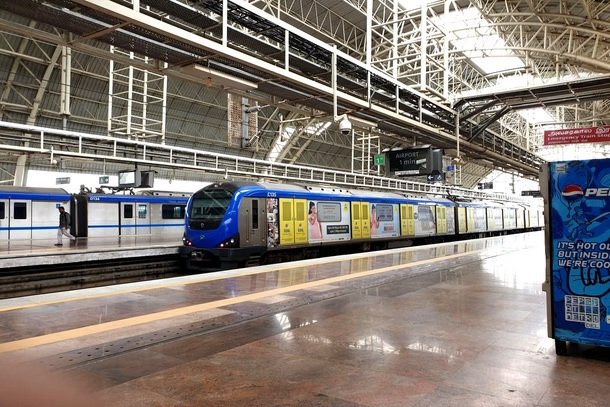
Chennai’s underground transit grid is set to advance deeper into its southern neighbourhoods, with tunnelling work between Thirumayilai and Boat Club scheduled to begin mid-year as part of Chennai Metro Phase II. The 1.9-km stretch, cutting beneath Alwarpet and Teynampet, marks a critical link in the city’s expanding east–west corridor and is expected to reshape connectivity across some of its most densely built residential districts. The works form part of the ₹63,000-crore-plus Chennai Metro Phase II programme, a 118.9-km expansion that aims to extend rapid transit access to emerging and established urban clusters alike. The Thirumayilai–Boat Club segment lies on Corridor 4, which will ultimately connect Poonamallee in the west to Light House in the east, stitching together commercial, institutional and high-value residential zones.
Two tunnel boring machines, recently deployed on the Light House–Thirumayilai stretch, are being repositioned for this new drive. Metro officials indicate that the first machine will be reassembled at a prepared shaft in Thirumayilai before commencing excavation, with the second to follow. Initial boring operations are expected to start towards the end of June, subject to ground readiness and safety checks. Geological conditions in parts of Alwarpet and Teynampet present engineering challenges. According to project officials, the initial section up to Bharathidasan Road includes mixed strata of rock and clayey soil. Such variable ground conditions require constant recalibration of pressure systems inside the tunnel boring machines to prevent settlement or surface disruption. This may increase equipment wear and necessitate periodic cutter-head maintenance. Beyond this segment, the soil profile is assessed to be more uniform, potentially allowing steadier progress.
Unlike the earlier stretch, which passed beneath sensitive heritage and coastal zones, this section will largely run under road corridors, including below the Alwarpet flyover. Tunnels are planned at depths ranging from roughly 24 to 29 metres, designed to avoid interference with existing utilities and foundations. For residents and businesses in central Chennai, the implications extend beyond engineering milestones. Urban planners argue that Chennai Metro Phase II could significantly reduce surface congestion in high-traffic neighbourhoods, where road widening is neither feasible nor climate-resilient. By shifting more commuters to electrified mass transit, the project aligns with broader efforts to cut transport emissions and support denser, transit-oriented development.
Real estate observers note that underground stations at Thirumayilai, Alwarpet, Bharathidasan Road and Boat Club may recalibrate property demand patterns, particularly for mixed-use and rental housing near station catchments. However, managing construction impacts noise, traffic diversions and dust will remain critical to maintaining public trust. As Chennai Metro Phase II advances through complex urban terrain, its success will hinge not only on engineering precision but also on minimising disruption while delivering long-term mobility gains for a growing metropolitan population.