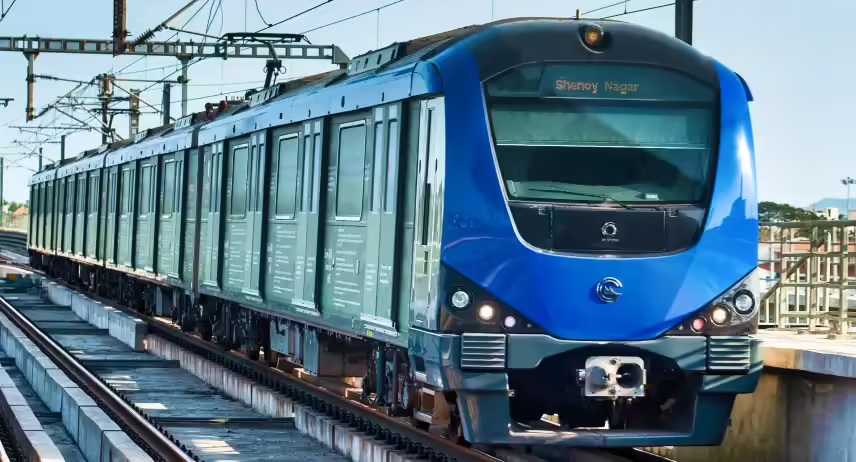
Chennai Metro Phase II Set For Commercial Services
Chennai is on the cusp of a significant urban transit milestone as the city’s metro prepares to open its extended Corridor 4 Phase II between Vadapalani and Poonamallee Bypass. Officials report that the final safety inspections for this double-decker viaduct, one of the most complex metro structures in the city, have concluded successfully, bringing daily passenger operations closer to reality. The corridor promises to alleviate congestion in one of Chennai’s busiest western stretches while supporting the city’s broader sustainable mobility agenda.
The extended line, designed to integrate seamlessly with the existing metro network, will initially operate ten trains along the Porur–Poonamallee route, with departures every seven minutes. Alternate services will terminate at Porur, reflecting a cautious phased approach prioritising operational safety. Access to the new Phase II Vadapalani station will be linked via the existing Phase I station, optimising connectivity without immediate additional infrastructure. Urban planners highlight that such integration can significantly improve commuter experience and reduce dependence on private vehicles, contributing to lower carbon emissions in dense corridors.
From an economic standpoint, this expansion is expected to influence local real estate dynamics, particularly in Porur and Poonamallee. Improved accessibility tends to increase commercial and residential demand along transit corridors, while also incentivising mixed-use urban development. Senior urban development experts note that metro-linked growth corridors often attract retail, office, and housing projects that align with people-first city planning principles, balancing density with inclusivity and accessibility. Environmentally, the corridor underscores Chennai’s commitment to low-carbon, climate-resilient infrastructure. Elevated, double-decker designs reduce the urban footprint compared with at-grade alternatives, preserving street-level spaces for pedestrians and sustainable last-mile mobility. Additionally, metro systems contribute to reduced vehicular congestion and associated emissions, supporting municipal climate goals and improving air quality in rapidly urbanising zones.
Once the official safety certification is received and operations commence, city authorities will monitor traffic flow, station utilisation, and commuter patterns to refine schedules and operational efficiency. Analysts suggest that real-time data from metro operations can inform future expansions, ensuring that growth remains both economically viable and environmentally responsible. While immediate relief for congestion is anticipated, the long-term impact will hinge on coordinated urban planning and multimodal integration, including feeder buses, cycling, and pedestrian networks. The Vadapalani–Poonamallee corridor launch positions Chennai Metro as a key enabler of sustainable urban mobility, linking critical western suburbs while supporting climate-conscious urban growth. Residents and investors alike will closely watch the initial performance, which will set benchmarks for future phases and operational strategies in the city’s expanding transit network.