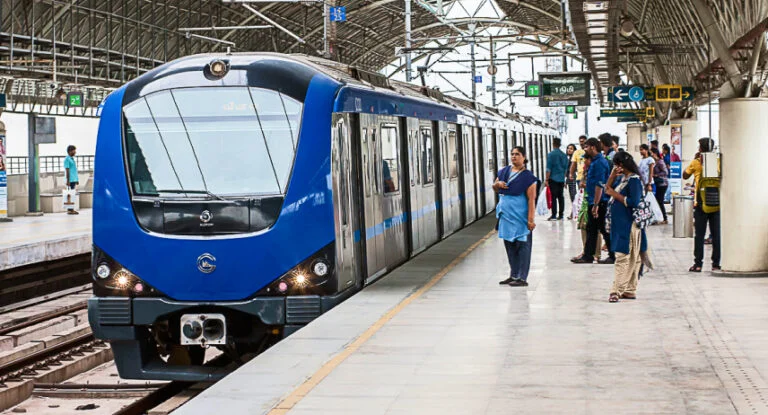
Chennai Metro is poised to extend its urban transit network as the Phase II corridor from Poonamallee Bypass to Vadapalani gears up for operational launch in February. The 15.8-kilometre stretch, which includes ten intermediate stops between Poonamallee Bypass and Porur Junction, will provide direct service to Vadapalani after Alapakkam, marking a significant step in expanding Chennai’s metro footprint and improving east-west connectivity across the city.
Originally, services were expected to begin from Poonamallee Bypass to Porur Junction by January-end, with the extension to Vadapalani following in February. The revised rollout ensures that commuters can access the metro network sooner while integrating with Phase I stations, providing continuity for daily travel and reducing congestion along major arterial roads. Urban planners emphasise that such phased commissioning helps balance operational readiness with commuter demand, particularly in high-density corridors.The final inspection of Phase II trains, conducted by the Commissioner of Metro Railway Safety, is scheduled for the last week of January. This review will assess operational safety, signalling systems, and station readiness, critical components for ensuring reliable service. Authorities highlight that adherence to rigorous safety protocols is essential as Chennai Metro aims to enhance both capacity and commuter confidence in its expanding network.
Infrastructure experts note that Phase II of Chennai Metro is designed to complement the existing network while supporting urban mobility objectives. By linking residential suburbs such as Poonamallee with commercial and employment hubs along Vadapalani, the corridor can alleviate traffic pressure on parallel roadways, promote public transport adoption, and foster transit-oriented development in surrounding neighbourhoods. The corridor’s integration with Phase I further strengthens connectivity across the city, demonstrating a people-first approach to urban transit planning.The Phase II expansion also reflects broader city priorities, including sustainable mobility, reduced reliance on private vehicles, and enhanced accessibility for daily commuters. As urban populations grow and traffic congestion intensifies, metro extensions like this play a pivotal role in ensuring safe, efficient, and climate-resilient transport. Analysts suggest that timely commissioning, coupled with continued monitoring of ridership and operational performance, will be key in maximising the benefits of Chennai Metro’s network expansion.
With safety inspections underway and services set for February, Chennai Metro Phase II is on track to transform daily commuting patterns, improve transit efficiency, and support sustainable urban development across western corridors of the city. The success of this corridor may also set the blueprint for future phases, guiding strategic infrastructure investments and transit-oriented urban growth in Chennai.