


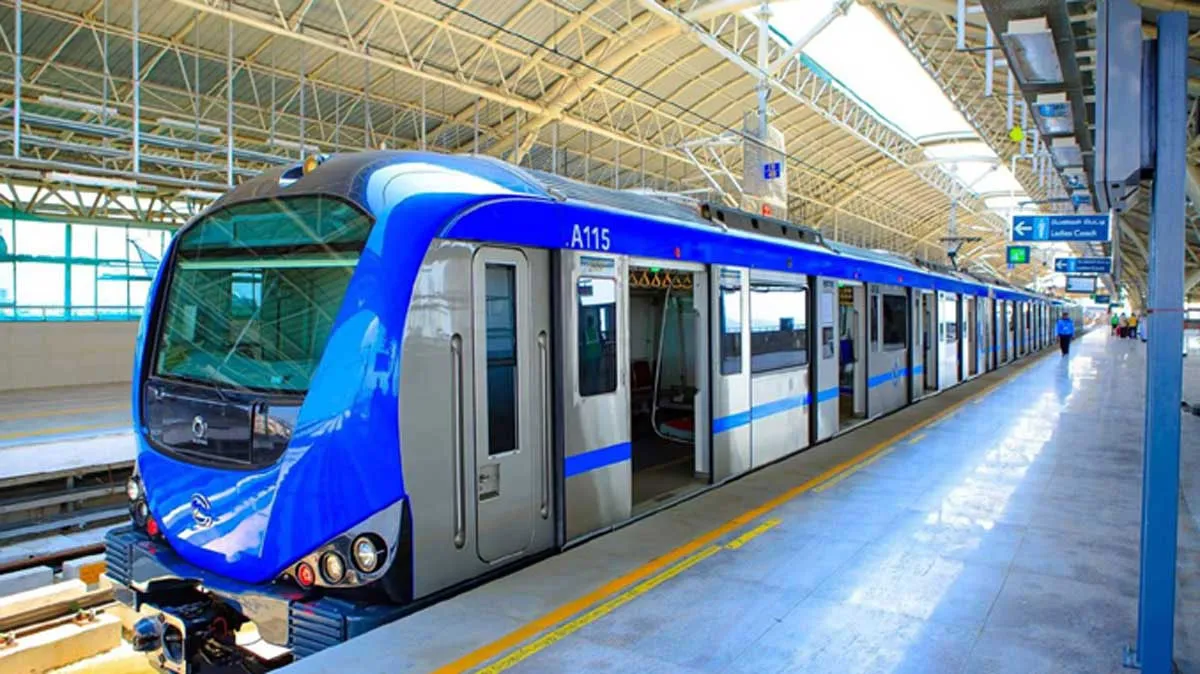
Chennai’s largest public transport expansion has crossed a financial and construction milestone, signalling growing alignment between state and central authorities on the city’s long-term mobility strategy. Nearly half of the Chennai Metro Phase II network is now physically complete, while central funding released for the project has exceeded ₹10,300 crore, according to parliamentary disclosures made this week.
The 118.9-kilometre Chennai Metro Phase II project, conceived to extend mass rapid transit deep into the city’s expanding residential and employment corridors, represents one of India’s most ambitious urban rail investments. Designed as a multi-corridor network, the project is expected to significantly reduce road congestion, cut vehicular emissions, and reshape daily commuting patterns across the Chennai Metropolitan Area.While construction progress has steadily advanced, the project’s financing structure has drawn closer scrutiny. Phase II was initially undertaken as a state-sector initiative, with the state government arranging early-stage borrowing to accelerate execution. Central approval for the project was granted later, triggering a shift to a shared funding model under a special purpose vehicle jointly owned by the Union and the state.
As part of this transition, the state sought accounting adjustments for approximately ₹9,500 crore already advanced to the metro authority. Officials clarified that subsequent central disbursements have been made strictly against verified project requirements, with no pending funding requests currently outstanding.Urban finance experts note that front-loaded infrastructure spending can strain state balance sheets in the short term, particularly when large transport projects intersect with fiscal responsibility norms. In Chennai’s case, early borrowing reportedly impacted the state’s debt-to-GSDP ratio and constrained its annual borrowing headroom, underlining the importance of timely inter-governmental coordination for mega urban projects.
From a city-building perspective, Chennai Metro Phase II is central to broader goals around compact growth, equitable access to jobs, and climate resilience. Urban planners point out that extended metro connectivity enables higher-density development around stations, reduces dependence on private vehicles, and supports inclusive mobility for women, elderly commuters, and low-income households.The scale of central funding already released also reflects a growing recognition of metro systems as essential urban infrastructure rather than discretionary capital works. With nearly 49% of construction completed, the project is entering a phase where systems integration, station-area planning, and last-mile connectivity will determine its long-term success.
Looking ahead, transport analysts emphasise the need for careful synchronisation between metro commissioning, feeder services, and land-use planning. As Chennai prepares for the next decade of urban growth, the outcomes of Phase II will shape not just how the city moves, but how sustainably and equitably it expands.
Also Read:India Maritime Strategy Reshapes Container Shipping Capacity
