


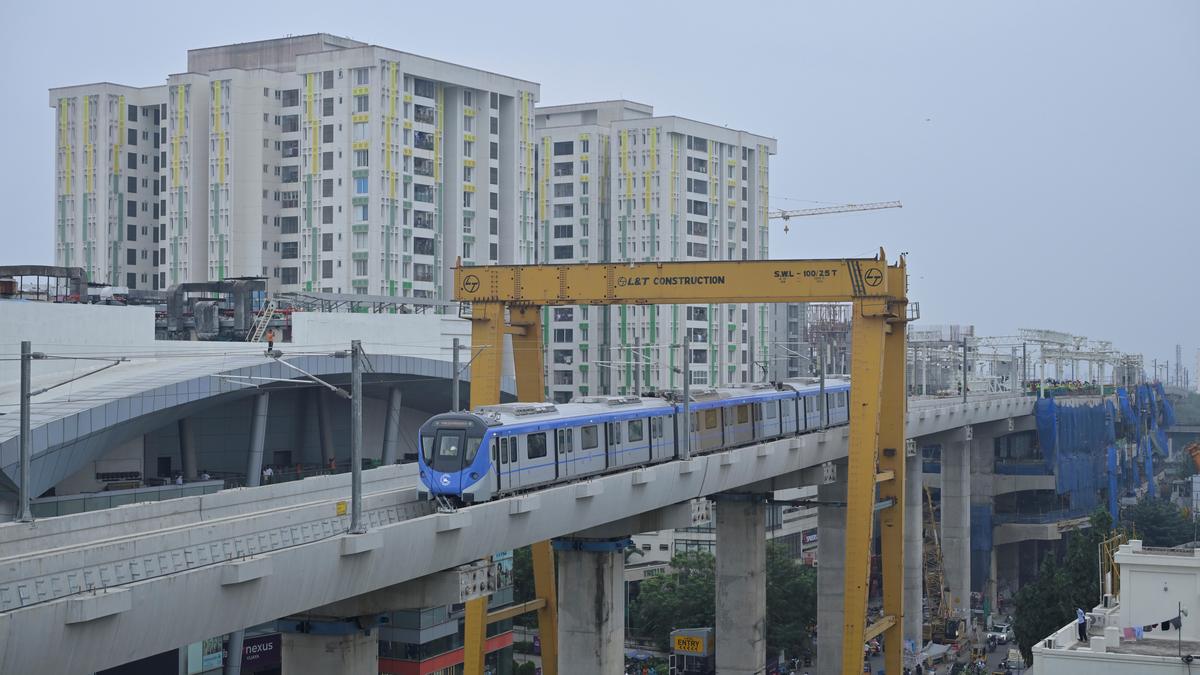
Chennai’s expanding metro network is incorporating advanced structural monitoring systems to enhance safety and long-term reliability, with engineers initiating continuous health assessments of key bridge components along a major corridor.
The move reflects a growing emphasis on predictive maintenance in urban transport infrastructure as cities scale up high-capacity transit systems.The latest intervention focuses on a composite girder span along one of the metro corridors, where scientific monitoring techniques are being deployed to track structural behaviour in real time. By integrating sensors and data analytics, authorities aim to detect stress patterns, material fatigue, and environmental impacts before they evolve into safety risks. This approach is increasingly central to Chennai metro monitoring, especially as elevated corridors become more complex and heavily used.Urban infrastructure experts highlight that traditional inspection methods, often periodic and manual, are no longer sufficient for modern transit systems. Continuous monitoring allows for data-driven decision-making, enabling engineers to anticipate maintenance needs and minimise disruptions. In the context of Chennai metro monitoring, this shift could significantly reduce lifecycle costs while improving commuter safety.The initiative also aligns with global best practices in resilient infrastructure design. As cities face climate-related challenges such as extreme heat, heavy rainfall, and coastal exposure, transport systems must be equipped to withstand variable conditions. Structural health monitoring helps assess how infrastructure responds to these stresses over time, ensuring that safety standards are maintained even under changing environmental conditions.
From a planning perspective, such systems contribute to the broader goal of building future-ready cities. Reliable public transport infrastructure is a cornerstone of sustainable urban growth, influencing everything from mobility patterns to real estate development. When metro systems operate safely and efficiently, they encourage a shift away from private vehicles, reducing congestion and emissions.Industry observers note that investments in monitoring technology are also tied to public confidence. As metro networks expand into new corridors, ensuring visible and measurable safety standards becomes critical to maintaining ridership growth. A senior infrastructure official indicated that integrating advanced monitoring tools can help authorities respond quickly to potential issues, strengthening operational resilience.However, experts caution that technology must be supported by institutional capacity. Data collected through monitoring systems needs to be analysed effectively, with clear protocols for maintenance and intervention. Training, coordination between agencies, and sustained funding will be essential to maximise the benefits of such initiatives.For Chennai, the adoption of structural health monitoring marks an important step in evolving from reactive maintenance to proactive asset management. As metro infrastructure continues to expand, embedding these systems early could set a benchmark for other cities investing in large-scale transit networks.
Looking ahead, the effectiveness of Chennai metro monitoring will depend on how well it integrates with broader urban systems, including planning, governance, and sustainability frameworks. If implemented consistently, it could play a pivotal role in ensuring safe, efficient, and climate-resilient urban mobility.
Also Read:Chennai Water Project Boosts Urban Climate Resilience
