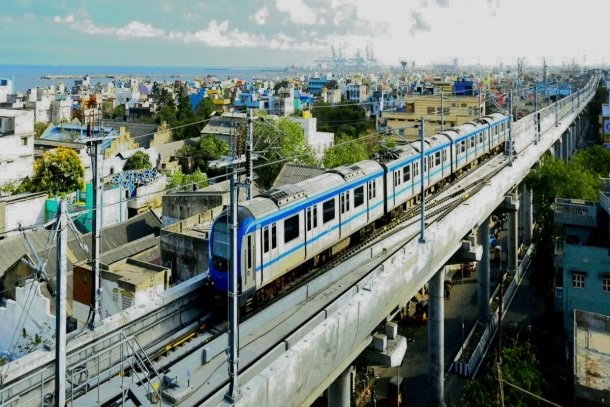
Chennai Metro Land Monetisation To Reshape Corridors
Chennai Metro Rail Limited is advancing a large-scale land development strategy along its upcoming metro corridors, aiming to unlock the economic value of roughly 73 lakh square feet of land near stations and depots across the city. The initiative forms part of the authority’s wider plan to diversify income sources while shaping denser, transit-oriented neighbourhoods along the expanding metro network. The programme focuses on 37 identified parcels located along the Phase II metro expansion routes, which together add about 118 kilometres to the city’s rapid transit system. Key stretches of the future network pass through busy and emerging urban districts such as Thousand Lights, Chetpet, Nandanam, Alandur and St Thomas Mount, linking central Chennai with the southern and western suburbs.
Urban development officials indicate the strategy reflects a broader shift among metro operators to rely less exclusively on passenger fares. The Chennai Metro land monetisation initiative is expected to combine commercial real estate with mobility-linked infrastructure to create mixed-use precincts around major stations. Preliminary planning suggests a blend of office spaces, retail complexes, hospitality facilities, structured parking and last-mile connectivity hubs could emerge across the sites. Authorities are examining public–private partnership models to implement the projects once feasibility assessments and financial structures are finalised. Urban planners say the Chennai Metro land monetisation approach aligns with transit-oriented development principles increasingly adopted across major Indian cities. By clustering economic activity near mass transit, planners aim to reduce travel distances, strengthen public transport ridership and support compact city growth.
Several of the identified locations lie in rapidly urbanising corridors including Perumbakkam and Poonamallee Bypass, where improved metro connectivity is expected to reshape real estate demand and employment clusters over the coming decade. Industry analysts note that integrating commercial development with transport infrastructure can help finance costly metro expansion while encouraging more walkable urban districts. Transport economists highlight that non-ticket revenues are becoming crucial for maintaining large transit systems in Indian megacities. Real estate value capture near stations allows operators to reinvest in network upgrades, improve commuter amenities and expand sustainable transport access without placing excessive pressure on fares.However, planners emphasise that the long-term success of such projects depends on balancing commercial returns with inclusive urban design.
Ensuring pedestrian access, safe last-mile links and climate-responsive infrastructure will be critical as new developments emerge around the stations.Authorities are currently preparing detailed feasibility studies and planning frameworks for each site. Competitive bidding processes for private participation are expected once regulatory approvals and financial models are finalised.If implemented effectively, the strategy could transform metro corridors into high-density urban nodes bringing jobs, services and transit closer together while reinforcing Chennai’s transition toward a more sustainable, transit-led growth model.