


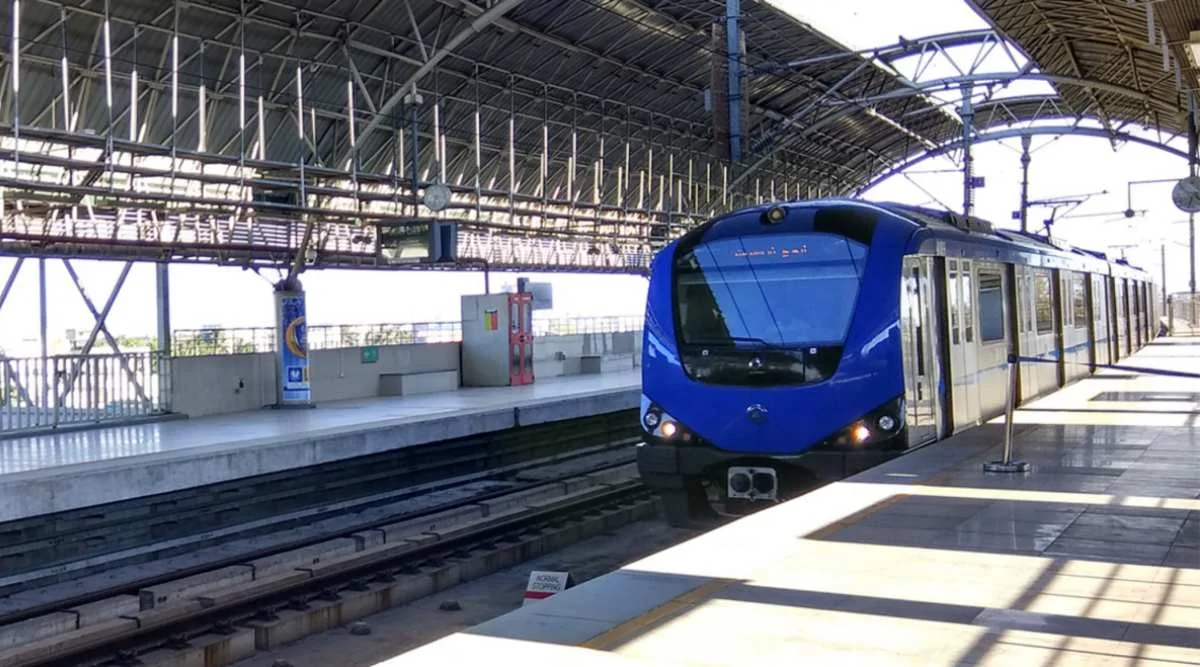
Chennai’s ambitious metro network has received a decisive push, with the Union government approving Rs 1,964 crore to accelerate construction and expansion works under Phase 2. Officials confirmed that the funds will be directed towards building new corridors, procuring advanced rolling stock, and upgrading critical systems. The investment signals a strong commitment to improving public transport in a city where traffic congestion and pollution continue to challenge everyday life.
Phase 2 of the Chennai Metro, spanning 118.9 kilometres, is one of the largest urban transport projects currently under execution in India. Designed to connect major residential and commercial hubs, the network aims to provide faster and safer mobility to lakhs of commuters. With the infusion of fresh capital, work on tunnels, viaducts, and stations is expected to progress at a quicker pace, enabling earlier completion timelines. Officials from Chennai Metro Rail Limited (CMRL) indicated that the financial assistance will not only support civil works but also bolster technological upgrades. This includes the procurement of modern driverless trains, improved signalling systems, and enhanced passenger amenities. The emphasis, they said, is on creating a metro system that rivals global standards while remaining affordable and accessible.
The expansion carries significant environmental implications as well. Experts highlighted that the metro, once operational across its full stretch, could reduce dependence on private vehicles and buses powered by fossil fuels. With Tamil Nadu’s capital city witnessing one of the highest vehicle growth rates in the country, shifting commuters towards cleaner, electric-powered mass rapid transit is expected to cut emissions and improve air quality. For the public, the project promises tangible improvements in daily commuting. Journeys that currently take over an hour during peak traffic could be completed in less than half the time. By connecting underserved areas and integrating with other transport systems, the metro also aims to reduce pressure on overburdened road networks. The socio-economic ripple effects are anticipated to include better connectivity for students, workers, and small businesses, thereby strengthening the city’s urban economy.
Government officials underscored that this funding is part of a broader national strategy to expand sustainable transport networks in metropolitan centres. Chennai, with its growing population and economic footprint, has been identified as a priority city in this regard. The Rs 1,964 crore allocation will supplement the state’s own funding commitments, ensuring that projects stay on track despite escalating construction costs. Urban planners believe that the successful completion of Phase 2 will transform Chennai’s mobility landscape, laying the foundation for a more equitable and environmentally conscious city. While challenges remain in terms of land acquisition and technical execution, the latest financial approval provides a fresh impetus to one of India’s most critical infrastructure undertakings.
Also Read : Mumbai Metro Extension To Gateway From Wadala Approved At Rs 28000 Crore Cost
