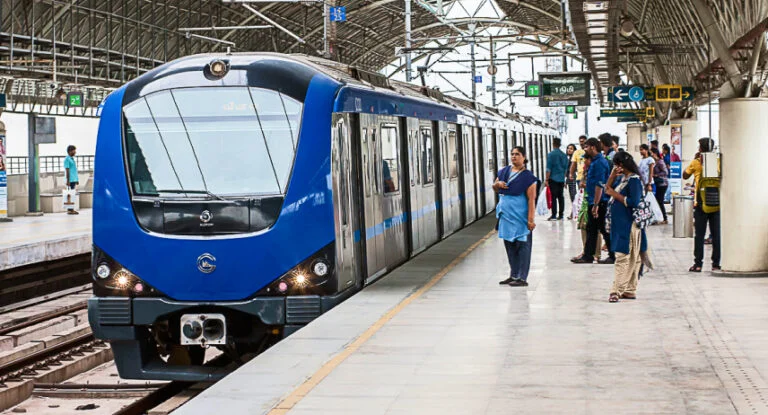
Chennai is moving closer to a long-awaited consolidation of its urban rail systems, with the State government and Indian Railways expected to sign a memorandum of understanding in January 2026 to transfer the city’s Mass Rapid Transit System (MRTS) to Chennai Metro Rail Limited. The proposed takeover, accompanied by a large-scale infrastructure upgrade, is positioned as a critical step towards creating a unified, efficient and sustainable public transport network in India’s fourth-largest metropolitan region.
The agreement, earlier targeted for December, has been deferred as technical and financial assessments continue. At the heart of the negotiations is the cost of modernising the ageing MRTS corridor, particularly the Chennai Beach Velachery stretch. Officials involved in the discussions estimate that bringing the system up to Chennai Metro Rail standards could require an investment of around ₹4,200 crore, though the final figure remains under evaluation. The total cost will depend on the extent of structural repairs, system replacements and passenger facility upgrades needed across stations and tracks. Chennai Metro Rail Limited has already begun groundwork for the transition. A preliminary assessment has identified urgent maintenance issues and gaps in station amenities, including accessibility features, lighting, signage and safety systems. Once the MoU is signed, the agency plans to appoint a project management consultant to prepare a detailed project report, which will form the basis for construction and renovation tenders.
A key component of the upgrade is the procurement of 25 new three-coach, air-conditioned trainsets designed to improve service frequency and passenger comfort. Officials say tenders for these trains will be issued only after the formal takeover is completed, ensuring that operational responsibility and funding arrangements are clearly defined. Financing remains central to the project’s viability. Chennai Metro Rail Limited has confirmed ongoing discussions with the World Bank for a long-term loan to support the MRTS modernisation. Urban transport experts note that multilateral funding could also introduce stronger project governance, climate resilience standards and social safeguards, aligning the upgrade with global best practices in low-carbon mobility.
Oversight of the merger rests with the Chennai Unified Metropolitan Transport Authority, which has proposed the creation of a dedicated state-level entity to manage major rail infrastructure projects. Tentatively referred to as the Tamil Nadu Rail Development Corporation, the body would coordinate planning, execution and integration across suburban rail, metro and future transit corridors. For commuters, the takeover promises more than cosmetic improvements. A single operator could enable integrated ticketing, coordinated timetables and smoother last-mile connectivity, reducing reliance on private vehicles. Planners argue that modernising MRTS is essential not only to revive underused assets but also to build an inclusive transport system that supports Chennai’s economic growth while lowering its carbon footprint. If executed effectively, the merger could become a template for Indian cities seeking cleaner, more equitable urban mobility.