


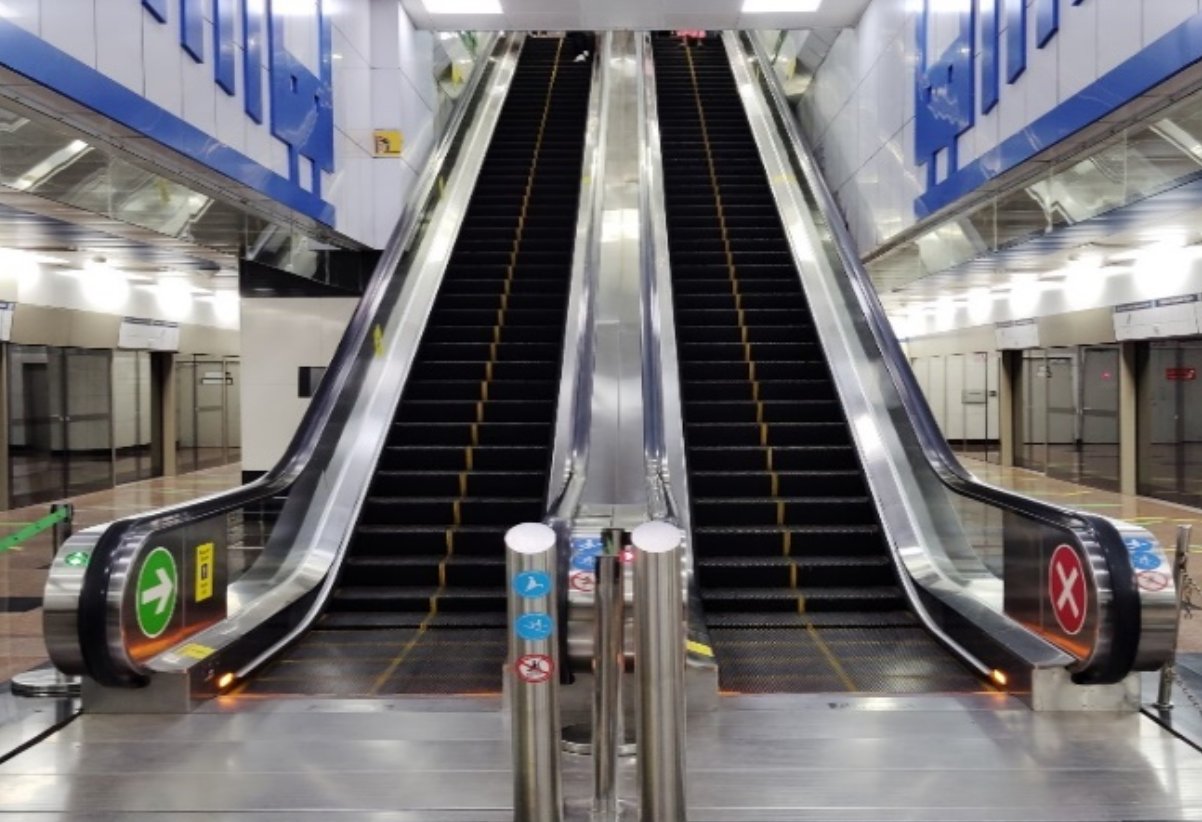
Chennai Metro Advances Accessibility Push With Escalator Contract
Chennai’s expanding metro network is taking another step toward improving commuter access, with a new contract awarded to install escalator systems along a key stretch of its Phase II corridor.
The development, focused on Line 5, signals a growing emphasis on inclusive infrastructure as the city prepares for higher passenger volumes and more complex transit interchanges.Officials indicate that the contract covers the design, supply, installation, and commissioning of escalators across multiple stations and access points. The move is aimed at enhancing vertical mobility—particularly in elevated and underground sections—where seamless movement between street level, concourses, and platforms is critical. The Chennai metro escalator project is expected to address accessibility gaps that often affect elderly commuters, persons with reduced mobility, and passengers carrying luggage.Urban transport experts note that escalator infrastructure is no longer viewed as a supplementary feature but a core component of modern transit systems. Efficient vertical circulation reduces congestion at entry and exit points, shortens transfer times, and improves overall passenger flow. In high-density corridors such as Line 5, these improvements can significantly influence ridership experience and operational efficiency.The Chennai metro escalator project also aligns with broader goals of universal accessibility and inclusive design. Infrastructure planners increasingly emphasise barrier-free access in public transport, integrating escalators with lifts, ramps, and tactile pathways to create a comprehensive mobility ecosystem.
Such measures are particularly important in a city like Chennai, where diverse commuter needs must be accommodated within rapidly expanding infrastructure.From a real estate and urban development perspective, improved station accessibility can have a measurable impact on surrounding neighbourhoods. Areas with well-equipped transit hubs often see increased footfall, higher commercial activity, and greater residential demand. Analysts suggest that Line 5, which connects emerging growth corridors, could benefit from enhanced connectivity, supporting transit-oriented development and more balanced urban expansion.Sustainability considerations are also embedded in the project’s design approach. Modern escalator systems are typically equipped with energy-efficient technologies, including variable speed drives and standby modes that reduce power consumption during low usage periods. Infrastructure specialists highlight that such features contribute to lowering the carbon footprint of large transit networks while maintaining high service standards.A senior project official indicated that timely execution and maintenance will be key to ensuring long-term performance. Escalators in high-traffic environments require robust design and regular upkeep to prevent service disruptions, which can directly affect commuter satisfaction and safety.
As Chennai continues to invest in its metro infrastructure, the focus on accessibility and passenger experience reflects a broader evolution in urban transport planning. The success of initiatives like this will depend on how effectively they integrate with other elements of the transit system, shaping a more inclusive, efficient, and resilient mobility network for the city.
Also Read:Bengaluru hotels adopt electric cooking systems push
