


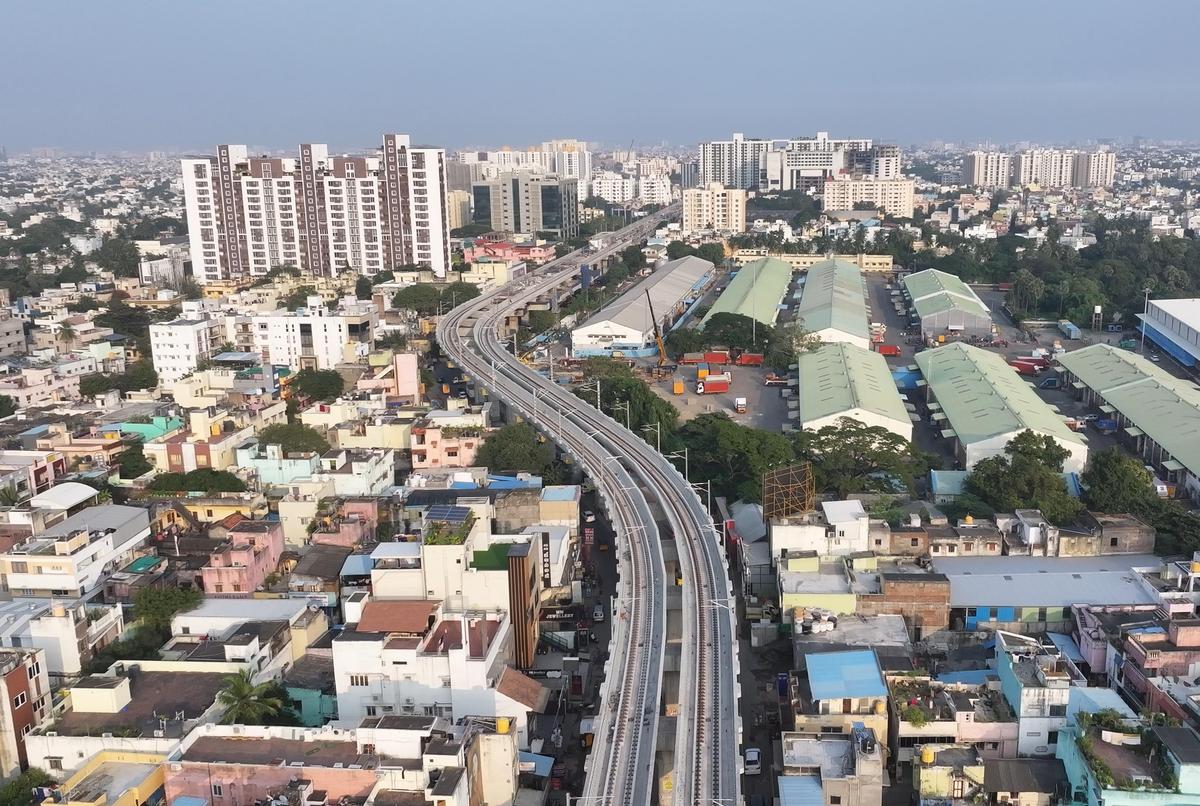
Chennai’s metro rail network has reached a key construction milestone with the completion of multiple deck slabs, a structural component essential for operational readiness on elevated corridors.
The development marks steady progress in expanding the city’s rapid transit system, reinforcing efforts to enhance capacity, reduce congestion and support sustainable urban mobility.The completed deck slabs form part of the elevated viaduct infrastructure that enables track laying and the eventual movement of metro trains. Their completion indicates that critical civil works are nearing readiness for subsequent phases, including system installation and testing. For a city grappling with increasing traffic volumes, such advancements in metro infrastructure are crucial to improving commuter efficiency and reducing reliance on road-based transport.Transport planners highlight that metro expansion plays a central role in reshaping urban mobility patterns. By offering a reliable, high-capacity alternative to private vehicles, metro systems can help ease congestion on arterial roads while lowering emissions. In Chennai, where vehicular density continues to rise, strengthening mass transit infrastructure is seen as essential for achieving long-term climate and sustainability targets.The progress also reflects the scale and complexity of urban infrastructure projects. Constructing elevated corridors in densely populated areas requires coordination across multiple agencies, careful traffic management and adherence to safety standards.
Industry experts note that timely execution of such milestones is critical to maintaining project schedules and controlling costs, both of which have broader implications for public investment and urban development.From an economic perspective, metro expansion can influence real estate dynamics and land use patterns. Improved connectivity often drives demand in areas surrounding stations, encouraging transit-oriented development and mixed-use growth. This can lead to more efficient utilisation of urban land, provided that planning frameworks ensure equitable access and prevent speculative imbalances.The environmental benefits of metro systems are also significant. Electrified rail networks produce lower per-capita emissions compared to conventional road transport, contributing to cleaner air and reduced carbon footprints. As cities like Chennai aim to build resilience against climate risks, investments in sustainable transport infrastructure are becoming increasingly important.Urban development specialists emphasise that the success of metro projects depends not only on construction progress but also on integration with other modes of transport. Seamless connectivity with buses, suburban rail and non-motorised transport options can enhance accessibility and encourage higher ridership.
As Chennai Metro advances towards operational readiness on new stretches, the focus will shift to system integration, safety clearances and service rollout. The completion of key structural components signals forward momentum, but sustained coordination and planning will be necessary to ensure that the expanded network delivers on its promise of efficient, inclusive and environmentally sustainable urban mobility.
Also Read:Chennai Japanese Course Expands Global Education Opportunities
