


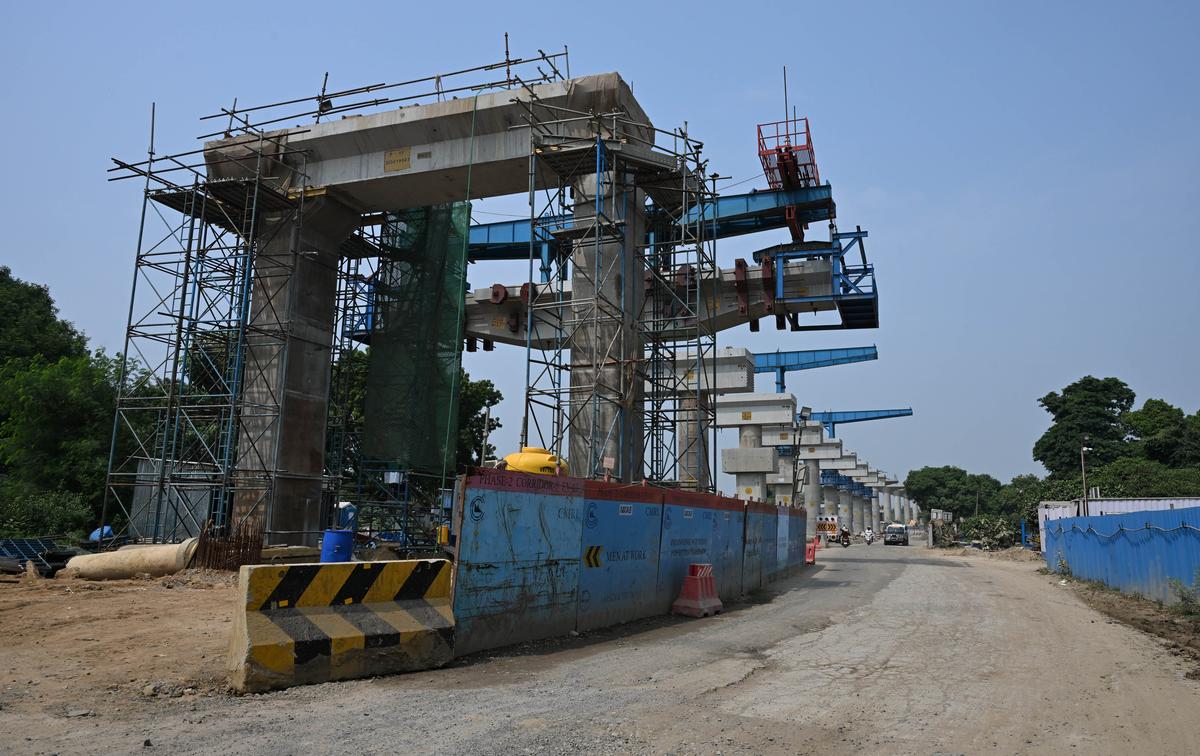
A recent assessment of infrastructure activity in Chennai has flagged rising environmental stress linked to ongoing metro rail construction, with elevated dust levels and persistent noise emerging as key concerns.
The findings highlight the growing challenge of balancing large-scale transit expansion with public health and liveability in dense urban corridors.The study points to construction zones as concentrated sources of particulate matter, particularly in high-traffic neighbourhoods where excavation, material transport, and road diversions intersect. Fine dust generated during drilling and earthmoving activities has been found to linger in the air, affecting both commuters and residents. Simultaneously, prolonged exposure to high decibel levels from heavy machinery and piling operations is adding to urban noise stress.Urban planners say these patterns are not unique to Chennai but reflect broader pressures faced by rapidly expanding cities investing in mass transit systems.However, the scale and pace of construction have intensified localised impacts. In mixed-use areas—where residential buildings, schools, and commercial establishments coexist—construction-related pollution can disrupt daily life and raise long-term health concerns.The issue of metro construction pollution is particularly relevant as Chennai accelerates efforts to expand its public transport network. While metro systems are widely seen as a low-carbon mobility solution that can reduce vehicle emissions over time, the construction phase introduces short-term environmental costs that need careful management.
Experts note that without adequate mitigation, these impacts can disproportionately affect vulnerable populations living close to project sites.Contractors and civic agencies are reportedly implementing measures such as water spraying to control dust, noise barriers, and restricted working hours in sensitive zones. However, industry observers suggest that enforcement remains uneven, and monitoring systems need to be more transparent and data-driven. A senior environmental expert indicated that real-time air and noise tracking, combined with stricter compliance standards, could significantly reduce metro construction pollution.There are also implications for project timelines and costs. Enhanced environmental safeguards often require additional investment and operational adjustments, which can affect delivery schedules. Yet, experts argue that integrating sustainability into construction practices from the outset is more cost-effective than addressing health and environmental damage later.From a broader urban development perspective, the findings underscore the need for infrastructure planning that places citizens at the centre. As Chennai continues to invest in transit-oriented growth, aligning construction practices with climate resilience and public health priorities will be critical. This includes adopting cleaner technologies, improving site management, and ensuring that communities are informed and protected during project execution.The path forward lies in balancing infrastructure ambition with environmental responsibility.
For Chennai, managing metro construction pollution effectively will determine not just the success of its transit expansion, but also the quality of life in the neighbourhoods it seeks to serve.
Also Read:Chennai Construction Costs Rise Amid Global Supply Shocks
