


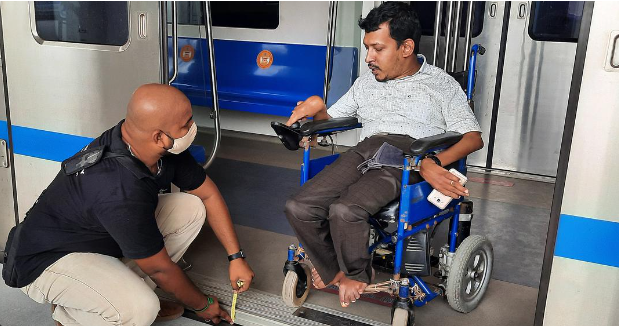
Chennai Metro Rail Limited (CMRL) has set a target of six months to ensure all 32 stations in its phase I network become fully disabled-friendly, as disclosed during a court hearing by advocate general P S Raman. The commitment comes in response to a public interest writ petition advocating for comprehensive accessibility across metro stations.
According to Raman’s submission before the first bench of Acting Chief Justice R Mahadevan and Justice Mohammed Shaffiq, the necessary modifications will be executed during non-operational hours, specifically between midnight and 4am, to minimize disruption to commuters. “The Managing Director of CMRL has assured the deployment of sufficient manpower during these hours to meet the compliance guidelines within the stipulated timeframe,” he stated. Acknowledging the challenges posed by potential structural adjustments that may temporarily halt metro services for a month or more, Raman emphasized the need for alternative solutions that mitigate commuter inconvenience.
Until the modifications are completed, CMRL has stationed dedicated personnel at each location to assist disabled passengers boarding trains. Raman noted that current usage statistics indicate an average of 10.3 to 12 disabled passengers per day across CMRL stations, thereby informing resource allocation decisions. The first bench, while recording the submissions, suggested collaborative efforts between CMRL and the petitioner of the PIL to explore feasible solutions. The court adjourned the hearing for further review after four weeks, anticipating progress updates on the metro accessibility initiatives. This commitment marks a significant step towards enhancing public infrastructure accessibility in Chennai, aligning with broader initiatives to ensure inclusive urban mobility. The initiative underscores CMRL’s proactive approach to meeting regulatory requirements and addressing public welfare concerns effectively. As CMRL progresses with its timeline, stakeholders anticipate improved accessibility standards that accommodate diverse commuter needs, setting a precedent for equitable urban transport infrastructure development across the region.
