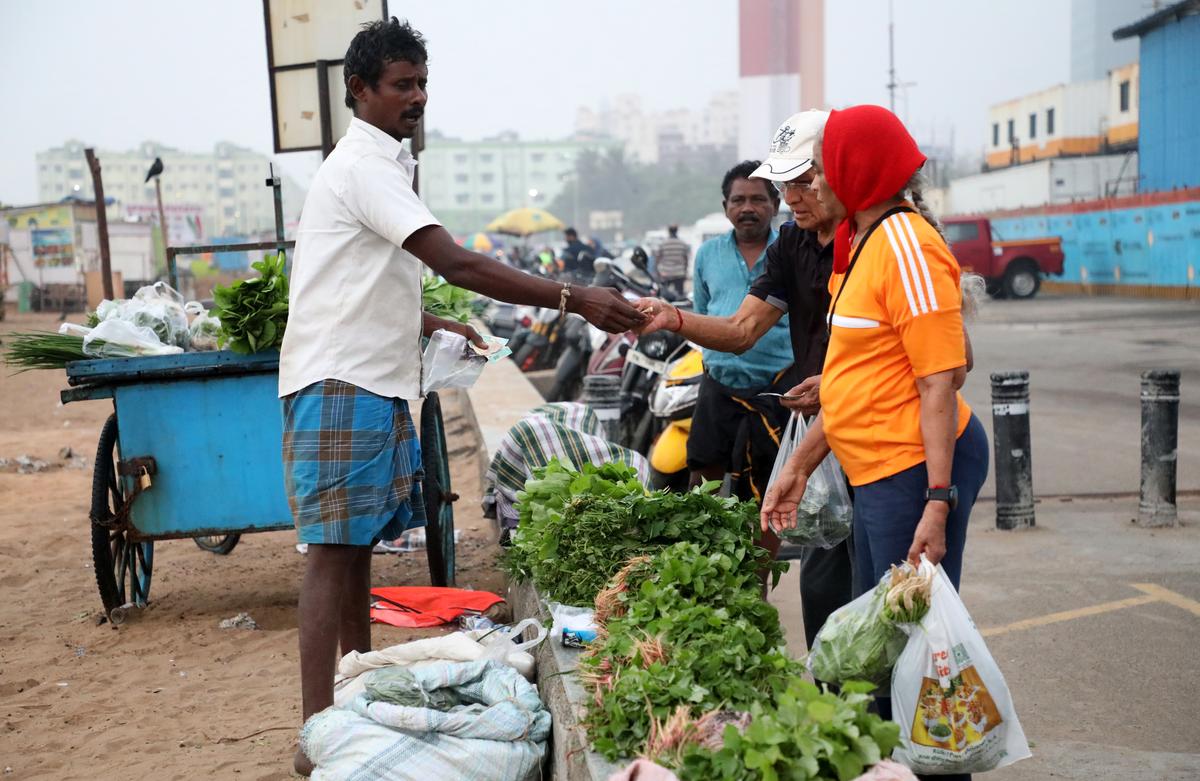
Chennai’s long-running contest over informal commerce along Marina Beach has entered a political pause, with the Greater Chennai Corporation (GCC) deferring enforcement against unauthorised stalls until after the upcoming Assembly elections. The decision leaves nearly 2,000 small traders in uncertainty and underscores the complex balance between public space management, coastal ecology and urban livelihoods in one of India’s most visited beachfronts.
Civic officials confirmed that a drive to rationalise vending activity along the promenade will resume once polling concludes, citing concerns around public order during the election period. The move follows a court-directed exercise aimed at limiting authorised stalls to 300 through a lottery mechanism, an approach that failed to secure participation from a majority of vendors.At the heart of the dispute is the future of Marina’s informal economy. Vendor associations estimate that close to 2,000 shop owners operate across various stretches of the beach. Many argue that a sharp reduction would dismantle long-established micro-enterprises that depend almost entirely on tourist footfall.nCity administrators, however, contend that unregulated vending has strained sanitation systems, restricted beach visibility and complicated coastal management efforts.
Portions of the seafront have already been cleared under the Blue Flag beach development programme, a certification model designed to improve environmental quality, safety and visitor amenities. Officials say subsequent phases will further reorganise space usage to enhance pedestrian access and coastal resilience.The Marina vendor clearance debate therefore extends beyond enforcement. Urban planners note that beachfronts are climate-sensitive public assets, particularly in cyclone-prone regions such as Chennai. Reducing congestion can aid evacuation planning, improve waste management and protect dune ecosystems. Yet, removing informal traders without structured rehabilitation risks deepening economic vulnerability in a city where informal work forms a significant share of employment.
Merchants are demanding regulated vending zones rather than eviction, calling for transparent allocation criteria and relocation options that maintain commercial viability. They argue that Marina’s street food culture forms part of the city’s tourism identity and supports thousands of dependents. Experts suggest that a calibrated approach integrating vending clusters, uniform design guidelines, waste segregation systems and defined operating hours could reconcile environmental compliance with income security. Similar models in other coastal cities have demonstrated that formalising informal trade can improve revenue collection and public hygiene while preserving local enterprise. As Chennai prepares for post-election action, the outcome will test how the city manages competing priorities: ecological stewardship, electoral sensitivity, and equitable access to economic opportunity. The direction taken could influence how other Indian metros approach high-footfall public spaces where sustainability, heritage and livelihoods intersect.