



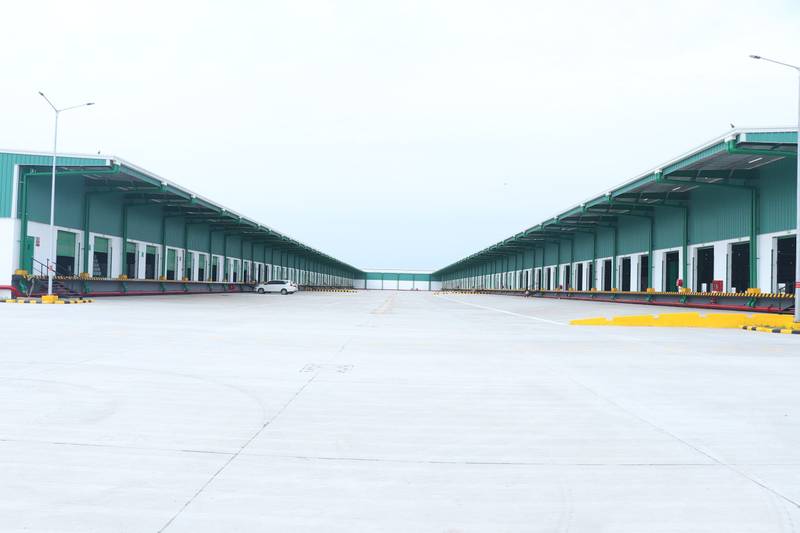
Chennai’s logistics and warehousing sector is set for a significant capacity boost with the commencement of a large-scale logistics park in the city’s northern corridor.
The development, spanning over a million square feet, underscores the growing importance of integrated supply chain infrastructure in supporting industrial growth and urban economic activity.Located in North Chennai, the project is expected to strengthen the region’s role as a key logistics hub, leveraging proximity to ports, industrial zones and major transport corridors. The Chennai logistics park expansion reflects increasing demand for organised warehousing driven by e-commerce growth, manufacturing activity and evolving distribution networks.Industry experts highlight that modern logistics parks are designed to improve efficiency across supply chains by offering scalable storage, streamlined operations and advanced technology integration. In a city like Chennai, where industrial output and trade volumes continue to rise, such infrastructure plays a critical role in reducing turnaround times and operational costs.From an urban development perspective, the concentration of logistics assets in North Chennai aligns with efforts to decentralise economic activity and reduce pressure on core city areas. By developing infrastructure in peripheral zones, planners aim to create balanced growth while improving connectivity between production centres and consumption markets.The Chennai logistics park expansion is also expected to influence real estate dynamics in the surrounding areas. Increased demand for warehousing and industrial space often drives land value appreciation and encourages the development of supporting infrastructure, including roads, utilities and worker housing.
This can contribute to the emergence of integrated industrial ecosystems.Sustainability considerations are becoming increasingly central to logistics infrastructure. Experts note that new developments are incorporating energy-efficient designs, renewable energy integration and optimised layouts to minimise environmental impact. In the context of Chennai’s climate goals, such features are essential to ensuring that industrial expansion does not come at the cost of environmental degradation.The project also has economic implications, particularly in terms of employment generation and investment inflows. Large logistics parks create jobs across operations, maintenance and supply chain management, while also attracting businesses that rely on efficient distribution networks. This can enhance the city’s competitiveness as a manufacturing and trade hub.However, challenges related to infrastructure readiness and connectivity remain. Efficient road and rail linkages are critical to maximising the utility of logistics parks, and any gaps in these networks could limit operational efficiency. Coordinated planning between public authorities and private developers will be essential to address these issues.
As Chennai continues to expand its industrial and logistics footprint, developments such as this highlight a shift towards more structured and technology-driven supply chain ecosystems. The success of the Chennai logistics park expansion will depend on its ability to integrate with broader urban infrastructure while supporting sustainable and inclusive economic growth.
Also Read:Chennai Viral Infection Rise Monitored Among Children
