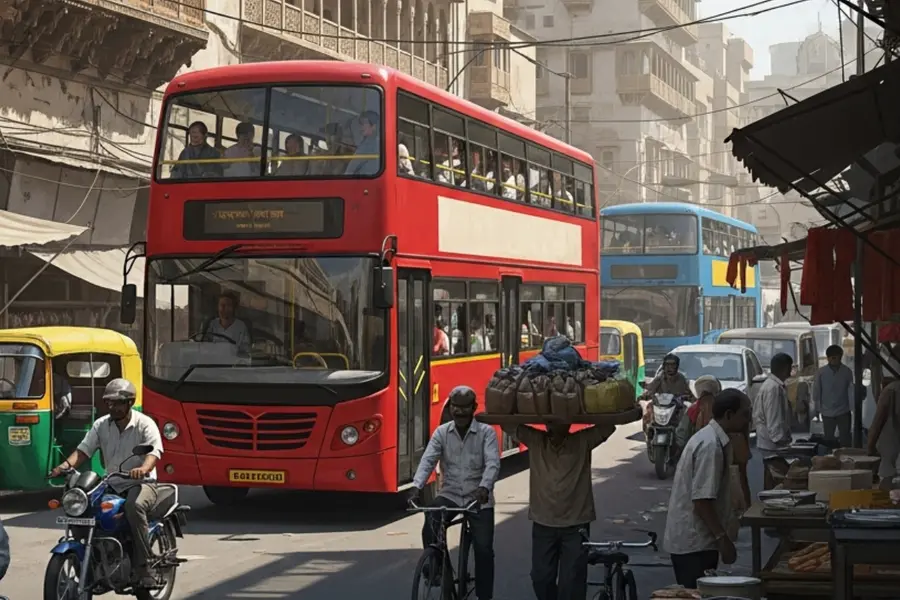
Chennai Launches Double Decker Sightseeing Buses Soon
Chennai is reviving a long-dormant chapter of its urban transport heritage with the launch of an air-conditioned double-decker sightseeing bus service aimed at tourists and city explorers. Set to be inaugurated by the state’s chief minister, the initiative reintroduces elevated panoramic travel to the city’s historic corridors — a blend of cultural experience and sustainable mobility that comes as Indian metros increasingly experiment with tourism-led public transport innovations.
The first route will circle from the Tamil Nadu Tourism Development Corporation (TTDC) office on Wallajah Road, passing key civic landmarks such as the Munro Statue on Anna Salai, the Madras High Court, RBI building, Secretariat, Napier Bridge and Foreshore Estate before returning via the DGP office. Air-conditioned comfort and guided commentary options are expected to broaden appeal for both domestic and international visitors, supporting Chennai’s efforts to grow its urban tourism economy without adding to surface traffic congestion. Although double-deckers were a familiar sight on Chennai’s roads in decades past, they disappeared from regular service more than 15 years ago. Their return reflects broader trends in Indian cities where transport networks are being reimagined to serve not only commuters but also visitors wanting deeper engagement with a city’s heritage and urban fabric. The move also dovetails with Tamil Nadu’s sustainability goals, as the buses are planned to be electric models, integrating cleaner propulsion technologies into the city’s surface mobility system — a shift from the diesel-powered predecessors of the late 20th century.
The project has mobilised support from the Tamil diaspora in the United States and benefited from a corporate social responsibility contribution from Ashok Leyland, signalling a blend of community-backed funding and governmental backing. Officials say the service will initially run on the defined circular route with scope to extend to additional heritage and cultural nodes based on tourist feedback and operational learnings. Urban mobility analysts note that integrated sightseeing services can help reduce reliance on private vehicles for recreational travel, potentially diminishing traffic choke points around key destinations during peak periods. By combining touristic value with a public transport framework, Chennai’s bus programme may serve dual purposes: easing movement across dense quarters while offering curated experiences of landmarks that are often overlooked by conventional transit systems. This strategy resonates with global examples where cities leverage iconic transport modes — such as hop-on hop-off buses or river ferries — to enrich urban visitation without inflating carbon footprints.
However, stakeholders caution that success will hinge on effective route planning, frequency adjustments and integration with existing bus and metro networks. Horizontal and vertical clearances on key routes, pedestrian safety at stops and weather-resilience of outdoor viewing decks will require meticulous operational planning. Equally important will be real-time passenger information and easy ticketing systems that bridge digital accessibility with on-ground convenience.
Looking ahead, the double-decker initiative could pave the way for a broader suite of experience-oriented transport services, including curated heritage loops and eco-friendly circulators that stitch together Chennai’s cultural assets. As cities globally adopt multi-modal strategies to address congestion while amplifying tourism, Chennai’s model may offer insights into blending heritage preservation with modern, climate-aware mobility design