


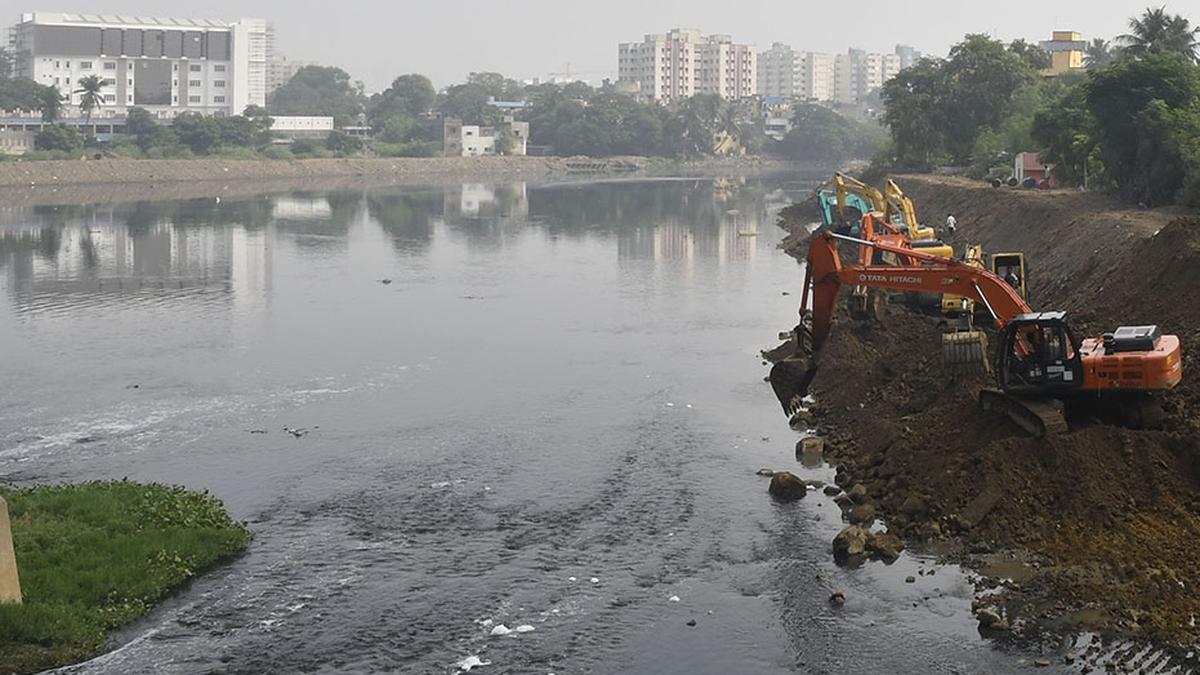
Authorities in Chennai have begun clearing residential structures built along a canal connected to Villivakkam Lake, part of a broader effort to restore urban waterbodies and reduce flood vulnerability in the city.
The Chennai lake restoration drive involves the demolition of dozens of houses identified as encroachments on land classified as a waterbody corridor, according to municipal officials overseeing the operation.
City administrators say the removal of the structures is intended to reclaim drainage channels linked to the lake and restore the natural flow of stormwater. Urban planners have increasingly highlighted the role of such channels in preventing flooding, particularly in densely developed neighbourhoods where natural waterways have been narrowed or blocked over time.Officials from the city corporation indicated that the affected houses were located along a canal that forms part of the lake’s drainage system. The Chennai lake restoration drive aims to remove obstacles from these waterways so that stormwater can flow freely during periods of heavy rainfall, reducing the risk of inundation in surrounding residential areas.Chennai has faced repeated flooding challenges in recent years, prompting authorities to prioritise the restoration of lakes, canals and wetlands that historically helped manage excess rainwater. Environmental experts note that protecting waterbodies and their feeder channels has become central to the city’s climate resilience strategy.However, the clearance operation has also raised concerns among residents who have been living in the locality for decades. Several families reported sudden disruptions as demolition activity began, affecting households, students and working residents who relied on the neighbourhood’s proximity to schools and workplaces.Residents displaced by the operation are expected to be relocated to government-built housing units in another part of north Chennai.
Officials said accommodation arrangements have been planned to ensure affected families receive alternative housing after the clearance process is completed.Urban housing specialists note that such situations highlight the complex challenge of balancing environmental restoration with social rehabilitation. Informal housing often develops in areas near waterways because of limited access to affordable land within cities. When restoration programmes begin, relocation policies become crucial to ensure displaced residents are provided with adequate housing and services.The Chennai lake restoration drive forms part of a wider programme to revive waterbodies across the metropolitan region. In addition to improving flood management, lake restoration can help recharge groundwater, improve urban biodiversity and create public open spaces.City planners say restoring drainage channels connected to lakes like Villivakkam is particularly important because they serve as critical pathways for stormwater during intense monsoon events. When such channels are obstructed, water accumulates in nearby streets and residential areas, increasing the risk of urban flooding.Infrastructure experts also emphasise the importance of long-term monitoring and protection of reclaimed waterbody land. Without consistent enforcement and urban planning safeguards, restored waterways can once again face encroachment pressures in rapidly expanding cities.
As Chennai continues to adapt to climate pressures and urban growth, projects under the Chennai lake restoration drive are likely to remain a central part of the city’s strategy to build a more resilient and environmentally balanced urban landscape.
Also Read:Kolkata Infrastructure Projects Boost Eastern Connectivity Network
