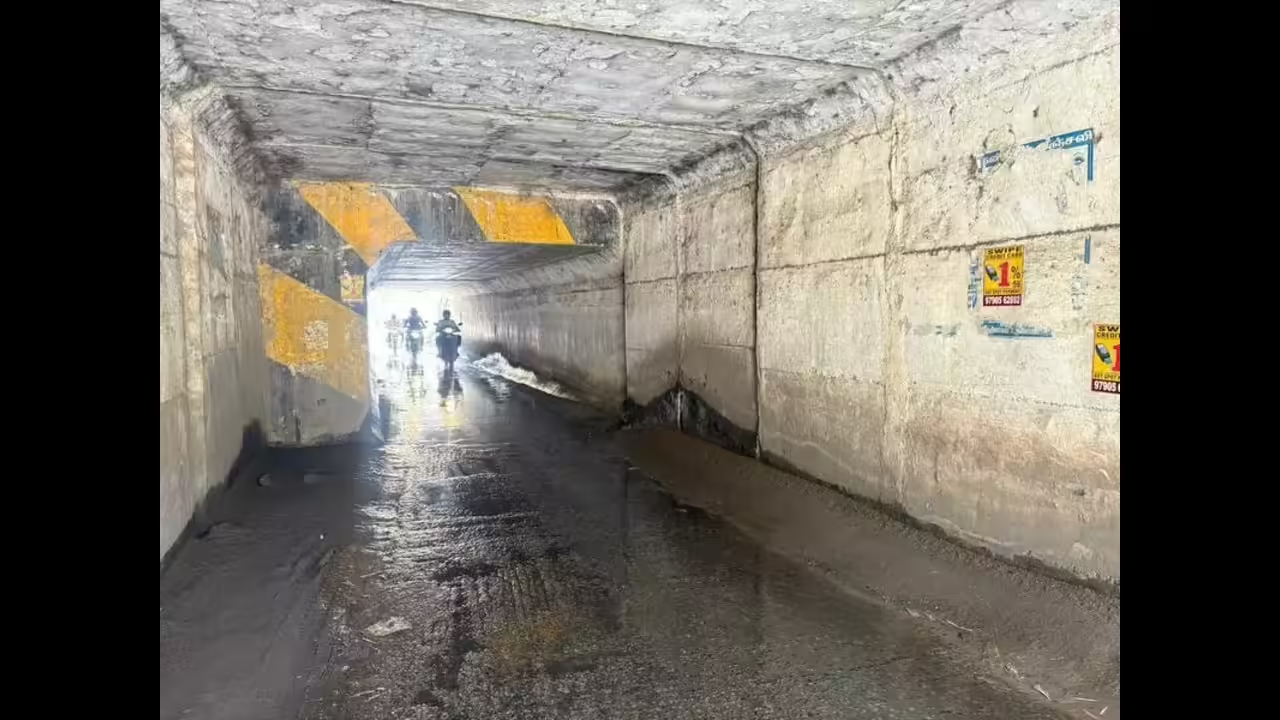
Chennai Irumbuliyur Underpass Stagnation Raises Urban Risks
An underpass at Irumbuliyur near East Tambaram railway station has become a persistent civic liability, undermining everyday mobility for thousands of commuters and highlighting systemic maintenance gaps in city transport infrastructure. Built in 2018 at a cost of roughly ₹2 crore to ease congestion near the suburban rail hub, the 120‑metre passage now suffers from sewage infiltration, inadequate lighting and safety deficits, prompting renewed calls for holistic urban infrastructure governance.
The underpass, intended to provide a safer, signal‑free crossing below railway tracks for vehicles and pedestrians linking GST Road with Velachery Main Road, is instead marked by continuous water and sewage seepage and stagnant pools, particularly during the monsoon season — conditions that users say persist year‑round. Daily traffic flows remain high as motorists seek to bypass surface congestion near Tambaram station, yet the basic amenities that ensure commuter comfort and safety are absent. Local residents and commuters describe the space as lacking essential infrastructure such as functional lighting, CCTV surveillance and designated footpaths, creating hazards especially after dusk when the underpass becomes poorly visible and perceived as unsafe. “After early evening, this place feels like a different corridor altogether — dark, slippery and risky for two‑wheelers and pedestrians,” a resident active in a Tambaram neighbourhood association told Urban Acres, reflecting widespread community concern.
Civic officials have shifted responsibility for maintenance to the railway authorities, which currently oversee the rail under‑structure, asserting inspection plans and incremental upgrades — notably lighting and camera installations — are forthcoming. However, the absence of a formal maintenance protocol or upkeep budget has allowed the underpass to degrade, frustrating commuters reliant on this link for both work and essential travel. Urban planners observing the situation argue the Irumbuliyur case underscores a broader challenge facing fast‑growing cities like Chennai: institutional fragmentation in infrastructure stewardship. Inter‑agency coordination — involving municipal corporations, railways and state transport bodies — is often less than seamless, leading to gaps in basic services for urban residents. These governance chasms can transform otherwise modest transport assets into bottlenecks or safety hazards, undermining broader goals of inclusive, equitable mobility.
Experts highlight that persistent waterlogging and sewage intrusion not only degrade public assets but also pose public health and environmental risks. Untreated organic effluent combined with standing water fosters mosquito breeding and accelerates material wear, increasing future rehabilitation costs. In the absence of coordinated maintenance and monitoring systems, such infrastructure can rapidly devolve into liabilities rather than enablers of seamless urban movement. Comparable maintenance problems have been observed in other Chennai subways, where water seepage, poor lighting and deteriorating pavements have similarly compromised usability and safety, pointing to a citywide infrastructure stewardship deficit.
As Chennai’s transport networks expand under multiple development schemes, addressing these governance and maintenance bottlenecks will be essential. Residents and planners alike see immediate attention to sanitation, surveillance and pedestrian access as overdue — not just for Irumbuliyur but across urban underpasses citywide.