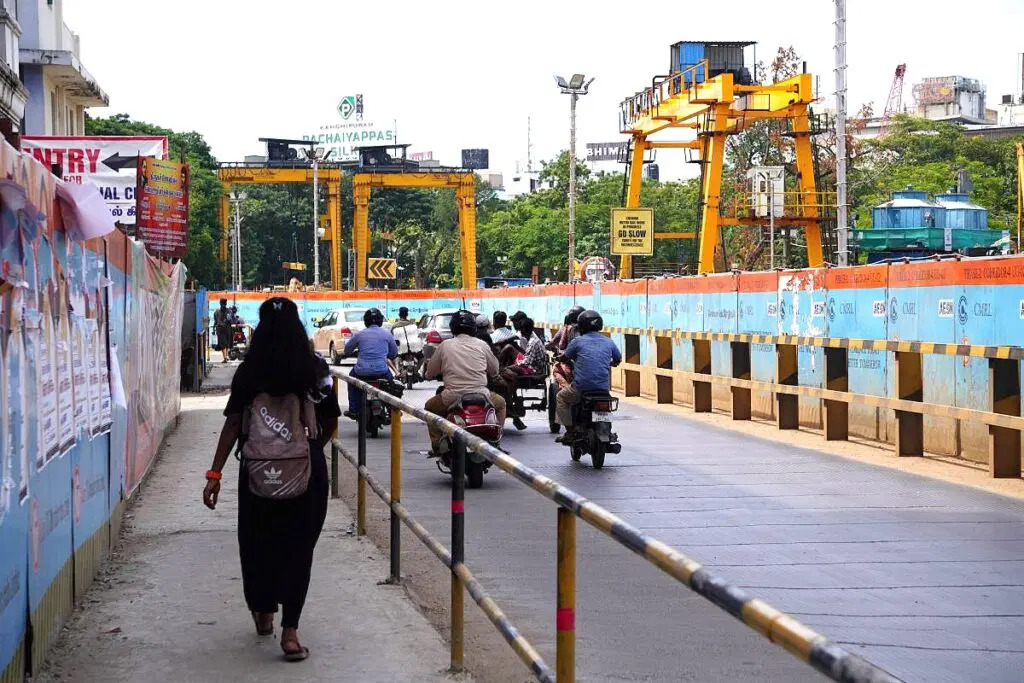
Chennai is witnessing a growing pedestrian safety concern as stone blocks and uneven surfaces obstruct key zebra crossings in Anna Nagar, creating hazards for daily commuters. The stretch, which experiences heavy vehicular traffic throughout the day, has seen multiple incidents where pedestrians and cyclists have tripped or lost balance, underscoring the need for urgent urban safety interventions.
Urban planners highlight that poorly maintained crossings directly impact city mobility, particularly for children, senior citizens, and persons with disabilities. “When basic pedestrian infrastructure fails, it reduces walkability and discourages non-motorised transit, which are crucial for a climate-resilient city,” noted a senior urban affairs official. The accumulation of temporary obstacles, such as stone blocks, also reflects systemic gaps in road maintenance and public safety oversight. Anna Nagar, a high-density neighbourhood, relies heavily on pedestrian connectivity to access schools, markets, and transport hubs. Experts indicate that infrastructure inadequacies here not only increase accident risk but also influence real estate perceptions. Properties in areas with unsafe crossings may experience lower footfall and reduced investor confidence, particularly in a market increasingly sensitive to sustainable and inclusive urban planning.
The phenomenon also raises questions about equitable city design. Residents report that uneven road surfaces disproportionately affect those with mobility challenges. Inadequate lighting and obstructed crossings compound the risk during evening hours, reducing visibility and increasing potential collisions with fast-moving vehicles. Urban development analysts emphasise that pedestrian-first planning is essential not only for safety but also for promoting gender-neutral, accessible urban spaces where economic and social activities can flourish without physical barriers. From an environmental perspective, improving walkability supports sustainable transport modes, such as walking and cycling, which are critical for reducing vehicular emissions. Urban designers argue that regular monitoring, timely maintenance, and community reporting mechanisms are key to ensuring that pedestrian infrastructure supports both safety and climate goals.
City authorities have acknowledged the long-standing issue but have yet to implement comprehensive solutions. Moving forward, planners suggest the adoption of modular pedestrian safety features, periodic audits of crossings, and integration of universal design principles to accommodate all age groups and abilities. Investments in well-maintained pedestrian infrastructure not only safeguard citizens but also enhance the overall resilience and attractiveness of urban neighbourhoods.