


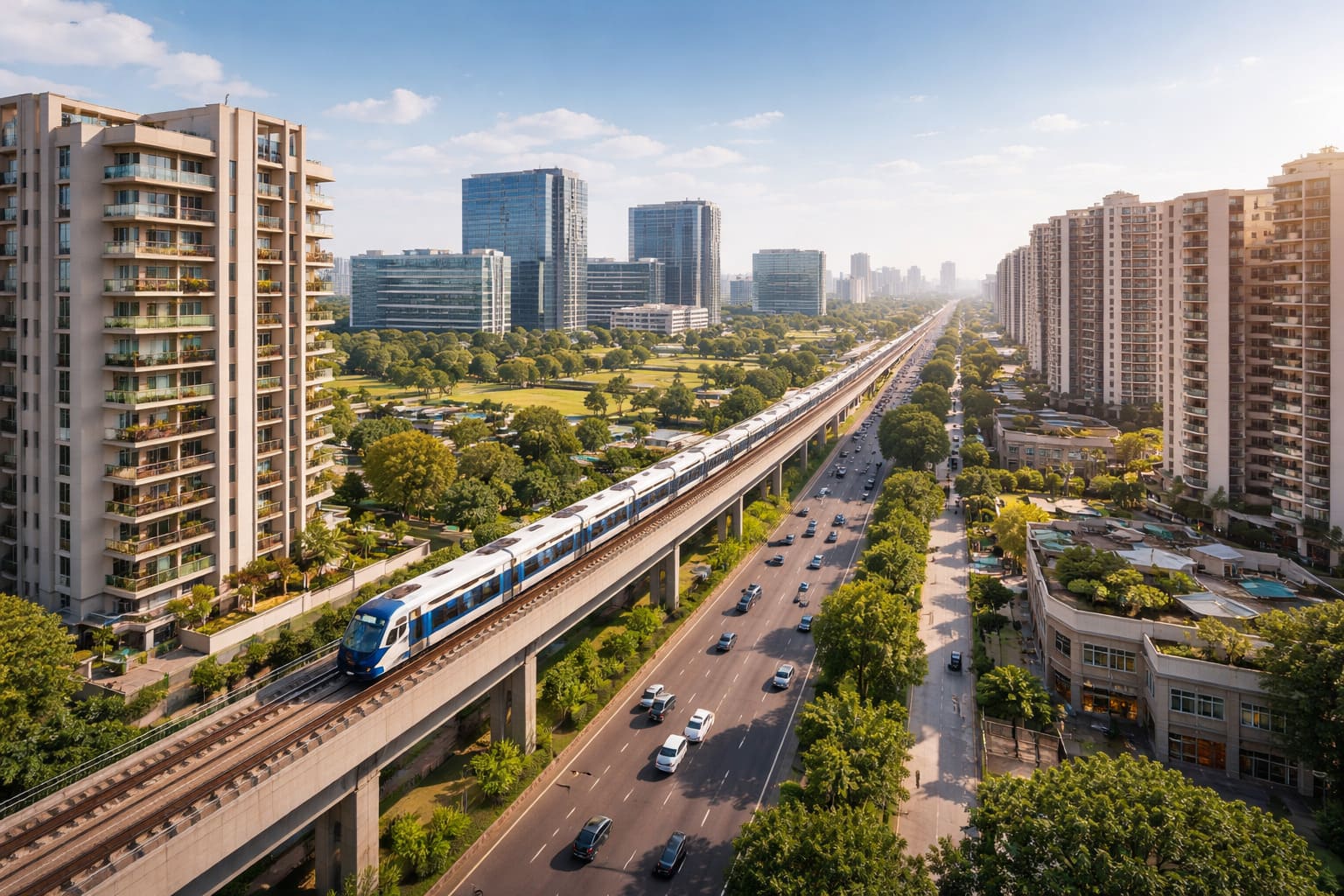
Chennai Real Estate Maintains Momentum Amid Market Pressures
Chennai’s residential property sector is demonstrating notable resilience despite a broader slowdown in India’s housing market. Analysts and industry officials report steady sales, particularly in mid-segment apartments and townships, indicating sustained urban demand in the city.
The trend underscores Chennai’s evolving appeal as a hub for investment, infrastructure development, and long-term housing stability.Urban planners note that Chennai’s resilience is supported by ongoing infrastructure upgrades, including new metro lines, elevated corridors, and improved connectivity to peripheral suburbs. These developments have not only eased intra-city commuting but also expanded viable residential catchments, attracting both end-users and investors. A senior real estate analyst observed that the city’s combination of established IT hubs, educational institutions, and diversified economic base contributes to consistent housing demand.Data from property consultancies suggest that while prices in metro cities like Bengaluru and Hyderabad have moderated, Chennai has experienced only marginal corrections. Mid-range housing, particularly units priced between ₹60 lakh to ₹1.2 crore, continues to witness strong absorption. Developers indicate that prudent financing options, including attractive home loans and flexible payment plans, are sustaining buyer confidence even amid economic uncertainties.From an urban development perspective, Chennai’s experience highlights the interaction between transport infrastructure and real estate growth.
Well-planned road networks, metro expansion, and the development of smart townships have enhanced livability in peripheral areas, supporting equitable urban expansion. City officials stress that promoting sustainable construction practices and integrating green spaces remain priorities to ensure long-term resilience and livability.Economic experts emphasise that the sustained property demand is closely linked to employment growth, especially in IT, manufacturing, and services sectors. This stability allows developers to confidently plan mid-to-long-term projects, mitigating risks associated with market fluctuations. Moreover, Chennai’s comparatively lower transaction volatility compared with other metros has positioned it as a safer destination for residential investment.However, analysts caution that continued momentum depends on maintaining infrastructure delivery and addressing urban sustainability challenges. Efficient traffic management, adequate water supply, and energy-efficient construction are seen as critical for supporting ongoing urban densification. Incorporating climate-resilient design and promoting mixed-use developments could further enhance the city’s appeal to both residents and investors.
Chennai’s housing market trajectory illustrates the broader principle that urban growth, when coupled with infrastructure investment and strategic planning, can buffer cities against national or regional economic pressures. For residents and investors, this offers opportunities to secure housing in well-connected, sustainable urban environments while enabling developers to pursue responsible expansion strategies.
Also Read:Hyderabad Chennai Highway Updates Road Conditions
