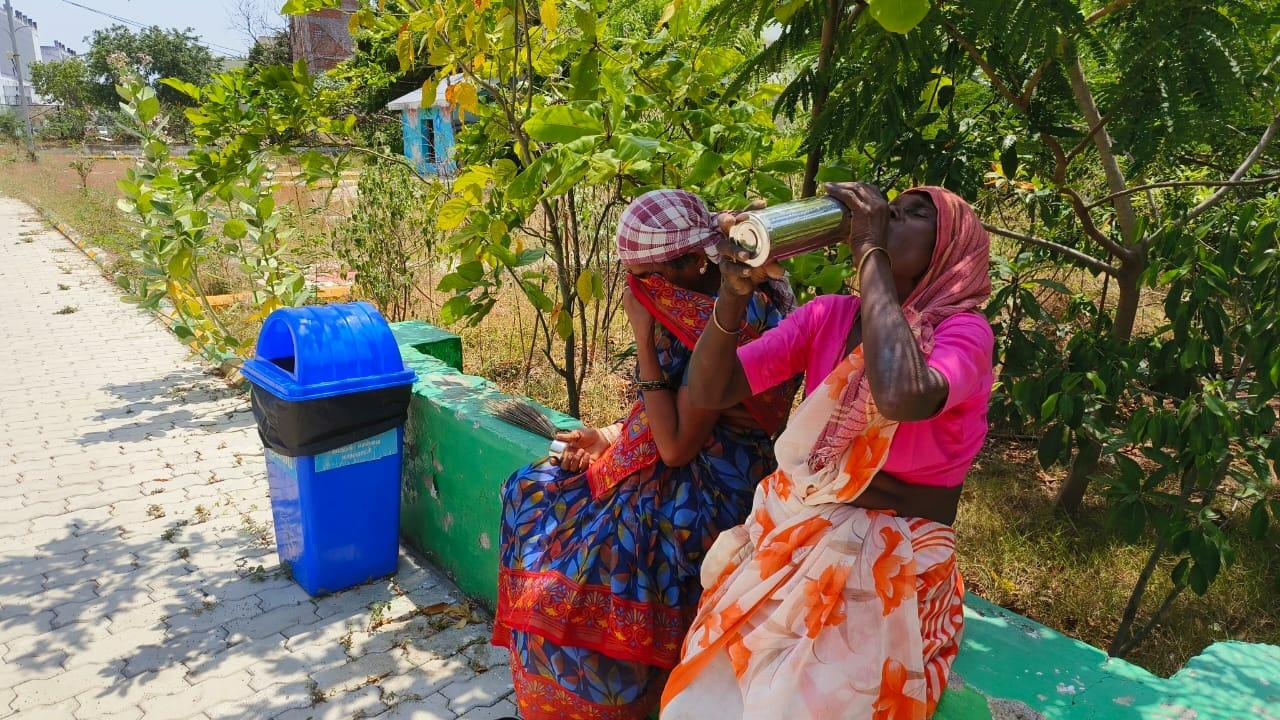
Chennai Heatwave Deepens Coastal Livelihood Crisis
As Chennai reels under record-breaking heat, the city’s coastal women—essential to its thriving fishing economy—battle daily exhaustion, poor health, and invisible inequality. Working long hours without shade, toilets, or fair pay, these women expose how climate change and systemic neglect are pushing entire communities to the brink.
A Fisherwoman starts her 15-hour workday well before dawn, preparing breakfast for her children before heading to Pazhaverkadu’s bustling fish market. As the sun climbs over the coast, so does the heat, pushing “feels-like” temperatures to nearly 40°C. Yet, she squats on blistering concrete, cleaning fish vein by vein for ₹20–₹30 a kilo—her sunburns and leg pain masked by the urgency of survival. Despite generating over ₹1 crore daily in seafood trade and contributing to India’s ₹60,523-crore export economy, Chennai’s coastal labourers—especially women—remain the most exploited. They face unbearable heat, chronic dehydration, and shrinking incomes, all while underpinning one of the country’s most vital food chains. A 2024 Centre for Science and Environment study confirms that Chennai now ranks as India’s hottest megacity in terms of average summer heat index, driven largely by humidity.
Fisherwomen in Pulicat and North Chennai play an integral but often invisible role in this economy—hauling fresh catch, selling door to door, drying unsold fish, and cleaning seafood for customers. Yet, most earn barely ₹200–₹300 per day, with no access to shade, toilets, or clean water during their long work hours. The market’s lone toilet costs ₹5 per use; most women simply avoid hydration altogether to limit bathroom breaks. “I carry water, but it heats up by 10 am. We end up buying cold drinks instead,” says Selvi, 54, who also dries fish outdoors. Without sufficient sun, her stock can rot, turning ₹300 of fish into a ₹100 loss. But sun exposure itself is no gift—she suffers from chronic dizziness and dehydration. “Menopause makes everything worse,” she says, describing the hot flashes, headaches, and bone aches now intensified by Chennai’s relentless heat.
Doctors warn that prolonged exposure to extreme temperatures combined with poor sanitation and diet is silently corroding the health of these women. “Many of them show signs of kidney strain, eye damage, and potential gastrointestinal cancers,” expert says . Yet most rely on over-the-counter drugs, avoiding clinics to escape medical bills they can’t afford. Meanwhile, structural injustice runs deeper than just gender or temperature. While registered male fishers get ₹8,000 during the annual 60-day fishing ban, women—who also lose work—receive no compensation. Unscheduled work stoppages linked to ISRO launches or sudden sea bans similarly leave families without support. Cooperative society benefits and relief aid remain skewed towards male members, ignoring the critical labour women perform along every link in the seafood supply chain.
Worse still, environmental instability is altering fish catch patterns, increasing fuel costs, and eroding traditional knowledge systems. Fish varieties once abundant within two nautical miles now require longer, more dangerous expeditions. Boat owners—who control most of the income—can delay trips during heat waves. Daily-wage workers, however, have no such choice. Expert underscores that rising sea temperatures, pollution, and unseasonal cyclones are making life riskier for fishers across the eastern coast. “But it’s not just the environment. It’s how we’ve structured labour, gender, and compensation in this economy,” he notes. Without systemic reform, the poorest will continue paying the highest price.
Activists agree. “Climate change didn’t create this crisis. It magnifies inequality that was already there,” he says, urging policymakers to reframe climate adaptation as a justice issue—not just a technical one. Doctors and experts recommend urgent interventions: free eye and health screenings, post-menopausal care, universal toilet access, and compensation for women during seasonal bans. Simple measures like shaded workspaces, cold storage units, and clean water can drastically reduce health risks while boosting economic productivity.
For now, though, fisherwomen like Anthony Ammal continue to work 15-hour days on burning pavements, with salt in their wounds and sun in their eyes. As they clean, sell, and dry the catch that feeds Chennai, they are still waiting—for shade, for pay, and for justice.