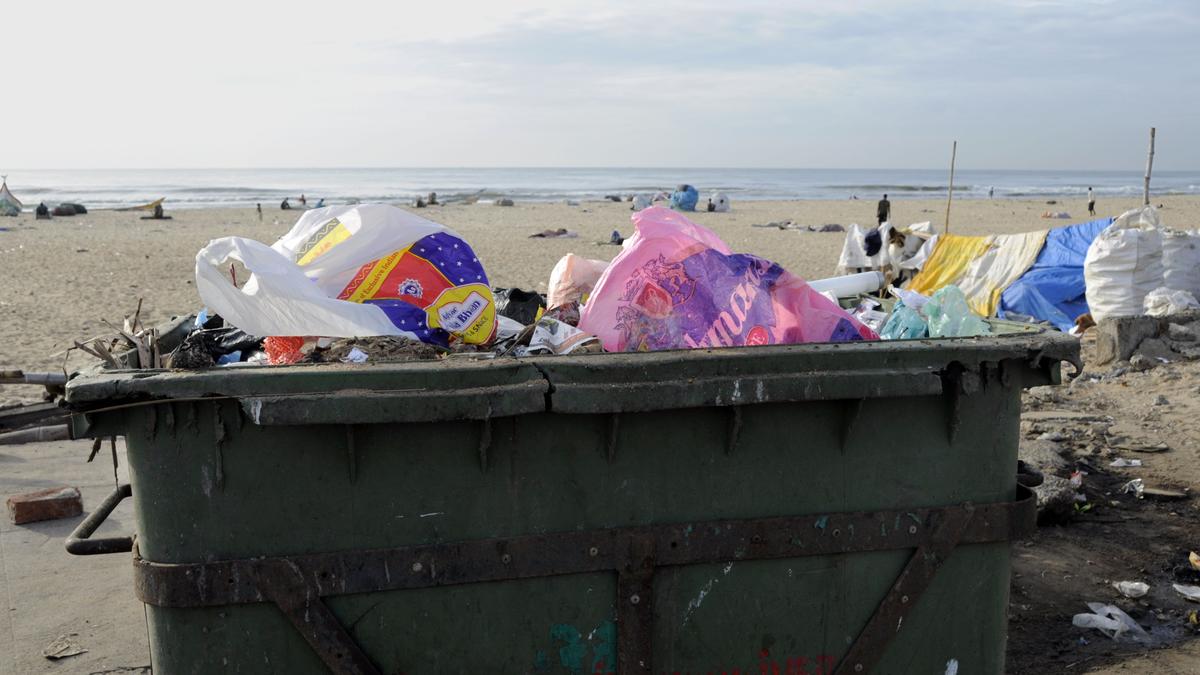
Chennai’s civic administration has stepped up enforcement to curb waste dumping along its coastline, introducing stricter penalties for littering on the city’s most visited beaches ahead of a seasonal surge in visitors. The move targets popular stretches such as Marina and other urban beaches, where footfall typically rises sharply during festive holidays, placing additional pressure on public sanitation systems.
The decision reflects growing concern within city agencies over the environmental and public health risks posed by unmanaged waste in high-density recreational zones. Beaches are not only critical public spaces but also form part of Chennai’s natural coastal defence, helping buffer the city against erosion and climate-related impacts. Persistent littering has undermined these functions, clogging sand stretches with food waste, plastics and disposable packaging. Under the revised enforcement approach, individuals found disposing of waste outside designated collection points will face an immediate monetary penalty. Civic officials say enforcement teams will be deployed along major beaches to monitor activity and issue fines on the spot, signalling a shift from advisory-driven management to deterrence-based regulation. The timing is deliberate, with authorities anticipating peak crowds during upcoming holidays.
To support enforcement, the city has scaled up operational capacity along the shoreline. Mechanical beach-cleaning equipment, specialised waste collection vehicles and expanded sanitation crews have been positioned across multiple locations. On Chennai’s central beachfront, waste clearance runs several times a day, with teams operating in rotational shifts to manage daily volumes that can run into several tonnes. Similar arrangements have been extended to neighbourhood beaches further south and north of the city. Urban planners note that beaches present unique governance challenges. Unlike enclosed public spaces, they remain open-access zones where behaviour change depends as much on civic awareness as on enforcement. Overflowing bins, unsegregated waste and irregular disposal patterns often attract animals and create secondary hygiene risks, affecting both visitors and nearby residential areas.
From an urban sustainability perspective, the crackdown aligns with broader efforts to strengthen solid waste management and protect fragile coastal ecosystems. Chennai’s coastline is increasingly viewed as shared urban infrastructure one that supports tourism, livelihoods and climate resilience. Maintaining cleanliness is therefore seen not merely as an aesthetic issue, but as a component of public health and economic vitality.
Residents’ groups and civic advocates argue that penalties alone will not solve the problem unless accompanied by better waste segregation, adequate bin placement and sustained public communication. They also stress the need for accountability across the value chain, including vendors and event organisers operating along beachfronts.
Looking ahead, the success of the initiative will depend on consistent enforcement beyond peak seasons and the integration of behavioural nudges with infrastructure investment. As Chennai grapples with rising urban density and climate pressures, keeping its beaches clean may prove to be a telling test of how effectively the city can manage shared public spaces in a people-first, environmentally responsible way.