


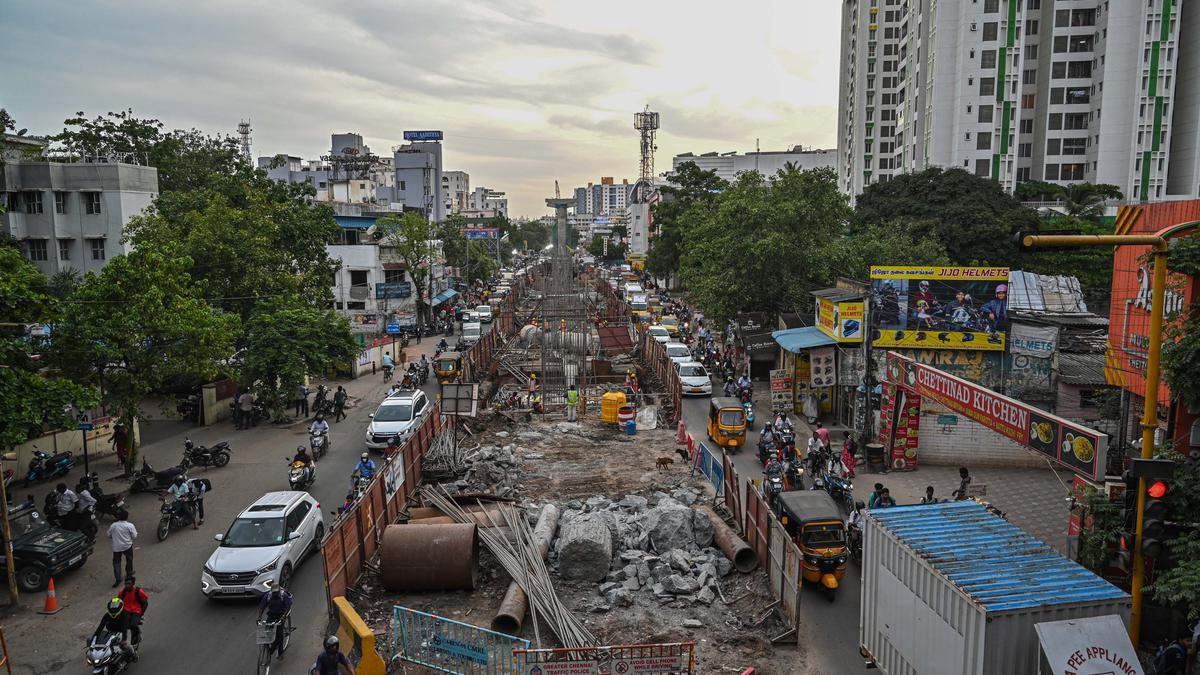
The Greater Chennai Corporation has established a technical audit committee to assess and mitigate flood risks associated with the Chennai Metro Rail Limited (CMRL) projects.
This initiative aims to address the persistent issue of waterlogging near metro construction sites, particularly in areas like Purasawalkam, Sembium, Pattalam, Otteri, Mylapore, Adyar, and Indira Nagar, which have been identified as flood-prone zones during the monsoon season. The audit committee, comprising experts from various engineering and civic bodies, is tasked with evaluating the current state of stormwater drainage systems in proximity to metro construction sites. Their mandate includes identifying obstructions caused by construction activities and recommending corrective measures to ensure efficient water flow during heavy rains. This proactive approach is crucial, given the city’s history of severe flooding, notably the catastrophic events in 2015, which were attributed to inadequate drainage infrastructure and unregulated urban development.
Residents have long voiced concerns over the impact of metro construction on local drainage systems. In areas such as Sterling Road, Gemini Flyover, and Kodambakkam, the accumulation of construction debris and the alteration of natural watercourses have led to increased instances of waterlogging. The situation is further compounded in regions like Porur, where the risk of inundation remains high due to insufficient stormwater management. The audit committee’s formation is a step towards integrating sustainable urban planning with infrastructure development. By scrutinizing the interplay between metro construction and the city’s drainage network, the committee aims to devise strategies that align with the principles of eco-friendly and equitable urban growth. This includes exploring the feasibility of implementing advanced pumping mechanisms and constructing sumps to facilitate better water diversion during peak rainfall periods.
Moreover, the committee’s findings are expected to inform future metro projects, ensuring that flood mitigation measures are embedded into the planning and execution phases. This aligns with the broader objective of creating resilient urban environments capable of withstanding the challenges posed by climate change and rapid urbanization. The success of this initiative hinges on the collaborative efforts of various stakeholders, including municipal authorities, metro rail officials, and the local populace. By fostering a participatory approach to urban development, Chennai can pave the way for a more sustainable and flood-resilient future.
Also Read :Bengaluru Metro Yellow Line Starts Partial Operations
