


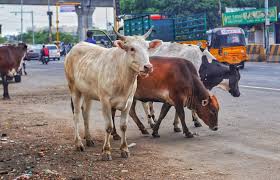
The Greater Chennai Corporation has begun direct field enforcement of cattle licensing and microchipping after limited voluntary compliance from livestock owners, signalling a tougher approach to managing urban animal husbandry. The move comes amid rising concerns over stray cattle, traffic safety and public health in a rapidly densifying metropolis.
Civic officials confirmed that inspection teams will now visit cattle sheds across the city to register animals and implant identification microchips. The initiative follows a recent enumeration exercise that recorded nearly 23,000 cattle within city limits, though industry representatives argue the current population may be significantly higher.Under the new framework, owners must secure a municipal licence to legally rear cattle in the city. Each animal will be fitted with a traceable microchip, linking it to a digital database containing ownership and location details. The civic body has set a deadline for applications through zonal offices, after which enforcement measures are expected to intensify.
Urban administrators describe cattle licensing and microchipping as essential to accountability. Traceability allows authorities to address complaints related to unattended livestock, road accidents and waste management. In congested neighbourhoods, stray cattle have been linked to traffic disruption and sanitation challenges, particularly near markets and transport corridors.However, the transition is not without friction. Livestock owners’ associations say communication around the new rules has been inadequate and that many families depend on dairy activity for daily income. They also question whether the city has sufficient infrastructure to support compliance. At present, five municipal cattle sheds operate in different zones, with plans announced for additional facilities. Owners contend that shelter capacity may not match the actual cattle population.
Urban planners note that livestock management is a complex issue in Indian cities, where informal economies intersect with formal land-use regulations. Dairy activity often coexists with residential and industrial areas, especially in northern Chennai. Without adequate designated spaces, enforcement risks pushing vulnerable households into financial distress.At the same time, environmental health experts argue that regulated cattle licensing and microchipping can improve disease surveillance and manure management. Better oversight could support cleaner neighbourhoods, reduce open dumping of waste feed and integrate livestock zones into broader climate-resilient planning. Methane emissions from unmanaged animal waste are a growing urban concern, particularly in dense settlements.
The licence fee has been kept modest, signalling that revenue generation is not the primary objective. Instead, officials frame the policy as part of a wider effort to modernise civic databases and align Chennai’s governance systems with digital tracking standards used in other sectors.The coming weeks will test whether enforcement can balance regulation with livelihood protection. For Chennai, the outcome will shape how traditional economic activities adapt within an evolving urban framework that prioritises safety, public health and orderly growth.
Also Read:Bengaluru realty stocks fall as IT slump deepens
Chennai enforces cattle licensing and microchipping
