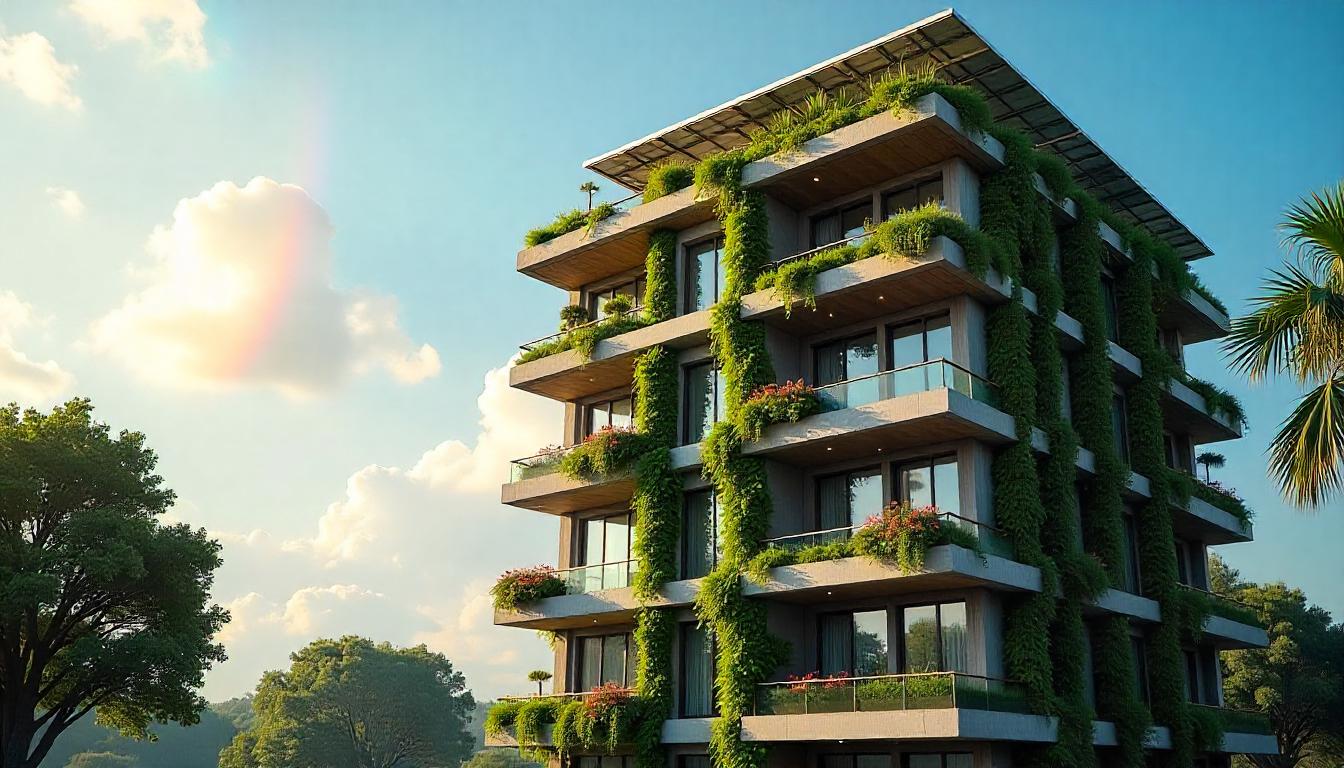
Chennai Dominates Tamil Nadu Green Buildings Growth
Tamil Nadu’s push towards climate-responsive construction is gathering pace, but the momentum remains heavily concentrated in Chennai. Data from the Indian Green Building Council (IGBC) shows that while the state has crossed 640 certified projects with a cumulative green footprint of nearly 178 million sq ft, more than half of this development is located in the capital, leaving tier-two cities significantly behind.
Chennai alone accounts for over 350 certified projects spanning close to 130 million sq ft. In contrast, Coimbatore, Madurai and Tiruchy together represent a small fraction of the state’s green building footprint. The uneven spread of Tamil Nadu green buildings reflects not just market dynamics but also differences in institutional demand, investor priorities and public awareness. Industry stakeholders indicate that most certified projects in the state are commercial including IT parks, office campuses, retail centres and mixed-use developments. These assets are often backed by global capital or export-oriented businesses, where environmental, social and governance (ESG) metrics are integral to investment decisions. As a result, green certification is treated as a performance and compliance tool rather than a lifestyle choice.
In tier-two cities, however, the residential market continues to be price-sensitive. Developers say that although the cost of eco-friendly materials has fallen over the past decade, land parcels that meet environmental planning criteria such as access to public transport, adequate open space and lower ecological risk command a premium. Excluding land, green compliance may increase construction costs by roughly 10–15 per cent, but that margin can influence buyer sentiment in smaller cities. Urban planners argue that the concentration of Tamil Nadu green buildings in Chennai mirrors broader infrastructure disparities. The capital benefits from better public transport connectivity, corporate occupancy, and policy visibility. Fast-track approvals, higher floor area ratios in select jurisdictions, and limited property tax rebates have nudged adoption, but implementation varies across municipalities.
Government institutions and educational campuses form a substantial share of certified projects in cities like Tiruchy and Madurai. Private housing projects, meanwhile, remain largely conventional. Experts suggest that sustained fiscal incentives such as long-term property tax concessions, stamp duty relief and utility-linked benefits could help shift green homes from a niche offering to a mainstream aspiration. The wider urban implication is significant. Buildings account for a large share of energy consumption and urban emissions. As Tamil Nadu positions itself as an industrial and technology hub, expanding climate-resilient construction beyond Chennai will be critical for balanced regional growth. For tier-two cities to bridge the gap, policy continuity, buyer awareness and local capacity-building will matter as much as capital. The next phase of urban development may well depend on whether green construction becomes not just compliant but commonplace.