Chennai Corporation Begins Strict Enforcement Of Construction Waste Guidelines From December Twenty Second
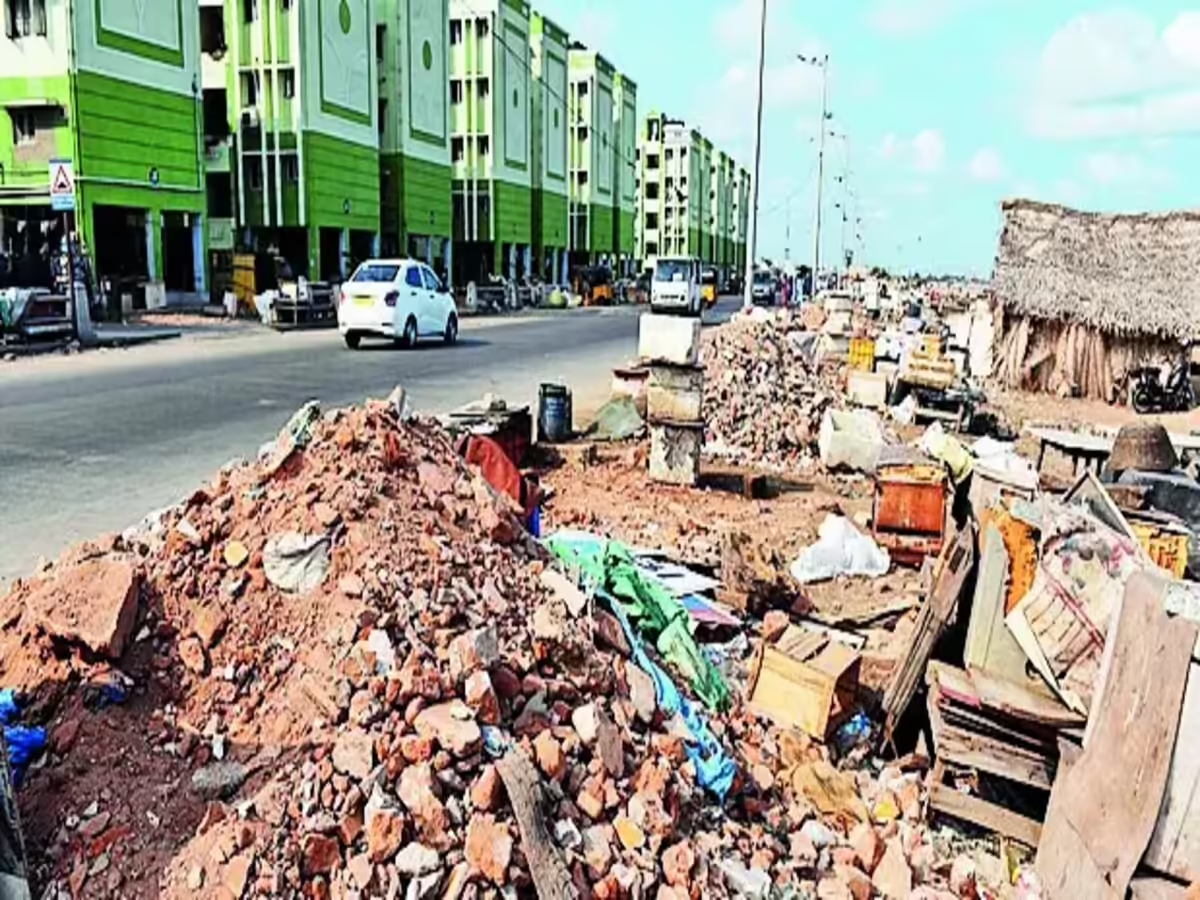
The Greater Chennai Corporation (GCC) will commence strict enforcement of construction waste management rules from 22 December, targeting developers and contractors who store debris outside construction sites. The regulations, initially introduced in May, mandate that all building materials, excavated soil, and waste remain within project premises to prevent road and pedestrian obstruction. Persistent violations across residential, commercial, and institutional projects have prompted the city to impose fines ranging from ₹25,000 to ₹5 lakh, signalling a renewed focus on safer, cleaner urban spaces.
Despite months of awareness campaigns, municipal authorities report that many construction projects continue to flout these rules. Debris has been observed spilling onto public roads, pavements, and verges, causing traffic congestion, hazards for pedestrians, and disruptions to civic life. “Containment of construction waste on-site is critical not only for safety but for creating liveable urban neighbourhoods,” an official from the GCC said, underlining the city’s commitment to more sustainable construction practices.The penalty system is structured by project scale. Developments between 500 and 20,000 square metres face fines of ₹25,000, while larger constructions exceeding 20,000 square metres may be penalised up to ₹5 lakh. Smaller buildings under 500 square metres are expected to manage waste responsibly without obstructing sidewalks or public roads, reinforcing the principle of civic accountability at all levels.
Urban planners note that Chennai’s stricter enforcement reflects global best practices in construction waste management. Keeping debris within site boundaries helps minimise environmental contamination, reduces hazards, and supports climate-resilient urban infrastructure. “Responsible debris handling is a small step that contributes to broader net-zero and sustainable city goals,” said an urban planning consultant familiar with municipal compliance strategies.To strengthen oversight, GCC has introduced monitoring mechanisms and citizen reporting channels. Residents can lodge complaints through the municipal app or helpline, enabling prompt inspection and enforcement. Regular site visits by municipal officers are planned to ensure adherence, with repeat offenders facing strict fines.Sustainability advocates highlight that the move reinforces equitable access to public spaces, pedestrian safety, and urban cleanliness. By preventing the encroachment of sidewalks and roads by construction waste, Chennai aims to balance rapid development with environmental stewardship and civic well-being.
While developers may initially resist stricter compliance, officials believe consistent enforcement will encourage long-term behavioural change, fostering greener, safer, and more responsible construction practices. The initiative aligns with Chennai’s vision for inclusive, zero-carbon urban growth, demonstrating how regulatory rigor can underpin sustainable city planning without stifling development.